All Blog
Thank you! Your submission has been received!
Oops! Something went wrong while submitting the form.
Golden Retriever Corgi

The Golden Retriever Corgi mix, often referred to as a Golden Corgi, is an adorable and lovable mixed breed dog, known for its unique blend of two popular purebred breeds: the Golden Retriever and the Corgi. These little dogs boast a charming appearance combined with a spirited character, thanks to the combination of the Corgi's big personality and small stature, with the affectionate and friendly disposition of the Golden Retriever.

This designer dog breed is relatively new but has been steadily gaining popularity due to their attractive appearance, friendly nature, and unique blend of traits. Golden Corgis are known for their high energy levels and their eagerness to please, making them great companions for families or individuals looking for an affectionate, energetic, and fun canine companion.

Key Takeaways

  • Golden Retriever Corgi mixes combine the charming appearance and spirited character of two popular purebred breeds
  • These designer dogs are friendly, energetic, and eager to please, making them excellent companions for various households
  • Their captivating physical and personality traits have resulted in this mix's increasing popularity among dog lovers

Golden Retriever Corgi Mix: Origins and History

The Golden Retriever Corgi Mix, also known as the Corgi Retriever or Golden Corgi, is a hybrid dog breed that combines two beloved dog breeds: the Golden Retriever and the Welsh Corgi. To understand the origins of this mixed breed, let's explore the individual histories of the parent breeds.

The Golden Retriever originated in Scotland around the end of the 18th century. Lord Tweedmouth, a British aristocrat, sought a loyal and hard-working gundog to retrieve waterfowl during hunting expeditions on his estate. So, in 1868, he created the Golden Retriever by selectively breeding the Flat-Coated Retriever, Tweed Water Spaniel, and other breeds. Golden Retrievers have since become one of the most popular dog breeds worldwide, known for their intelligence, loyalty, and gentle disposition.

On the other hand, the Welsh Corgi has its roots in Wales and actually consists of two distinct breeds: the Pembroke Welsh Corgi and the Cardigan Welsh Corgi. Both Corgi breeds have been present in Wales for over a thousand years and were initially used as cattle herding dogs. Corgis have gained notoriety as the favored breed of Queen Elizabeth II, who has owned and loved these dogs throughout her reign.

The intentional breeding of the Golden Retriever Corgi Mix started in North America during the late 1990s, as part of the designer dog trend. While this particular hybrid may have existed naturally for quite some time, it took a surge in popularity due to its unique appearance, sociable temperament, and the best qualities inherited from its parent breeds.

The Golden Retriever Corgi Mix has become a popular choice for dog lovers who appreciate its charming personality, adorable looks, and loyal nature. As a mixed breed, the characteristics of this designer dog can vary widely, making each Golden Corgi a truly unique and lovable companion.

Physical Characteristics

Size, Weight, and Height

The Golden Retriever Corgi mix, sometimes called a Golden Corgi, combines the traits of both Golden Retrievers and Corgis, resulting in a unique appearance. In terms of size, a Golden Corgi typically falls between 10-18 inches in height and weighs between 25-65 pounds. The size of a Golden Corgi can greatly vary due to the differences in size of its parent breeds.

Coat Type and Colors

Golden Corgis have a double coat, which means they have both an outer coat and an undercoat. This double coat acts as insulation, keeping them warm in the winter and cool in the summer. Because of this thick coat, Golden Corgis do tend to shed, especially during shedding seasons. Regular grooming and brushing can help manage shedding and keep their coats healthy.

The coat colors of Golden Corgis can vary widely, with the most common colors being:

  • Golden
  • Tan
  • Fawn
  • Red
  • White
  • Black
  • Brown

These colors can appear as solid colors or a mix of colors. In addition to their coat colors, some Golden Corgis may inherit the distinctive shape of Corgis, with a long, sturdy body, short legs, and a noticeable backside, caused by a genetic condition known as dwarfism. This physical trait is both a distinguishing characteristic and a result of the fusion of these two breeds.

Temperament and Personality Traits

The Golden Retriever Corgi mix, also known as the Golden Corgi, possesses a unique combination of traits from its parent breeds. This mixed breed is friendly, loyal, loving, and active, inheriting some of the best qualities from both the Golden Retriever and Welsh Corgi.

Golden Corgis are known for being gentle, showcasing the loving nature of the Golden Retriever. They are incredibly warm towards their families and are always eager to show their affection. They tend to get along with everyone, including children and other pets, making them a perfect family companion.

Being active and playful creatures, Golden Corgis enjoy engaging in physical activities and spending time outdoors. They have a natural curiosity and enjoy exploring new environments. Regular exercise and mental stimulation are essential to keep them happy and healthy. These dogs love playing fetch or agility games and going for walks or hikes with their families.

However, the Golden Corgi can sometimes exhibit stubborn behavior, a trait they inherit from the Welsh Corgi. This stubbornness might present a challenge during training. Positive reinforcement and patience are crucial when teaching them new commands or behaviors. Despite their occasional stubbornness, the breed is known for being intelligent and eager to please, making training a rewarding experience for both dog and owner.

Training and Intelligence

The Golden Retriever Corgi mix, also known as the Corgi Golden Retriever, is a breed that combines the best traits of both parent breeds. One of the most notable characteristics of this breed is its intelligence, which makes training a relatively easy process.

The intelligence of the breed can be attributed to its parent breeds – the Pembroke Welsh Corgis and the Golden Retrievers. Corgis were originally bred for herding cattle and sheep, proving their impeccable intelligence and dependable nature. They excel in agility, competitions, and sheepdog trials. Similarly, Golden Retrievers are considered one of the smartest dog breeds, showing their ability to learn new commands quickly and respond to known commands on the first attempt.

Training a Golden Retriever Corgi mix not only requires patience and persistence but also consistency. Their intelligent nature means that they learn quickly, but it is essential to set clear boundaries and rules for them to follow. To ensure long-lasting results, positive reinforcement techniques, such as praise and treats, work well in motivating these dogs.

One crucial aspect of training a Golden Retriever Corgi mix is socialization. These dogs are known to be social animals that enjoy spending time with humans. Therefore, it is crucial to expose them to various people and environments early on. This helps them grow into well-rounded and well-behaved adults.

Given their herding background, training should also focus on physical and mental stimulation to keep them engaged and challenged. Activities like agility courses, puzzle toys, and obedience training can help satisfy their innate drive to work and excel.

Health and Wellness

Common Health Problems

Like all mixed breed dogs, Golden Retriever Corgi mixes may face certain health problems inherited from their parent breeds. Some common health issues include:

  • Elbow and hip dysplasia: A condition affecting the joints which can cause pain and mobility issues.
  • Various eye diseases: Which may include cataracts or progressive retinal atrophy, sometimes leading to vision loss.
  • Heart diseases: These can be more prevalent in this breed due to the Corgi’s susceptibility.

It's essential to maintain regular check-ups with a veterinarian to catch and address any health concerns early on.

Diet

A well-balanced diet is crucial in maintaining the health of a Golden Retriever Corgi mix. Providing high-quality dog food that meets their nutritional needs is key. Some essential components of their diet include:

  • Protein: from sources such as chicken, beef, or fish.
  • Fats: for energy and a healthy skin and coat.
  • Carbohydrates: from sources like oats, rice, and vegetables.

It's important to monitor their calorie intake to prevent them from becoming overweight, which can contribute to some of these health problems. Consult with a veterinarian to determine the appropriate feeding schedule and portion sizes for your specific dog.

Exercise

Golden Retriever Corgi mixes are an active and intelligent breed, requiring daily exercise to maintain proper health and prevent obesity. Exercise needs might include:

  • Daily walks: covering one to two miles, depending on their energy level.
  • Play sessions: using toys or fetching games to engage their minds and bodies.
  • Training sessions: offering mental stimulation and an opportunity to bond with their owner.

Although these dogs may be suited for apartment living due to their size, ensure they have ample opportunities for activity both indoors and outdoors.

Grooming

Grooming is an essential component of maintaining a healthy Golden Retriever Corgi mix. This breed might be prone to shedding, so regular grooming is necessary to manage loose hair and promote a healthy coat. Some grooming tasks to consider include:

  • Brushing: using a slicker brush or comb at least two to three times per week to remove loose hair and prevent matting.
  • Bathing: every 4-6 weeks, using a mild dog shampoo to maintain skin and coat health.
  • Nail trimming: approximately every 3-4 weeks, to prevent overgrowth and discomfort.

By carefully addressing these health and wellness topics, you can ensure your Golden Retriever Corgi mix lives a happy and healthy life.

Family and Home Life

Golden Retriever-Corgi mix, also known as the Golden Corgi, is a gentle, loyal, and loving breed, which makes them suitable for both family and home life. They inherit some of the best traits from both of their parent breeds, the Golden Retriever and the Corgi. Known for their playful and friendly nature, these dogs can easily adapt to a variety of living situations, including apartments and houses with yards.

Golden Corgis are great with children, as they showcase a tolerant disposition towards kids and other pets. Their gentle nature provides a safe and enjoyable experience for the entire family. However, it is essential to teach children how to interact with the dog correctly and supervise their playtime to avoid any potential mishaps.

For families with multiple pets, the Golden Corgi can coexist well with other animals. Being social creatures, they quickly form bonds with their furry companions and engage in playful activities. It is crucial to introduce them to other pets in a controlled and neutral environment to ensure a smooth integration process.

Golden Corgis are generally well-suited for both apartments and houses with yards, as their energy levels can be managed with regular exercise and mental stimulation. Although they are not as large as Golden Retrievers, they still need adequate space to move around and play. Access to a yard is not mandatory, but it can be an added advantage, as it allows them to explore and burn off energy outdoors.

Adoption and Breeders

Golden Retriever and Corgi mix, also known as the Golden Corgi, is a popular and adorable hybrid dog breed. Combining the friendly and lovely personality of Golden Retrievers with the energetic and charming temperament of the Pembroke Welsh or Cardigan Welsh Corgi, this mixed breed makes an excellent companion for families and various types of households.

Where to find Golden Corgi puppies
For those interested in adopting a Golden Retriever Corgi mix, there are several options to consider. You can either purchase a puppy from a reputable breeder or adopt one from a shelter or rescue organization.

Breeders
When looking for a Golden Corgi puppy, it's crucial to find a responsible and knowledgeable breeder. The price of a Golden Corgi mix puppy can range from $1,000 to $3,000, depending on factors such as the breeder's location, purebred parents' bloodlines, and the availability of puppies. To find a suitable breeder, start by asking for referrals from your local vet or searching for breeders with positive reviews online.

Adoption
Adopting a Golden Corgi mix is another admirable option to consider, as it helps give a loving home to a dog in need. Rescue organizations and shelters often have mixed breed dogs that include Golden Retrievers and Corgis, so there's a chance you may find a Golden Corgi waiting for you. While the cost of adoption is generally lower than purchasing from a breeder, you'll still need to be prepared for expenses related to healthcare and grooming for your adopted dog.

In both cases - breeders and adoption agencies - it is essential to think about the time and resources needed to properly care for a Golden Corgi. Remember that they are an active breed and require regular exercise and mental stimulation to be happy and healthy.

When choosing a Golden Corgi, whether from a breeder or a shelter, take time to assess the dog's personality and temperament. Interact with the puppy or dog, and, if possible, meet its parent breeds. This will give you a good understanding of the potential traits and characteristics of your future furry friend.

Golden Retriever Corgi Mix Versus Other Popular Mixed Breeds

Golden Corgi Versus Labrador Retriever Mix

Golden Corgi, also known as Corgi Golden Retriever mix, is a "designer dog" that is a cross between a Corgi and a Golden Retriever. This energetic dog has a cheerful character and becomes a loving, loyal companion. On the other hand, a Labrador Retriever Mix is a popular hybrid breed where a Labrador Retriever is crossed with another breed.

  • Size: Golden Corgis are generally smaller than Labrador Retriever mixes, as Corgis have a shorter stature.
  • Temperament: Both Golden Corgis and Labrador Retriever mixes are known for their friendly, outgoing nature and form strong bonds with their families.
  • Activity level: Labrador Retriever mixes usually require more exercise than Golden Corgis, but both breeds are active and enjoy outdoor playtime.
  • Appearance: While the appearance of Labrador Retriever mixes can vary significantly based on the other breed involved, the Golden Corgi typically inherits the distinctive foxy face and short legs of the Corgi, combined with the luxurious golden coat of the Golden Retriever.

Pembroke Corgi Versus Golden Retriever Mix

The Pembroke Corgi is one of the two Corgi breeds, known for its charming looks, intelligence, and affectionate nature. When comparing a Pembroke Corgi to a Golden Retriever Mix, like the Golden Corgi, there are several differences to take note of.

  • Size: Pembroke Corgis are smaller than most Golden Retriever Mixes, particularly the Golden Corgi. Pembrokes typically stand 10-12 inches tall and weigh 24-30 pounds, while Golden Retriever mixes can vary widely in size.
  • Temperament: Both breeds have a friendly, outgoing personality and are known for their loyalty to their families. However, Pembroke Corgis tend to have a more independent streak and can also be more vocal compared to Golden Retriever mixes.
  • Activity level: While both breeds need regular exercise and mental stimulation, Pembroke Corgis may require less physical exertion than a larger Golden Retriever mix.
  • Appearance: The Pembroke Corgi has a distinct appearance with its fox-like face, rounded ears, and shortened legs. Meanwhile, the appearance of Golden Retriever mixes, such as the Golden Corgi, can be a blend of the parent breeds, like the combination of the adorable Corgi face with the elegant coat of the Golden Retriever.

Frequently Asked Questions

What are the temperament traits of a Golden Retriever Corgi mix?

A Golden Retriever Corgi mix, often referred to as a Golden Corgi, will typically exhibit temperament traits from both of its parent breeds. These dogs are generally intelligent, friendly, and playful. They have a loyal and active nature, thanks to their Golden Retriever lineage, while also possessing the tenacity and boldness of a Corgi.

What health issues should I watch for in a Golden Retriever Corgi mix?

Golden Corgis, like any other breed, can be prone to certain health issues. Some common concerns include hip dysplasia, which is common in larger breeds like the Golden Retriever, and intervertebral disc disease (IVDD), which is a risk due to the Corgi's long spine. Regular vet check-ups, proper diet, and consistent exercise can help reduce the chances of developing these conditions.

How much exercise does a Golden Retriever Corgi mix need?

Considering their parent breeds' active nature, a Golden Corgi requires around 1-2 hours of exercise per day. Both mental and physical stimulation is important to keep them happy and healthy. Activities like walking, playing fetch, or even agility courses are great options to help them stay active and engaged.

What is the lifespan of a Golden Retriever Corgi mix?

The average lifespan of a Golden Retriever Corgi mix ranges between 12-15 years. This is fairly standard for a medium-sized dog breed. Proper care, a balanced diet, and regular health check-ups will contribute to their overall well-being and longevity.

Are Golden Retriever Corgi mixes suitable for families?

Golden Corgis tend to be family-friendly dogs, given their playful, loyal, and affectionate nature. They are typically good with children and can adapt well to living in apartments or houses with yards. However, it is always essential to monitor interactions between children and dogs to ensure a safe environment for both parties.

How do I train a Corgi Golden Retriever mix?

Training a Golden Corgi can be a rewarding experience, as they are known to be intelligent and eager to please. Consistent, positive reinforcement methods are recommended to make the training process enjoyable for both the dog and the owner. Early socialization and obedience training are crucial in forming well-rounded, well-behaved dogs. Also, check out the Golden Cocker Retriever for another reference of a Golden Retriever mix.

French Bullhuahua

French Bullhuahuas are captivating little dogs that have gained popularity in recent years, thanks to their adorable appearance and endearing personalities. A designer breed resulting from crossing a French Bulldog with a Chihuahua, these F1 hybrid pups combine some of the most desirable characteristics of both parent breeds. Known for their loyalty, playfulness, and occasional stubbornness, French Bullhuahuas are excellent companions for the right family.

This compact and energetic breed is characterized by a mix of physical attributes inherited from the French Bulldog and Chihuahua, creating a unique and charming look that many dog lovers find irresistible. Temperament-wise, these dogs tend to be deeply devoted to their family members, but can also be protective and, at times, challenging to train. Nevertheless, with proper socialization and consistent training methods, French Bullhuahuas can grow to become affectionate and well-behaved pets.

Key Takeaways

  • French Bullhuahuas result from crossing a French Bulldog and a Chihuahua, combining desirable traits from both parent breeds.
  • These designer dogs are known for their loyalty, playfulness, and unique physical appearance.
  • Proper socialization and consistent training are vital to raising a well-behaved and affectionate French Bullhuahua.

History and Origin

The French Bullhuahua is a hybrid dog breed, resulting from the cross between a French Bulldog and a Chihuahua. While the specific date of origin for this breed remains unknown, its ancestry can be traced back to the parent breeds, the French Bulldog, and the Chihuahua.

The French Bulldog has its origins back in the early 19th century. English breeders initially crossed their local Bulldogs with Toy Bulldogs in France, creating this distinctly smaller and flatter-faced breed. The French Bulldog then gained popularity among the urban and artistic class, transforming it into a beloved companion in Europe and the United States.

On the other hand, the Chihuahua, believed to be an ancient breed, has its roots in Mexico. The breed's name comes from the Mexican state of Chihuahua, where the first specimens were found in the 19th century. They are thought to be descendants of the Techichi, a small companion dog of the ancient Toltec civilization in Mexico.

The French Bullhuahua, while not as well-documented in history, merges the characteristics of both the French Bulldog and the Chihuahua. Although many well-known organizations recognize this hybrid, details about the breed's history and development remain limited.

Breeding between French Bulldogs and Chihuahuas could have emerged due to the increased interest in smaller companion dogs in contemporary times. Moreover, the designer dog trend has led to the creation and popularization of many crossbreeds, including the French Bullhuahua. Their playful and loyal temperament makes them suitable companions for small or single-person households.

While information on the specific origin of the French Bullhuahua remains scarce, their ancestry can be traced back to the French Bulldog lineage in Europe and the Chihuahua lineage in Mexico. Understanding these roots can provide valuable context on the breed's development into the playful and popular hybrid dog they are today.

Appearance

The French Bullhuahua, a small designer breed resulting from a mix between a French Bulldog and a Chihuahua, features a distinctive appearance that combines traits from both parent breeds. While their size and weight may vary, they typically measure 6-12 inches in height and weigh 10-30 pounds.

The coat of a French Bullhuahua is smooth and sleek, offering a low-maintenance grooming option for owners. Their coats present in a range of colors, including black, white, brown, golden, merle, cream, and tan. Some French Bullhuahuas exhibit solid-colored coats, while others showcase a mix of colors or unique markings such as brindle patterns.

One of the defining features of the French Bullhuahua is their impressively large and erect ears, which they inherit from their Chihuahua lineage. Their head is often a blend of the rounded shape of the French Bulldog and the more elongated muzzle of the Chihuahua, creating a well-proportioned and expressive appearance.

Their eyes are typically round and alert, contributing to the breed's endearing and playful demeanor. The tail of a French Bullhuahua is often short and straight, sometimes with a slight curve. They generally have a compact and stocky body, owing to the French Bulldog genes, but may exhibit slightly longer legs if they inherit more traits from the Chihuahua side.

Temperament and Personality

The French Bullhuahua is a small, yet energetic and confident dog. Born from a mix of the French Bulldog and the Chihuahua, this breed is known for its intelligence and stubbornness. They are generally friendly and affectionate creatures, making them a suitable companion for various types of households.

As intelligent dogs, they are quick learners and often eager to please. However, this breed can also be quite stubborn at times. It is important to establish firm and consistent training from a young age to ensure that they develop good habits and become well-rounded companions.

Loyalty is a strong trait in French Bullhuahuas, as they tend to form a close bond with their owners. This loyalty, paired with their affectionate nature, makes them loving pets that thrive on physical contact and companionship. They do well with other pets and children, though it's essential to monitor interactions to avoid overprotective behavior.

French Bullhuahuas are known for their independent spirit and can be quite excitable and playful at times. This energy level may require daily walks or playtime to help them stay happy and healthy. While they can adapt to apartment living, having access to a small yard or designated play area would be ideal for them to burn off some energy.

One thing to note about the French Bullhuahua is their tendency to be overprotective of their owners. This behavior can result in the dog becoming wary of strangers, which may lead to guarding or territorial behaviors. Proper socialization from an early age can help to curb this trait and create a well-adjusted and friendly pet.

Training and Exercise

The French Bullhuahua is an intelligent breed that requires consistent training and daily exercise. Due to their small size, a moderate amount of exercise should suffice to keep them healthy and happy. It is important to start training and socialization early in their life to ensure they develop into well-adjusted adult dogs.

Obedience training for your French Bullhuahua should be both fun and positive. Using reward-based techniques, such as praise and small treats, will encourage your dog to learn quickly and enjoy the training process. Keep the sessions short and engaging to hold their attention. Be patient and consistent in reinforcing the desired behavior.

Daily exercise is essential for the physical and mental wellbeing of your French Bullhuahua. Aim for at least one 30-minute to 1-hour walk per day, coupled with a few active play sessions and shorter walks throughout the day. Interactive toys, such as puzzle feeders and chew toys, can help keep their minds stimulated and alleviate boredom.

Socialization is another crucial aspect of training. Introducing your French Bullhuahua to various people, other dogs, and new environments will help them become more comfortable in different situations. Regular visits to dog parks, puppy classes, and populated areas can provide ample opportunities for socialization.

While the French Bullhuahua may have a stubborn streak, perseverance and patience in training will result in a well-behaved, loving, and loyal companion. Remember, a happy and well-exercised dog is less likely to display undesirable behaviors. Taking the time to train and exercise your French Bullhuahua will ensure a strong, positive bond and a healthy, content canine.

Socialization and Behavior

The French Bullhuahua is a small yet confident dog breed that is known for its lively and playful nature, making it an excellent choice for families with children. Their affectionate temperament and natural protective instincts can make them great family dogs, particularly when they are socialized from a young age.

Socializing a French Bullhuahua early on helps them adapt well to various environments and ensures they develop positive behavioral patterns. When properly socialized, these dogs can become amicable companions to both adults and children, as well as other pets in the household. Although their energetic nature may lead to some stubbornness or rowdy play, consistency in training will help in instilling good habits and maintaining obedience.

It is important to introduce a French Bullhuahua to other pets, such as cats or other dogs, with caution and supervision. Since this breed may have a slightly assertive attitude, early exposure to different animals helps them learn appropriate social skills and become comfortable around their furry companions.

Regarding behavior, the French Bullhuahua can be quite the entertainer and loves being the center of attention. While they may not be excessively loud, they can be prone to occasional barking and may alert you to any perceived threats. Proper training can help manage any unnecessary barking and enable them to differentiate between real concerns and harmless everyday occurrences.

Grooming and Maintenance

French Bullhuahuas are relatively low-maintenance dogs when it comes to grooming. Their short coat makes it easy to manage, so they don't require frequent or extensive grooming sessions. In general, brushing their coat once a week with a slicker brush will help remove any dead hair, distribute natural oils, and keep their fur looking shiny and healthy.

Bathing your French Bullhuahua is not necessary very often. In fact, over-bathing can lead to dry skin and irritation. You should bathe your dog once every couple of months or if they become exceptionally dirty or smelly. When bathing, make sure to use a mild shampoo that is specifically designed for dogs to protect their skin and coat.

Trimming the nails of your French Bullhuahua is an essential part of their grooming routine. Overgrown nails can cause discomfort and even lead to long-term joint problems. Ideally, you should clip your dog's nails once a month or when you start to hear them clicking on the floor.

In addition to coat, bathing, and nail care, it's important to check your French Bullhuahua's ears regularly for any signs of infection or build-up of debris. Cleaning their ears once or twice a month with a gentle dog ear cleaner and a cotton ball or soft cloth can help prevent these issues.

Dental care is another important aspect of grooming and maintenance for a French Bullhuahua. Be sure to brush your dog's teeth at least twice a week with dog-approved toothpaste and a soft-bristle toothbrush. This routine will help prevent plaque buildup, prevent bad breath, and maintain good oral health.

By following these simple grooming and maintenance routines, you can keep your French Bullhuahua looking and feeling their best. Regular care will not only make your dog more comfortable but also provide an opportunity for you to bond with your pet and catch any potential health issues early.

Health Issues and Lifespan

The French Bullhuahua is a crossbreed between the French Bulldog and Chihuahua. This breed's lifespan ranges from 12-16 years. While they often enjoy relatively good health, they may be prone to certain health issues due to their breed genetics.

One prevalent concern for the French Bullhuahua is hip dysplasia. This health issue occurs when there's a malformation in the hip joint, leading to discomfort and mobility problems. Regular vet check-ups and weight management can help prevent and mitigate the impact of hip dysplasia.

Another issue that may affect this breed is pulmonic stenosis. This congenital heart defect can range from mild to severe and results in blood flow obstruction to the heart. Early detection through vet appointments can help manage the condition and ensure the dog's overall well-being.

French Bullhuahuas can also experience patellar luxation, a condition in which the kneecap dislocates from its normal position. This can cause lameness and discomfort for the dog. Regular exercise and maintaining an appropriate weight can aid in preventing this issue or reducing its impact.

Hypoglycemia, or low blood sugar, is another potential concern for the French Bullhuahua. Small dogs are often at an increased risk for this condition. To keep it under control, feeding small, frequent meals can help maintain stable blood sugar levels throughout the day.

Cataracts are a common concern for many dog breeds, and the French Bullhuahua is no exception. Regular vet check-ups and early detection are essential in managing this issue. Maintaining a healthy lifestyle and diet can also help in reducing the possibility of cataracts.

Finally, brachycephalic faces, or short, broad heads, can cause breathing problems in the French Bullhuahua. Ensuring their living environment encourages easy breathing and monitoring them on hot days can help prevent additional respiratory stress.

Frequent veterinary check-ups and prompt attention to any emerging health issues, coupled with a healthy diet and exercise, can contribute to a long, happy life.

Breeding and Adoption

French Bullhuahua dogs are a mixed breed created by crossing a French Bulldog and a Chihuahua. This small-sized hybrid, often referred to as a designer breed, is popular among dog owners who seek a unique and pleasing appearance in their pets. When considering breeding or adoption, it's essential to understand the unique challenges and considerations involved.

Breeding French Bullhuahuas can be rewarding, but it also comes with its own set of challenges. It's vital to find a reputable breeder when searching for puppies. Browse through verified breeders, like those listed on websites such as PuppyFinder.com, to ensure that the puppies are healthy and have been responsibly bred. A responsible breeder will ensure that both parent breeds are free from genetic disorders and are in good health before breeding, resulting in fewer complications and healthier puppies.

Another vital aspect of breeding is understanding the general temperament and characteristics of both parent breeds. French Bulldogs are friendly, charming, and affectionate, while Chihuahuas are feisty, energetic, and devoted to their owners. These traits will most likely be passed on to the mixed breed, resulting in each French Bullhuahua having a unique personality. Potential owners should keep this in mind before proceeding with breeding or purchasing a puppy.

Adoption is an excellent option for those looking to bring home a French Bullhuahua. Many mixed breed dogs, including French Bullhuahuas, can be found in shelters and breed-specific rescues. Choosing adoption not only gives a loving home to a dog in need, but it also helps reduce the demand for puppies from irresponsible breeders. Websites such as PuppyFinder.com offer listings of French Bullhuahuas available for adoption. It's crucial to visit shelters and rescues to meet these dogs in person, as their unique personalities may vary.

Remember, adopting a French Bullhuahua will require patience, love, and commitment, as each dog will have different needs and behaviors. Regardless of whether you choose breeding or adoption, French Bullhuahuas are sure to bring joy and companionship to your life.

Living Conditions and Lifestyle

The French Bullhuahua is a playful, intelligent, and occasionally stubborn breed, making them both a lively and resilient companion. Their small size, standing at 6-12 inches tall and weighing between 10-30 pounds, makes them suitable for apartment living. However, they still require regular exercise and mental stimulation to keep them healthy and happy.

As a cross between a French Bulldog and a Chihuahua, the French Bullhuahua has inherited their adaptability and loyalty from both parents. They are known to be reserved with strangers but form strong bonds with their owner and family. This makes them an excellent choice as a companion for singles, couples, or families with older children. Due to their small size and occasional stubbornness, they might not be the best choice for families with younger children who might not understand how to handle them gently.

In terms of their home environment, the French Bullhuahua can adapt to various living situations, whether it's a small city apartment or a large suburban home with a yard. It is crucial to provide them with a safe and comfortable space where they can relax and retreat to when they feel overwhelmed. Consistency in their surroundings helps them feel more secure and confident.

Maintenance-wise, the French Bullhuahua has moderate grooming needs, which include weekly brushing to remove loose hair and keep their coat in good condition. Additionally, regular dental care, nail trimming, and ear cleaning are essential to prevent potential health issues.

Although they typically adapt well to apartment living, the French Bullhuahua still requires an active and engaged owner to ensure they receive proper exercise and stimulation. A daily walk combined with interactive play sessions using toys or puzzles will help keep them both physically and mentally fit.

Diet and Nutrition

A French Bullhuahua's diet is critical to their overall health and well-being. It is crucial to provide them with a balanced, species-appropriate diet that meets their nutritional needs.

French Bullhuahuas, like all dogs, are primarily carnivores. Their ideal diet should consist mainly of high-quality protein sources such as meats, bones, and offal. This type of diet, often referred to as a raw diet, aims to replicate the food choices of undomesticated wolves, as dogs' digestive systems have not significantly evolved since then.

Feeding guidelines vary depending on your French Bullhuahua's age, size, and activity level. Puppies require more frequent meals and a higher calorie intake to support their growth and development. Adult dogs generally eat two meals per day, while senior dogs may need adjustments to their diet to cater to age-specific nutritional requirements.

When selecting food for your French Bullhuahua, be sure to choose high-quality dog food that includes:

  • Protein sources: Meats such as chicken, beef, and fish are essential for maintaining muscle mass and overall health.
  • Healthy fats: These provide energy, support brain function, and promote a healthy coat. Look for foods containing omega-3 and omega-6 fatty acids.
  • Carbohydrates: Complex carbs, like sweet potatoes or brown rice, deliver the energy needed for an active lifestyle.
  • Fiber: This can help maintain a healthy digestive system. Fruits, vegetables, and whole grains can be good sources of fiber.

For heart health, it is important to avoid feeding your French Bullhuahua excessive amounts of sodium, which can contribute to high blood pressure and other cardiovascular issues. Instead, focus on providing balanced, nutritious meals that supply the appropriate vitamins and minerals necessary for optimal heart function.

Notable Variations and Hybrids

The French Bullhuahua, also known as Frencheenie or Mexican Frenchie, is a popular designer dog breed resulting from the cross between French Bulldogs and Chihuahuas. This hybrid combines the best traits of both parent breeds, creating an affectionate, loyal, and intelligent companion.

In terms of appearance, Bullhuahuas display a wide range of colors, including golden, brown, white, black, brindle, merle, cream, and tan. Some dogs may have solid coats, while others may exhibit a mix of these colors. The merle pattern, which is a patchwork of dark and light colors, is particularly striking and unique among these hybrids.

When it comes to size, French Bullhuahuas typically range between 6-12 inches in height and weigh anywhere from 10-30 lbs. This makes them suitable for various living arrangements, such as apartments and small homes. Despite their size, they still possess an energetic and playful nature that makes them great companions for singles or small families.

The temperament of a Bullhuahua is a blend of its parents' characteristics. They tend to be playful and intelligent, with a touch of reservation around strangers, displaying the Chihuahua's wariness. At the same time, they inherit the stubbornness of the French Bulldog, which can make training more of a challenge for inexperienced dog owners.

In terms of health, some common concerns for the French Bullhuahua include pulmonic stenosis, hip dysplasia, and intervertebral disc degeneration. To maintain their health and well-being, routine check-ups with a veterinarian and a balanced diet are essential.

Frequently Asked Questions

What is the lifespan of a French Bullhuahua?

The typical lifespan of a French Bullhuahua is around 12-18 years. These dogs tend to be healthy and robust, thanks to their mixed breed heritage.

How do I care for a French Bullhuahua?

Caring for a French Bullhuahua involves regular grooming, as they can shed moderately. Make sure to brush their coat weekly and help to keep their skin clean and healthy. Additionally, dental hygiene is essential, so clean their teeth regularly to prevent dental problems.

Feed your French Bullhuahua a well-balanced diet appropriate for their size, weight, and activity levels. Ensure they have access to fresh water at all times.

What health issues do French Bullhuahuas face?

French Bullhuahuas may face certain health concerns, including pulmonic stenosis, hip dysplasia, and intervertebral disc degeneration. Regular veterinary check-ups and maintaining a healthy lifestyle can help minimize the risk of such issues.

How big do French Bullhuahuas grow?

French Bullhuahuas typically grow to a height of 6-12 inches and weigh between 10 and 30 pounds. Their size can vary, as it depends on the specific traits inherited from their French Bulldog and Chihuahua parents.

Are French Bullhuahuas good with kids?

French Bullhuahuas often make great family pets and can be good with kids. However, it's essential to remember that individual temperaments can vary. Always supervise interactions between children and dogs, and teach children to approach and handle pets with care and respect.

How much exercise does a French Bullhuahua need?

French Bullhuahuas have moderate exercise needs. They should have daily walks and some playtime to keep them physically and mentally stimulated. While they are adaptable and can be comfortable in smaller living spaces, providing enough exercise will ensure they stay happy and healthy. If you love French dogs, be sure to check out the Braque du Bourbonnais.

bull dog

The American Pugabull is a unique and charming mixed breed dog that has captured the hearts of many dog enthusiasts. This hybrid is a cross between the strong and protective American Bulldog and the small, charming Pug dog breeds. The result is a medium-sized, friendly, and loyal companion with an adorable appearance.

These fascinating dogs are known for their loving and playful nature, making them suitable for various types of households. Their medium size and moderate energy levels make them ideal for families, singles, and seniors alike. Although not officially recognized by major breed registries, the American Pugabull continues to gain popularity due to its temperament, low grooming needs, and compatibility with other pets.

Key Takeaways

  • American Pugabull is a mixed breed dog, combining the American Bulldog and Pug breeds.
  • This hybrid is medium-sized, friendly, and loyal, making it a popular family pet.
  • American Pugabulls have moderate energy levels and adapt well to various types of households.

Origins and History

The American Pugabull is a designer breed, resulting from a cross between the American Bulldog and the Pug. This hybrid dog combines some of the best traits from both parent breeds, inheriting the alertness and loyalty that make them great companions.

The Pug has its origins in ancient China, where it was initially bred as a pet for emperors. It eventually made its way to Tibetan monasteries, where monks regarded the Pug as a beloved companion. As time went on, the Pug found its way to Europe and became a popular member of royal households. During the Victorian era, the Pug was often featured in paintings, postcards, and figurines, revealing its stature as a fashionable and prized breed.

On the other hand, the American Bulldog can trace its roots back to bull-baiting, a now-extinct practice. Farmers and ranchers favored these dogs for their usefulness in hunting and guarding their properties. Since then, the American Bulldog has evolved into a loyal companion breed known for its affectionate nature and tenacity.

The American Pugabull breed is a relatively recent development in the world of designer dogs. Since it is a mixed breed, it exhibits a range of characteristics inherited from both the Pug and American Bulldog. These medium-sized pups stand out for their combination of physical attributes and temperament traits, which endear them to their families and other dog enthusiasts.

Despite its brief history, the American Pugabull has gained popularity among dog lovers, particularly for its low-maintenance grooming needs and its adaptability to various living situations. As a result, the American Pugabull has become an increasingly sought-after breed among those looking for a loyal and affectionate companion.

Appearance and Size

The American Pugabull is a crossbreed dog, resulting from a combination of the American Bulldog and the Pug. This breed exhibits a unique blend of characteristics from both its ancestors, giving it a distinct appearance.

In terms of size, the American Pugabull is considered a medium-sized dog, with heights ranging from 12 to 20 inches at the shoulder. Their weight can vary significantly, falling anywhere between 25 to 70 pounds. Due to their diverse genetic backgrounds, the size of individual dogs may differ, making each Pugabull unique.

The coat of an American Pugabull is typically short, making it relatively easy to groom. Although not hypoallergenic, regular brushing at least twice a week is sufficient for maintaining a healthy coat. Their short coats contribute to the American Pugabull's overall low-maintenance grooming requirements.

As for coat colors, the American Pugabull is known to have a wide variety of shades and patterns. Some of the most common coat colors are tan, cream, brown, black, red, and white. These colors are rarely solid and are usually found as a blend of two or more shades on the dog.

The combination of size, coat, and color variations allows the American Pugabull to showcase a diverse range of appearances, providing pet owners with numerous options for selecting their ideal companion. With its attractive blend of characteristics, the American Pugabull is an unmistakably unique and charming breed.

Personality and Temperament

The American Pugabull is a confident and knowledgeable dog breed that possesses a mix of traits from both its Pug and American Bulldog parents. Known for being a loyal and devoted companion, this breed is highly regarded for its affectionate and endearing personalities. They are also recognized as protective, often displaying a strong instinct to guard the home and their family members.

As a family dog, the American Pugabull is known for being particularly kid-friendly, forming strong bonds with children and providing a gentle and loving presence. Their friendly nature allows them to easily integrate into family dynamics and adapt to various situations. However, they still require appropriate socialization, training, and early exposure to different experiences to ensure they grow into well-behaved and well-rounded adult dogs.

While they may have a quiet demeanor at times, American Pugabulls can also have bursts of high energy and enthusiasm. Regular exercise and engaging playtime are crucial for maintaining their physical and mental health, providing them with appropriate outlets for their vivacious personalities.

In terms of sensitivity level, American Pugabulls are known to have a moderate degree of emotional sensitivity. They might react to changes in their environment or owner's emotions, making it important for owners to be aware of their own behavior and maintain a calm, clear, and consistent approach when interacting with this breed.

Bravery is also a key trait of the American Pugabull, stemming from the courageous nature of their American Bulldog lineage. Their fearlessness, combined with their innate loyalty and protective instincts, makes them excellent watchdogs and devoted companions.

Energy and Exercise

The American Pugabull is a medium-sized dog with a fair bit of energy and a great love of play. These dogs are a hybrid resulting from the breeding of an American Bulldog with a Pug, so their activity level is moderate, combining the high energy levels contributed by the Pug parent and the lower levels shared by the American Bulldog parent.

To ensure the well-being of your American Pugabull, provide several short daily walks, as they are prone to weight gain. Additionally, introduce active play sessions in between the walks to keep your dog both mentally and physically stimulated. Some of the recommended activities for American Pugabulls include:

  • Playing fetch with toys or balls in a secure area
  • Visiting dog parks to socialize and interact with other dogs
  • Short hikes or nature walks to explore new environments

Take into consideration the weather when planning their exercise regimen. In hot weather, avoid overexertion and schedule activities during cooler parts of the day, such as early morning or evening. Likewise, in cold weather, provide adequate protection such as a doggy jacket or sweater, and limit the time spent outdoors.

By providing a consistent and varied exercise routine, you can keep your American Pugabull healthy and happy while maintaining their energy levels at an optimal state.

Health Issues and Care

The American Pugabull, a crossbreed between the American Bulldog and the Pug, can inherit health issues from both parent breeds. Being aware of these potential health issues and providing regular veterinary care can help maintain your dog's overall health.

One common health issue in American Pugabulls is hip dysplasia, a genetic condition that affects the hip joints. Regular vet check-ups, maintaining a healthy weight, and providing moderate exercise can help manage this condition. Symptoms of hip dysplasia include difficulty standing, limping, or reluctance to engage in physical activities.

Another concern specific to Pug ancestry is Pug dog encephalitis, a rare inflammatory brain disease. Symptoms may include seizures, instability, or behavioral changes. Consult a vet if you notice any of these signs in your American Pugabull. Diagnostic tests like MRI, blood tests, or physical examinations can help determine the presence of this condition.

Cataracts are another issue that can affect American Pugabulls. Regular vet visits, including eye examinations, can help detect cataracts early and discuss potential treatment options. Symptoms of cataracts include cloudiness in the eye, trouble seeing, or bumping into objects.

Due to their Pug ancestry, American Pugabulls may experience trouble breathing, which can worsen in hot weather or during strenuous exercise. To prevent respiratory distress, avoid overexertion and always provide access to fresh water.

Skin conditions, such as allergies, are also common among American Pugabulls. Symptoms may include itching, redness, or hair loss. A vet can diagnose these issues through skin scrapings or allergy tests and recommend appropriate treatments and preventive measures.

Grooming and Shedding

The American Pugabull is a relatively low-maintenance dog when it comes to grooming and shedding. With their short coats, they require minimal grooming, making them suitable for dog owners who lack the time for extensive grooming routines. However, be aware that they are not hypoallergenic, so they may not be an ideal dog breed for people with allergies.

Shedding is a natural process for the American Pugabull, as it is for all dogs, but it's not excessively heavy. Regular grooming is essential for keeping shedding under control and maintaining a healthy coat. To effectively groom your American Pugabull, it is recommended to brush their coat at least twice a week. This will not only help minimize shedding but also keep their coat clean and free from tangles.

When grooming, start by brushing the coat in the opposite direction of hair growth to pull out the dead hair. Afterward, brush in the direction of hair growth to remove it. This should be done for a few times, ensuring that all dead hair is removed. It is also essential to pay attention to their facial folds, as they may require regular cleaning to prevent any buildup of dirt or bacteria.

As mentioned earlier, American Pugabulls are not well-suited to harsh weather because of their shorter coats. In the winter, a coat will be necessary to keep them warm, and in the summer, dog sunscreen may be necessary to protect them from sunburns.

Training and Socialization

The American Pugabull, a hybrid breed created by crossing an American Bulldog and a Pug, is known for its intelligence and loyalty. As with any dog breed, proper training and socialization are essential for raising a well-balanced, well-behaved American Pugabull.

To begin with, early training is crucial for American Pugabulls. These medium-sized dogs need a strong, consistent leader to guide them. Their intelligence makes them eager to please their owner, which is beneficial during the training process. Nevertheless, their playfulness might lead them to test your patience, so remaining calm and consistent is vital.

In terms of exercise, these dogs have a fair amount of energy, which means they require regular moderate exercise to remain healthy and well-behaved. This can include walks, play sessions, or even outdoor activities supporting their inherent skills and muscular build.

Socialization plays a critical role in developing an American Pugabull's temperament. The ideal window for introducing these dogs to various environments, people, and other pets is between 3 and 14 weeks of age, as this is when they are most accepting and less cautious. While socialization can still take place at later stages, the process is slower for older dogs compared to puppies.

Moreover, American Pugabulls usually get along well with other dogs and pets if they receive proper socialization and training. This quality, combined with their adaptability, makes them suitable companions for families living in apartments or larger homes.

Feeding and Diet

The American Pugabull is a medium-sized dog with a fair bit of energy and a great love of play. It is important to provide them with a high-quality diet specifically designed to deliver the nutrients they need for their age, size, and activity level.

One option for feeding your American Pugabull is a raw food diet. A natural, whole food diet can help keep your dog healthy and happy, while also preventing common health conditions such as obesity, joint, dental, and digestive issues, as well as allergy symptoms like excessive itching and skin complaints.

When planning your American Pugabull's diet, it's crucial to consult with a veterinarian to ensure their nutritional needs are met. They will be able to recommend the best type of food and portion sizes for your dog's unique requirements. Keep in mind that the specific needs of your dog may vary depending on factors such as age, size, and activity level.

In addition to a high-quality diet, it's essential to establish regular feeding habits for your American Pugabull. Consistent mealtimes not only contribute to a healthy eating routine, but also help reinforce structure and predictability in their daily life. Moreover, be cautious of overfeeding, as obesity can lead to various health complications for your dog.

To provide a well-balanced diet for your American Pugabull, consider incorporating the following food groups:

  • High-quality proteins: Options include lean meats like chicken, turkey, and lamb. These proteins are essential for maintaining muscle mass and supporting overall growth and development.
  • Vegetables and fruits: Fresh produce such as carrots, peas, and blueberries supply vitamins, minerals, and antioxidants that contribute to your dog's health.
  • Healthy fats: Sources like fish oil or flaxseed can help maintain healthy skin and a shiny coat, as well as support brain function.
  • Fiber: Foods rich in fiber, like sweet potatoes and brown rice, can aid in digestion and help prevent constipation.

Remember, always consult your veterinarian before making any significant changes to your American Pugabull's diet. They can provide valuable advice and guidance to ensure the best nutrition plan tailored to your dog's individual needs.

Adoption and Breeders

The American Pugabull is a designer breed that is a cross between a Boxer and a Pug. When looking to adopt or buy an American Pugabull puppy, it's crucial to find a reputable breeder or rescue organization. Websites like PuppyFinder.com list American Pugabull dogs for adoption and verified breeders in the USA.

Breeders should be knowledgeable about the breed's traits, such as their social and energetic nature, as well as any health concerns. They should also provide documentation about the puppy's lineage, which may include the American Kennel Club (AKC) registration. However, it is important to note that the American Pugabull is not recognized by the AKC as a standard breed; therefore, the kennel club association may differ.

When searching for an American Pugabull, consider contacting local shelters or rescue organizations. Rescues often have American Pugabulls, as well as other mixed breeds, available for adoption. Adopting from a shelter or rescue typically includes spay or neuter services, vaccinations, and a thorough evaluation of the dog's health and temperament. Furthermore, adopting from a reputable rescue organization often supports responsible pet ownership and helps prevent overpopulation.

In summary, when looking for an American Pugabull:

  • Research and connect with reputable breeders or adoption agencies
  • Understand the breed's traits and characteristics
  • Verify the lineage and registration of the puppy
  • Consider rescue organizations or shelters for a potential American Pugabull adoption

Compatibility with Families and Other Pets

The American Pugabull, a mixed breed dog that's a cross between the American Bulldog and Pug, is known for its energetic, affectionate, and loyal nature. These qualities make them suitable for families with children and other pets. Their playful behavior combined with their loyalty ensures they can be an excellent companion for kids and a source of fun for the entire family.

As a family-oriented animal, the American Pugabull is affectionate with family members and usually gets along well with other animals in the household. However, it's essential to socialize them from a young age to ensure they're comfortable around different pets and to prevent any guarding tendencies.

Despite their energetic nature, American Pugabulls can adapt to apartment living. Though not your typical apartment dog like a Labrador Retriever or other lap-sized pets, these dogs can adjust as long as they have access to regular exercise and playtime. Carefully managing their energy levels through daily walks and interactive activities ensures their wellbeing in an apartment environment.

It's worth noting that for those families with allergies, the American Pugabull may not be the best choice. As a mixed breed, they can still carry allergens from both parent breeds. For sensitive individuals, it's wise to consider this aspect before adopting an American Pugabull.

Breed Recognition and Registries

The American Pugabull, a mix between the American Bulldog and the Pug, is considered a "designer breed" or a hybrid. As a mixed breed dog, it is not eligible for registration with the American Kennel Club (AKC), which only registers purebred dogs. However, there are other registries that recognize and register hybrid breeds, such as the American Pugabull.

The American Canine Hybrid Club (ACHC) is a widely-recognized organization that registers hybrid dog breeds, including the American Pugabull. They provide breed specifications, promote responsible pet ownership, and help maintain accurate records of designer breed dogs, which can be beneficial for those considering an American Pugabull as a companion animal.

Another organization that recognizes the American Pugabull is the Dog Registry of America (DRA). The DRA aims to provide updated records of mixed-breed dogs, ensuring that owners have access to the necessary information about their pets. Registering an American Pugabull with the DRA not only provides pedigree documentation but also allows access to various resources about breed-specific health care and training tips.

Frequently Asked Questions

What is the temperament of an American Pugabull?

American Pugabulls are known for their playful, loving, stubborn, and loyal personalities. They inherit a combination of their parent breeds' best traits, such as the alertness of the American Bulldog and the loyalty of the Pug. Due to their loyal nature, they make great watchdogs and can be suitable for families with kids.

How big do American Pugabulls get?

These medium-sized dogs typically have a height range of 16-20 inches and a weight between 30-60 pounds, depending on the size and characteristics inherited from their parent breeds.

Are American Pugabulls friendly?

Yes, American Pugabulls are usually friendly dogs who get along well with children and other pets, provided they are socialized properly from a young age. They have a strong watchdog character, but they are also loving and affectionate with their family members.

What is the difference between an English Pugabull and an American Pugabull?

The main difference between an English Pugabull and an American Pugabull is in the parent breeds involved. An English Pugabull is a mix between an English Bulldog and a Pug, whereas an American Pugabull is a mix between an American Bulldog and a Pug. Due to the differences in the parent breeds, these two hybrids might have different characteristics and temperaments.

How to find Pugabull puppies for sale?

If you are looking to find Pugabull puppies for sale, it is always advised to research reputable breeders who follow ethical breeding practices. You can also check online forums, local pet stores, or dog rescue organizations for leads. Make sure to visit the breeder or adoption facility and ask questions about the puppy's health, temperament, and parents.

What are the common health issues in American Pugabulls?

Some of the common health issues that American Pugabulls might face include hip dysplasia, patellar luxation, allergies, obesity, and eye problems. These health issues are due to the genetic predisposition inherited from their American Bulldog and Pug parent breeds. Regular veterinary check-ups and a healthy lifestyle can help them lead a longer, happier life. If you're a fan of bulldog breeds, you might also want to check out the Bullador dog!

Dog swimming in a lake

Your dog is part of the family, so you obviously want to do what is best for them. From choosing the right food and the highest quality treats, your pup looks to you for the care they need. Part of that care is learning how to exercise your dog.

But do you know how to exercise your dog? What does it mean to exercise your dog? Walks? Fetch? Agility courses? And how much exercise is right for your dog?

As you can see, there are lots of questions to answer. Keep reading to see how to keep Fido or Lady in tip-top shape!

What Kind of Exercise Does Your Dog Require?

Breed

When taking proper care of your furry friend, you need to understand what their breed needs to live a long and healthy life. When it comes to exercise, different dog breeds require different types of daily physical activity. For example, Bavarian Mountain Scent Hounds require a significant amount of daily physical exercise to stay healthy and happy. Exercising your dog in a way that doesn’t match the breed will either under-stimulate them or put them at risk for injury.

Flat Face Dogs

A pug looking at bubbles.

Flat-faced pups like pugs have a lower tolerance to high physical activity because of their breathing constraints. These dogs have smaller airways making breathing more complicated than the average long-snouted dog. In turn, this makes it hard for them to pant to cool down.

You may think you’re doing a good deed by taking them on a long walk, but this type of exercise for flat faced breeds can be quite dangerous. Even worse than heat for these flat-faced dogs is humidity. This can drastically raise the dog's body temperature, resulting in overheating and heatstroke.

Small Dog Breeds or Toys Breeds

Just like flat-faced breeds, smaller breeds cannot take on as much exercise as larger breeds can. So taking your chihuahua on a 3-mile hike can be more harmful than helpful. Rather, these type of dogs thrive on short-duration activity throughout the day. Multiple short walks and fully charged playtimes keep them happy and healthy.

Large Dog Breeds

The larger the breed, the more exercise they need, right? That’s not always the case.

Giant breeds like Great Danes can be prone to hip and joint issues, so prolonged periods of running and jumping aren’t the best choice of daily activity for them. St. Bernards only need daily walks to meet their exercise requirements. This is why it’s important to research your dog’s breed (or mix of breeds)!

In general, most larger breeds need short bursts of high activity followed by long walks or moderate runs.

Age

A senior-aged boxer dog looking at the camera.

Age plays a big part in how to exercise your dog. Younger pups crave more frequent and physically strenous exercise and can go from sun up to sun down. An older dog, on the other hand, may take a few more naps during their day.

Remember that old dogs can and will learn new tricks if you’re willing to teach them. Just make sure that the activity is age appropriate for your pup. Taking your 10-year-old German Shepherd to agility training might not be best for his age.

Younger dogs need lots of exercise to aid in their development and learning. Taking them on walks also helps with mental stimulation of their growing minds and socialization skills.

Senior dogs benefit from more low-impact activities such as light walks, swimming, or even chasing or fetching when limited to 15-minute increments.

Weight

An overweight small breed dog.

Like us, it’s not uncommon to see some weight gain in your dog if there has been an excess of treats and not as much physical activity. But once you learn how to exercise your dog, you can get their weight under control.

Don’t expect your dog torun for a mile or play an hour-long game of fetch right away. Like humans, they need to build up their stamina. Once they’ve established a routine of shorter walks and small increments of heavy activity, they’ll be ready to work up to longer periods of daily exercise.

Make sure to keep your dog comfortable by offering them a warm-up before any type of intense activity as well as cool-down sessions. This keeps their muscles and joints happy and healthy.

If your dog is not used to physical activity and has fallen into a sedentary lifestyle, look into physical therapy to avoid damaging joints or ligaments, especially with older dogs.

Be On the Lookout For…

When exercising your dog, there are a few things to watch for, one being hot weather. This goes for all breeds, big and small. Dogs can get overheated easily, and it can lead to life-threatening outcomes. Make sure your dog always has access to cool, clean water, when exercising.

Make sure you know of any medical conditions your dog has, such as arthritis, hip, or joint issues. If your dog does have any medical issues, always check with your vet about the best exercise or add daily activity for your pet.

How to Exercise Your Dog

Walks

Dog on a walk with owner.

The number one best exercise for your pup is walking. Not only is this amazing for your dog’s joints and muscles, but it also offers great mental and social stimulation. Walking is the perfect way beginning of exercise, especially for dogs not used to being active.

Running

All dogs have an instinctual urge to run and chase, so why not let them satisfy that urge? Running offers your dog a way to blow off steam and release any built-up tension, which results in a calm, happy pup afterward.

Obedience Training

Not only is obedience training a necessity for all dogs, but it also gives your dog much-needed mental and physical stimulation they can’t get with other kinds of activity. They learn commands, manners, tricks, and get to do scent work.

Fetch

A shepherd breed dog catching a frisbee.

Like running, fetch is a good way to tap into your dog’s instincts. The short bursts of energy work your dog’s muscles and ligaments and provide a ton of mental stimulation. All dogs, big and small, love fetch.

Now whether or not they retrieve the ball or frisbee and bring it back is a whole other question.

Dog Parks

Like people, dogs have all sorts of personalities with unique characteristics and quirks. Not all dogs benefit from dog parks. While it’s like Disneyland for one dog, another dog may find it a stressful and traumatic experience. Know which dog yours is!

If you want to be able to bring your dog to a dog park for regular exercise, you’ll need to introduce them to this environment slowly. Ideally, you want to start when they're puppies, but not everyone gets their dog at that age.

Two dogs playing tug together.

Pay attention to how your dog responds to the dog park. If your dog is social and likes the park, this is a space where your dog can run, jump, play, and, most importantly, socialize. It’ll probably be their favorite exercise activity they can’t wait for.

If you’ve tried visiting the dog park a few times and your dog’s clearly uncomfortable with the situation, it’s just not their thing, and that’s okay! Dog parks are only one exercise option and there are plenty of exercise your dog will enjoy.

Swimming

Swimming offers exercise for dogs that's easier on joints and is perfect for older dogs or dogs with physical limitations. Swimming is proven to decrease inflammation and is the best exercise for pups with arthritis. Of course, swimming isn’t just limited to older dogs – younger dogs will also greatly benefit from it.

Agility Classes

A dog getting exercise on a dog agility course.

Have an active pup that just wants to run, chase, and jump? Try your dog at agility classes. These classes are specifically aimed at dogs that have energy to spare. These classes help prevent obesity and improve endurance, strength, and joint health.

These classes also provide your dog with problem-solving skills and mental stimulation that will keep them sharp and as healthy as can be.

Scent Work

Scent work is the answer if you are home and wondering how to exercise your dog. Scent work offers brain benefits that walking and other activities don't. Your dog does have to learn this, but most dogs catch on quickly after the first few sessions.

Scent work is great for those who aren't able to be physically active with their dogs but want to keep them in shape. This works to fufill a dog’s natural instincts and offers wonderful brain and physical stimulation. Scent work tires out the dog because they are using different portions of their brain to do the work.

The same way walking your dog around the block can activate their little sniffers and get them walking about and tired out, scent work can offer the same benefits.

Post-Exercise Care for Your Dog

Just like us, dogs need post-workout care. After a long hard workout or strenuous activity, properly taking care of muscles prevents muscle pain or injury.

Hydration

Closeup of a beagle drinking water.

Regardless if you’re taking your dog on a casual walk or a jog through the park, your pup always needs access to clean, fresh water. Hydration is key when exercising your dog because water replenishes the body so everything can run smoothly. This also helps keep muscles from cramping up and causing aches and pains.

Remember not to let your dog gulp up the water. Instead, offer it in smaller amounts to prevent stomach upset and bloating.

Cool Down

After a fast walk, hike, or run, allow your dog to cool off. Letting them take a small stroll or sniff around for 5 minutes is enough to get their body temperature and heart rate back to normal. This also allows their muscles to relax and stretch after working hard.

Diet

After learning how to exercise your dog, you don’t want it to all be in vain because of what your dog eats. Giving your pup the proper diet to nourish their bodies will keep them happier and healthier for longer.

Whether you feed your dog fresh, raw, kibble, or canned, make sure to check that it’s made with high-quality ingredients. Avoid foods with fillers or by-products at the beginning of the ingredients list, as those cause adverse effects on a dog’s health.

Frequently Asked Questions

A Labrador playing tug with owner.

How can I exercise my dog without walking or running?

There are many alternative ways to keep a dog fit and active without going on a daily walk or run. You can play a game of fetch in the backyard, play tug of war, or even teach them a new trick! Anyway to get them moving and mentally engaged is good for them.

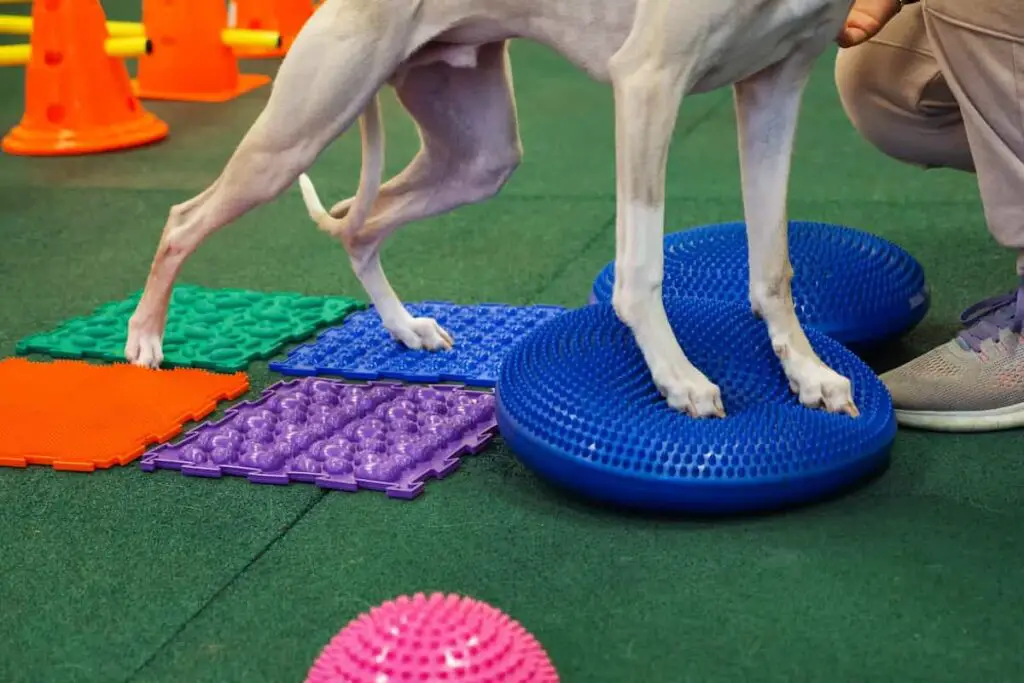
There are all kinds of dog exercise equipment you can purchase to make the exercise even more fun! You’ll see exactly what your dog needs from sniff mats, ball throwers, and even treadmills for dogs.

What is considered active for a dog?

Active would be any dog that is bred to have a job – typically called “working dogs.” An example is Australian Shepards. They were specifically bred to herd sheep. Working dogs are highly active and require more exercise than the average dog.

How do I exercise my dog when I have a busy schedule?

You can make the exercise session short, yet effective. A 10-minute run or intense game of fetch a few times a day could be perfectly adequate for your pup. There are also many interactive toys like Flirt Poles on the market today that can give you a bit of a break without sacrificing your dog's need to run and chase!

A small breed dog running with a ball in its mouth.

Can dogs go one day without exercise?

Of course, yes, there may be times when you’re unable to take your dog for his favorite run or walk through the park, and that’s ok. One day or even two days off won’t hurt them. It may even benefit them, especially after being more active than usual.

What happens if you don’t exercise your dog?

Sedentary lifestyles can result in stiff, tense, painful muscles that lead to early onset weakness when moving. Exercise helps keep these muscles and ligaments relaxed, which maintains your dog’s strength.

Keeping your dog exercised also keeps your dog from getting bored. When dogs are bored, they tend to lean into more destructive behavior to relieve their boredom. You’d much rather take them for their nightly walk than replace the furniture.

How to Exercise Your Dog the Right Way

Closeup of two pitbulls playing with a stick.

dog exercise equipment

Now that you know exactly how to exercise your dog, you’ll be well on your way to a happier, healthier pup! More activity leads to a longer life and creates the ultimate bond with your dog.

Want to see even more dog care tips? Check out All Paws for all you need to know.

Woman cleaning a brown dog's ears

Taking your pup to the groomer can be hard to fit into your schedule and budget. Many dogs get stressed in these environments as well. So it might be a better option to invest in dog grooming tools for at-home grooming!

Getting your dog back to smelling and looking great doesn’t need to be challenging or annoying. Keep reading to learn about the must-have dog grooming tools you should have at home!

1. Shower Head Attachment


Waterpik PPR-252 Pet Wand Pro Shower Sprayer Attachment, 2.5 GPM, for Fast and Easy at Home Dog Cleaning, Blue/Grey

When you get your dog groomed, they typically have a bathing stall or tub that’s specifically for dogs. But you don’t need this fancy bathing station to get the job done.

You can turn your tub or sink into a bathing station with an easy-to-use shower head attachment! Most dog shower attachments are also compatible with hoses if you’d rather wash your dog outside.

Many people typically opt for buckets to dump water onto their dogs for at-home bathing. But, this method can take forever and might even scare your dog more. Using a sprayer attachment works wonders at washing off all the shampoo and thoroughly wetting your dog’s fur.

Your dog should also be calmer since these dog grooming tools are gentle and generally quiet.

2. Grooming Clippers/Scissors

HASHIMOTO Curved Scissors For Dog Grooming,6.5 inches,Design For Professional Groomer.

Grooming clippers or grooming scissors are helpful dog grooming tools in keeping your dog’s coat free of any matting. They’re notably handy for long-haired breeds and curly-haired breeds. Without using these two products, the dog’s fur can get knotted and filled with all kinds of gross debris.

Long hair can also cause vision issues, as it blocks your pup’s eyes. Your dog’s tears will also cause the hair to knot and mat near their eyes, creating dirty, itchy buildup. Clippers and scissors will help cut down your dog’s coat before it can reach this nasty stage. You’ll need to ensure you keep up with it as their coat grows.

These two dog grooming tools are also great for sanitary shaves or trims. This type of shaving will prevent any urine or feces from getting lodged in your dog’s fur.

3. Slicker Brush

Slicker Brush

A slicker brush is an essential dog grooming tool for medium and long-haired dogs. It’s especially great at detangling curly-haired breeds.

This type of brush has long, wire bristles that will get deep into your dog’s undercoat. It should be your first line of action when you see matted areas before you head to the clippers.

Since the wire bristles on these brushes are rather long, they can get into the undercoat. By gently brushing through your dog’s fur, it’ll get any loose hairs out which will make their coat less dense. On top of that, you can expect to get any trapped debris out of their coat.

This is a good dog grooming tool to use after baths and for general maintenance between baths. If you have Pyrenean Mastiff dog, three highly recommended brushes are the Andis Large Firm Slicker Brush, the JW Pet Company GripSoft Double Row Undercoat Rake, and a standard bristle brush for the finishing touches.

4. Nail Grinder or Nail Clippers


Casfuy Dog Nail Grinder Upgraded - Professional 2-Speed Electric Rechargeable Pet Nail Trimmer Painless Paws Grooming & Smoothing for Small Medium Large Dogs & Cats (Dark Blue)

Dog grooming isn’t solely about your dog’s fur coat! Their nails need to get cut down as well to prevent future injuries. Dog owners usually take their furry friends to the vet or a groomer for nail trimmings. But, many dogs dislike it and get very nervous during the nail-cutting process.

So, picking up a nail grinder or some nail clippers to do this at home might be best! Remember that the dog grooming tool you should pick depends on your dog’s tolerance.

Nail grinders are similar to nail files in the fact that they use a sandpaper-like piece to file down nails. But it typically uses batteries or electricity to rotate the grinding piece instead of physically moving it back and forth. Think of it as a miniature sander.

A nail grinder is a great dog grooming tool for minimizing sharp edges and giving nails a dull feel. However, due to its mechanical abilities, it does create a sound that can be off-putting for some dogs. So, if your dog gets spooked by noises, this might not be a good choice.

Your other option would be a good pair of dog nail clippers, which might be more tolerable for skittish dogs. However, you have to be a little more careful with clippers, as you don’t want to cut your dog’s quicks. These little pockets of blood vessels and nerves can be very painful if you cut them open.

You can usually see the quicks shine through your dog’s nails naturally or with a flashlight. So, don’t clip those areas. The best way to clip a dog’s nails is a little at a time and at a diagonal angle. And if you do hit the quick by accident, a styptic powder or simple corn starch can stop the bleeding!

5. A Soothing Shampoo


Burt's Bees for Dogs Oatmeal Dog Shampoo | With Colloidal Oat Flour & Honey | Moisturizing & Nourishing, Cruelty Free, Sulfate & Paraben Free, pH Balanced for Dogs - Made in USA, 16 Oz

Grooming is never complete without a good bath! A soothing dog shampoo will do just the trick at scrubbing the dirt away and keeping your dog’s skin moisturized.

Dog shampoos help give your pet’s fur a beautiful shine and silky smooth softness. And they’ll of course smell much better than they did before their bath.

Oatmeal-based shampoos are a great dog grooming tool for dogs with sensitive skin or dandruff. They aren’t harsh and will replenish any lost moisture. But you can use any dog shampoo you’d like if your dog isn’t sensitive.

6. Bath Brush

Bath Brush

Sometimes your hands don’t do a good enough job of getting deep into your dog’s fur. When grooming at home, you want to ensure you’re getting every piece of dirt and debris out. Scrubbing out any built-up oils is essential as well. And a bath brush can aid in doing this!

Silicone bath brushes have short, rubber bristles that lift dirt and loose hairs from your furry friend’s coat. They’re excellent dog grooming tools to make bath time faster, and your dog will think he’s just getting a massage!

It’s perfect for shedding dogs, especially in the springtime when they’re getting rid of their winter coat. No more clumps of hair rolling around on your floors like tumbleweeds! Or there will be fewer of them, especially if you groom every month.

7. Grooming Glove

Grooming Glove

Grooming gloves are another helpful dog grooming tool for maintenance in between baths. They’re similar to bath brushes in the sense that they’re silicon with bristles. They’re similar to bath brushes but work best when your dog’s fur is dry.

Instead of scrubbing, use simple petting motions to loosen your dog’s fur, pulling up any dead hairs. The glove also covers a larger surface area, allowing more hair to get pulled up with each swipe. All the hair will typically clump up on the glove like a matted fur ball.

Peel it off and keep brushing until the amount of fur on the glove decreases. This dog grooming tool works best with long-haired dogs since their coat is more likely to get matted. But short-haired dogs can benefit from it too, as it’ll loosen their undercoats.

These gloves won’t hurt your dog, and they’ll merely think they’re getting some loving pets from you!

8. Microfiber Dog Towel


Dog Gone Smart Shammy Dog Towels For Drying Dogs - Heavy Duty Soft Microfiber Bath Towel - Super Absorbent, Quick Drying, & Machine Washable - Must Have Dog & Cat Bathing Supplies | Blue 13x31"

Unless you don’t mind letting your dog run around dripping water everywhere, you’ll need a microfiber dog towel! This dog grooming tool has plenty of soft fibers that will soak up the water from bath time. Dog-specific towels usually have little pockets for your hands, making the drying process much easier with squirmy pups.

Microfiber towels have thinner fibers than your typical bath towel, so there are much more of them. More tightly knit fibers mean a larger absorbent surface area.

Microfiber material also dries much faster than other fabrics, so the towel won’t stay sopping wet for long. They can be a great addition to dog beach trips besides solely being a helpful dog grooming tool!

9. Pet Toothbrush and Toothpaste


Vet’s Best Dog Toothbrush and Enzymatic Toothpaste Set - Teeth Cleaning and Fresh Breath Kit with Dental Care Guide - Vet Formulated

Most people don’t consider brushing their dog’s teeth as part of the grooming process. But, it is essential in keeping up with their hygiene. Groomers usually count this in their services when you drop your dog off. To do it at home, a simple pet toothbrush and toothpaste kit will do the trick!

Oral hygiene for dogs is just as important as it is for humans. Without any intervention, your dog will most likely get a bad case of periodontal disease. This can lead to infections in their mouths and even tooth decay and loss. Don’t forget about the high vet bills to fix these problems!

About 80% of dogs over three years old have periodontal disease! It is inevitable for most breeds, as you can’t scrub away every bit of bacteria.

Preventative care like brushing their teeth can lessen plaque and bacteria and slow the progression of the disease. So, a simple toothbrush and toothpaste are some dog grooming tools that can do wonders for your pet’s health!

10. Pet Ear Cleanser With Nozzle

Pet Ear Cleanser With Nozzle

Thoroughly cleaning your furry friend’s ears should also be on your grooming list to help prevent future infections. Pet ear cleansers with nozzles can help you with this task.

Your dog will always have bacteria and debris in their ears because they’re constantly bouncing around and going outside. Sometimes they can shake debris out, but bacteria will remain until you clean it out.

After washing your dog, it’s also possible that water got into their ears. If that water stays trapped, it provides an inviting environment for bacteria to grow.

A quick squeeze of some ear-cleaning solution in your dog's ears can easily wash all that nasty stuff out. It’s the perfect dog grooming tool to keep their ears squeaky clean and works as preventative care for ear infections.

Most of these solutions have a drying effect too. So, they can help dry out any water inside your pup's ears after bathing.

Why You Need Pet-Specific Tools and Products

Dog grooming tools like toothbrushes help your pet stay health.
Only use dental products made for dogs.

You should never use human products on dogs. Animals have their own microbiome that can get disrupted if we use human products on them. Our products also contain ingredients that might be okay for us but can be toxic to our pets.

Things like human shampoo can strip your dog’s coat of its protective oils, leaving him prone to infections. Ingesting human toothpaste can make your dog sick, especially if it contains xylitol (a sugar substitute that’s toxic to dogs).

Dog grooming tools are also better to use on your dog than human ones because they tend to be gentler. Pet-specific tools and products make grooming faster and easier, providing an overall calmer experience.

Start Grooming With Ease

Long-haired black dog lying down with grooming scissors nearby.

Grooming is essential to your fur baby’s health, but you don’t always need to take them to a groomer. At-home grooming can help you save some money and keep your dog stress-free in its home environment.

Luckily, you can do this task yourself by simply purchasing some must-have dog grooming tools! A clean dog is a happy dog.

Want to know more about grooming your canine companion? Check out our Dog Grooming post for useful tips and tricks!

Chigi Dog

The Chigi is a mixed breed dog, resulting from the cross between the Chihuahua and Corgi breeds. These small dogs pack a big personality, known for their loyalty, intelligence, and energetic nature. As a designer breed, Chigis bring together the favorable qualities of their parent breeds, making them the perfect choice for families and single owners alike.

Their unique appearance, thanks to their Corgi and Chihuahua ancestry, includes erect ears, dark eyes, and a petite yet sturdy stature. Chigis come in various coat colors, with copper or orangish hues being most common. Combining the loving personality of the Cardigan Welsh Corgi and the playful, sassy nature of the Chihuahua, the Chigi dog makes an affectionate and entertaining companion.

Key Takeaways

  • Chigi dogs are small, intelligent, and energetic, resulting from the cross between Chihuahuas and Corgis.
  • The breed is affectionate and playful, making it suitable for families and single owners.
  • Chigis have unique physical characteristics inherited from their parent breeds, such as erect ears and a sturdy stature.

Chigi Breed Origins

Parent Breeds

The Chigi is a cross between two well-loved breeds, the Chihuahua and the Pembroke Welsh Corgi. Both parent breeds have distinct personalities and physical traits that contribute to the unique characteristics of the Chigi dog. The Chihuahua is known for its small size, bold temperament, and devotion to its owner. The Pembroke Welsh Corgi, on the other hand, is an energetic, intelligent, and friendly herding dog with a loyalty to its family.

Designer Dog

While the Chigi is classified as a designer dog, the exact origin of the breed is unknown. It is believed to have originated in the United States, where the demand for designer breeds has grown rapidly in recent years. Designer dogs are created by intentionally crossing two purebred dogs to combine their desired traits into a new, unique breed. In the case of the Chigi, the goal was to create a small, loving, and loyal dog with the playful, energetic, and affectionate nature of both parent breeds.

Hybrid

As a hybrid breed, the Chigi is a blend of characteristics inherited from its Chihuahua and Pembroke Welsh Corgi parents. This means that each Chigi can possess a diverse mixture of traits, including appearance, temperament, and health. Some Chigi dogs may display more physical or personality attributes of one parent breed over the other, while others may be an even mix of both. This variation ensures that each Chigi is a unique and delightful addition to any family setting.

Weight: 10-20 pounds
Lifespan: 12-14 years
Colors: Black, cream, white, and/or fawn
Suitable for: Apartment living, families with children, beginner dog owners
Temperament: Playful, affectionate, loyal, sometimes stubborn

Physical Characteristics

Size and Weight

The Chigi is a small dog that stands between 7 and 12 inches in height, with a weight range of 10 to 20 pounds. Despite their small stature, these dogs are well-proportioned and balanced in appearance.

HeightWeight7-10 inches10-15 pounds10-12 inches15-20 pounds

Coat and Colors

Chigis have short to medium-length coats that can be either straight or slightly wavy. The texture of their coat is typically dense, providing good protection from the elements. They can have a variety of coat colors, with the main hues being black, white, cream, fawn, tan, golden, and brown. Oftentimes, Chigis may have a combination of these colors, resulting in a multi-colored appearance.

Their distinct facial features include a moderately long muzzle with a well-defined, black or brown nose. As for their tail, it's long and usually carried low, sometimes with a slight curl. Overall, the Chigi's appearance is a delightful blend of their Chihuahua and Corgi ancestors, giving them a unique and charming look that is all their own.

Personality and Temperament

The Chigi is a delightful family dog that boasts a unique blend of characteristics from its parent breeds, the Cardigan Welsh Corgi and Chihuahua. They are known for their loyal, affectionate, and playful temperament, making them an excellent choice for families with children, as well as other pets.

Intelligence

Chigi dogs are intelligent creatures, inheriting their smarts from both the Cardigan Welsh Corgi and Chihuahua. Their alert nature and quick mind make for an easy-to-train pet, so long as you maintain a consistent training routine. However, remember that the Chigi may also inherit a touch of sassy attitude from their Chihuahua heritage.

Energy and Exercise

Though small in size, Chigis are energetic dogs with moderate exercise needs. Regular walks and play sessions, such as visits to the dog park, will keep them satisfied and healthy. As Chigis possess a herding instinct from their Corgi lineage, engaging in activities that tap into this instinct, like fetch or agility training, will provide mental stimulation and strengthen the bond between you and your Chigi.

Exercise Needs:

  • Daily walks: 20-30 minutes
  • Play sessions: 15-20 minutes
  • Interactive games such as fetch or agility

Socialization and Friendliness

Early socialization is essential for Chigis, as they tend to develop protective tendencies toward their family. Taking them to dog parks or arranging play dates with other pets will help them become well-rounded and friendly dogs. Being around children will also help Chigis develop their loving and devoted nature, solidifying their role as a beloved family pet.

Health and Lifespan

Chigi dogs typically have a lifespan of 12-14 years. This is mainly due to the hardy nature of both the Chihuahua and Corgi breeds. As with any breed, the Chigi can experience a range of health issues. To maintain their best health, it is essential to have a well-balanced diet and regular checkups with their veterinarian.

Common Health Issues

Chigi dogs, being a crossbreed, can inherit health problems from both their Chihuahua and Corgi parent breeds. Some common health issues that Chigis may face include:

  • Hip Dysplasia: This is an inherited condition where the hip joint doesn't fit correctly into the hip socket. Hip Dysplasia can lead to pain, arthritis, and decreased mobility.
  • Patellar Luxation: This condition occurs when the kneecap dislocates or moves out of its normal position. It can cause temporary lameness and, in severe cases, can result in chronic pain and arthritis.
  • Skin Issues: Chigis can sometimes inherit skin allergies or sensitivities from their parent breeds. Regular grooming can help minimize skin irritation and help keep the coat healthy.

It is important for Chigi owners to be aware of these potential health issues and consult their veterinarian if they notice any concerning signs.

Feeding and Diet

To maintain optimal health, Chigis require a well-balanced diet that meets their nutritional needs. Nutritional requirements may vary depending on factors such as age, weight, and activity level. In general, Chigi dogs should be fed a high-quality dog food formulated for small breeds.

Here are some general guidelines for feeding Chigis:

  • Puppies: Feed 3-4 times a day with smaller portions specifically designed for small breed puppies.
  • Adults: Feed twice daily with portions adjusted for their weight and activity level.
  • Seniors: Feed twice daily with smaller portions and consider a diet specifically designed for senior small breed dogs, as their nutritional needs may change with age.

Avoid feeding Chigis table scraps or human food, as this can lead to obesity and other health problems. It's essential to monitor your Chigi's weight and body condition to ensure they are not gaining or losing excessive weight. Discuss with your veterinarian for personalized feeding recommendations tailored to your Chigi's specific needs.

Training and Behavior

Obedience Training

The Chigi, a mix of Chihuahua and Corgi, is an intelligent breed with a friendly and affectionate personality. However, they can sometimes be stubborn, which is why early obedience training is crucial. Start the sessions when they are still puppies to help them become well-behaved adult dogs. Consistency and patience are essential during training, as they may occasionally resist commands. Use positive reinforcement techniques such as praise, treats, and toys to motivate them and keep them engaged throughout the training process. Avoid harsh training methods, as it might hinder their progress and affect their trust in you.

Socialization

Being a high-energy and sociable dog, Chigi benefits from early socialization. Expose them to various sights, sounds, people, and animals to help them become more comfortable and confident in different situations. This process can help prevent any potential behavioral issues, such as aggression or fearfulness. Socialization can be done by enrolling your Chigi in puppy socialization classes, taking them on walks to dog-friendly parks, or inviting friends and their pets over for visits.

Grooming and Maintenance

Shedding

The Chigi is a moderate shedder, thanks to the influence of its Corgi parent. Regular brushing will help reduce shedding and keep the dog's coat healthy. It is recommended to brush your Chigi's coat at least twice a week to remove loose hairs, prevent mats, and distribute natural oils throughout the fur.

Coat Care

The Chigi's coat is typically short to medium in length, with a dense undercoat for insulation. To keep the coat in optimal condition, grooming should be an essential part of your Chigi's care routine.

  • Bathing: Chigis don't require frequent baths – only when they get too dirty or start to smell. Overbathing can strip the natural oils from their coat, resulting in dry, itchy skin. Make sure to use a gentle, dog-specific shampoo to maintain the coat's health.
  • Ears: Chigis can be prone to ear infections, so it's crucial to regularly check and clean their ears. Use a soft, damp cloth or cotton ball to gently remove any debris or wax buildup. Avoid using cotton swabs, as they can damage the ear canal. Keep an eye out for redness, inflammation, or unusual odors, as these can be signs of an infection.
  • Nails: Regular nail trimming is necessary for Chigis to prevent overgrown nails, which can cause discomfort and contribute to joint issues. Trim your dog's nails every three to four weeks or as needed, using a proper dog nail clipper or grinder.
  • Teeth: Dental care is vital for maintaining your Chigi's overall health. Brush their teeth two to three times a week with a dog-specific toothpaste to prevent tartar buildup, bad breath, and gum disease.

By following these grooming and maintenance guidelines, you can help ensure that your Chigi looks and feels their best. Remember to be gentle and patient, as regular grooming can also be an opportunity to bond with your beloved pet.

Living with a Chigi

Adopting from Shelters

When looking to bring a Chigi into your family, consider adopting from a reputable shelter or rescue group. These organizations often provide information about the dog's history, health, and temperament, which can help you determine if the Chigi is a good fit for your household.

Living Environment

The Chigi is a small to medium-sized dog, usually weighing between 10-20 pounds and standing 7-12 inches tall. Due to their size, they can adapt well to various living environments, including apartments and houses with or without yards. However, they do appreciate having some room to play and run around.

Compatibility with Families, Pets, and Apartment Living

Chigis are known for their playful, affectionate, and loyal temperament, making them a great companion for families with children. They generally get along well with other pets, including other dogs, as long as they are properly socialized from a young age.

Chigis can be suitable for apartment living due to their size and relatively low exercise requirements. However, it is essential to provide them with daily walks, playtime, and mental stimulation to keep them happy and healthy. While they may sometimes be stubborn, Chigis are usually easy to train and are a good option for novice dog owners.

Living EnvironmentSize/WeightCompatibility with FamiliesApartment/House10-20 lbsGood with childrenYards preferred7-12 inchesGood with other petsDaily exercise Suitable for novice owners

Food and Exercising Requirements

As a hybrid breed, the Chigi requires a balanced diet that meets the nutritional needs of both the Welsh Corgi and Chihuahua parents. Consult your veterinarian for guidance on appropriate food and portion sizes for your Chigi depending on their age, size, and activity level.

When it comes to exercise, Chigis enjoy activities such as fetch and playing with toys. Regular walks and play sessions will help keep them physically and mentally stimulated. Although they are not recognized by the American Kennel Club, Chigis can still participate in dog sports such as agility, flyball, or obedience trials if properly trained and interested.

Frequently Asked Questions

What is the price range for Chigi puppies?

Chigi puppies can vary in price depending on factors such as the breeder's reputation and the quality of the parents. Expect to pay anywhere from $500 to over $1,000 for a Chigi puppy.

Where can I find Chigi breeders near me?

To find reputable Chigi breeders, start by searching online for breeders in your area or joining a Chigi community forum. Always research the breeder's reputation and ask for references before moving forward with the purchase.

How large do Chigi dogs grow?

Chigi dogs are a small-sized breed, typically growing to a height of 7 to 12 inches and weighing between 10 and 20 pounds.

Are Chigi dogs suitable for families?

Yes, Chigi dogs can be great family pets. They are known to be friendly, affectionate, and loyal, making them excellent companions for both adults and children.

What is the general temperament of a Chigi?

Chigis have a playful, affectionate, and loyal temperament, making them excellent companions. Though sometimes stubborn, they are well-suited for families with children and beginner dog owners. They can be social and get along with other pets, but early socialization and training are still important for a well-rounded temperament.

How much exercise does a Chigi need?

Chigi dogs are fairly low-energy and don't require extensive exercise. A daily walk and occasional playtime should be sufficient to keep them physically and mentally stimulated. It's important not to over-exercise them, as they are prone to obesity and joint issues. If you love Chihuahuas, check out the Chi-Poo dog, a unique mix of the Chihuahua and Toy Poodle, or Jack Chi dog which is a delightful combination of the spirited Jack Russell Terrier and the charming Chihuahua.

A senior-aged dog

If your dog is getting into their senior years it’s important that their diets are adjusted to fit their evolving needs.

There are so many benefits to feeding your senior dogs homemade dog food, including the ability to customize their diet specifically for their individual needs.

When making your pet's food right in your own kitchen you have the advantage of knowing exactly what ingredients went into the recipe. This allows you to keep better track of your senior dog's health.

Are you turning away from commercial dog food and looking for homemade dog food recipes for senior dogs? Keep reading for 12 great recipes your older dog will love.

Homemade Dog Food Recipes for Senior Dogs

1. Brown Rice, Turkey, and Veggies

This recipe for brown rice, turkey, and veggies is a healthy, low-calorie, and low-fat homemade dog food that your senior dogs will love.

Raw cuts of turkey.
Raw turkey.

This recipe is especially great for overweight senior dogs because it uses lean meat with healthy carbohydrates and vegetables. This delicious combination is sure to help you keep your senior dog healthy and trim!

The recipe makes around 12 cups of homemade dog food for your senior dog that can be separated into single-serve containers and stored in your refrigerator for up to 5 days. You can also freeze the single servings.

2. Homemade Dog Food Recipe for Sensitive Senior Dog Tummies

It can be difficult to find recipes for homemade dog food that are easy on your pooch’s sensitive tummy.

Some dogs are sensitive to fatty foods and can have food allergies, but regardless of the reason you’ll want to be thoughtful of your dog's specific nutritional needs.

Raw cuts of venison meat.
Raw cuts of venison.

This homemade dog food recipe for a sensitive senior dog's tummy is free of common allergens that plague pups, like soy, dairy, wheat, beef, and poultry.

In place of these ingredients, this recipe uses a lean novel protein which will reduce the risk of causing irritation for your senior pup's stomach.

This homemade dog food recipe for senior dogs can be separated into individual servings and refrigerated for up to 5 days, or you can freeze the servings for later.

3. Chicken Casserole for Dogs

This chicken casserole for dogs recipe is great for senior dogs because it’s very easy to digest while providing many vitamins and minerals essential for senior dogs' development.

A man cutting raw chicken.
Cutting raw chicken.

This homemade dog food recipe for senior dogs helps provide a balanced diet for your dog, filled with natural antioxidants, fiber, protein, and carbohydrates.

As a caution, this recipe does contain cabbage, which may cause gas in some older dogs, so it can be adjusted or removed if need be.

This chicken casserole can be separated into individual servings and stored in a sealed container in the refrigerator for up to 3 days.

4. Peanut Butter and Banana Dog Biscuits

This recipe for peanut butter and banana dog biscuits is a delicious treat for your senior pup. These dog biscuits are especially great treats for holidays!

A plate with peanut butter and banana slices on it.

What dog doesn’t love peanut butter? This homemade dog food recipe for senior dogs is sure to be a hit for your four-legged friends, whether it's a special occasion or not.

Even if you’re watching your senior dogs' weight, you can still give them the occasional treat, just be careful not to overdo it.

5. Grain-Free Recipe for Senior Dogs

This grain-free recipe is a fantastic homemade dog food recipe for your senior dog.

This homemade dog food includes all of the essential vitamins, minerals, and fatty acids an aging dog might need, without any grain ingredients.

Putting homemade dog food into meal-sized containers.

Made with proteins including liver, poultry, and sunflower oil for linoleic acid, this grain-free dog food includes at least 10 essential amino acids for senior dogs.

You can separate this meal into individual servings to be stored in the refrigerator for up to 3 days in sealed containers or freeze each serving for later use.

6. Homemade Raw Dog Food

Homemade raw dog frood from www.runningtothekitchen.com

This recipe for homemade raw dog food is easy to prepare and make adjustments to for smaller or larger senior dogs. A raw food diet is often considered one of the best options for Sheepadoodles.

This homemade dog food recipe for senior dogs consists mostly of meat with proportions of 80% meat with fat, 10% organs, 5% vegetables or fruits, and 5% dairy. This food provides complete nutrition for your senior dog and can be tweaked to their dietary needs easily.

For the easiest storage, form the raw food into meat patties and store them stacked with parchment paper between patties in the freezer.

To thaw, take the patties out of the freezer the day before you want to use them and put them in the refrigerator so they can thaw.

7. Bacon Cornmeal Dog Biscuits

Bacon cornmeal dog biscuits from annsentitledlife.com

This recipe for bacon cornmeal dog biscuits makes a fantastic and flavorful treat for senior dogs. It’s a breeze to make and you can make small or large biscuits based on your dog's size.

This homemade dog food recipe for senior dogs consists of flavors your pooch won’t be able to get enough of!

You can adjust the serving size of these dog biscuits simply by making smaller biscuits for small dogs or larger biscuits for large dogs. The recipe makes around 12 medium-sized servings.

8. Homemade Dog Treats

Three-ingredient dog treats from theurbenlife.com

These homemade dog treats are conveniently made using just 3 ingredients. Some of the senior dogs' favorite flavors in these yummy treats are peanut butter and pumpkin.

This homemade dog food recipe for senior dogs is simple to make. Just mix the 3 ingredients, roll out the dough, cut it into shapes if you prefer, and then bake it!

Keep an eye on the bake time, since the thickness of the treats will determine how fast they bake. The longer they bake the crunchier they get so be careful not to overcook them.

These homemade dog treats can be stored at room temperature for up to 2 weeks as long as they are stored in an air-tight container. They last up to 4 weeks in a sealed container in the refrigerator and up to 6 months in the freezer.

9. Low Protein Homemade Dog Food Recipe for Senior Dogs

Low-protein food should only be fed to your pet with the strict supervision of their veterinarian. Always consult with a veterinarian before changing your dog's diet.

This recipe for low-protein dog food is a fantastic homemade dog food for senior dogs with special care needs including a diet low in protein.

A man working ground beef with his hands.

Make sure to use the fattiest ground beef you can find when making low-protein food because you’ll have more fat and less protein.

Store this homemade dog food for your senior pup in the refrigerator in a sealed container for up to 4 days.

Diet Requirements for Senior Dogs

When planning out your senior dog's diet, it’s important to strictly follow the instructions and advice of the veterinarian who treats your pet.

As dogs age the way they digest food and use nutrients can change, so you’ll need to make changes to their diet to keep them happy and fit in their golden years.

Homemade dog food provides complete nutritional value for senior dogs and it can also help with some of the health issues seen in older dogs.

The most vital nutrients that should be present in homemade dog food for senior dogs include protein, fats, carbohydrates, and vitamins A, B, D, E, and K. Other important nutrients for senior dogs include fiber, calcium, magnesium, potassium, copper, zinc, manganese, and iron.

Various homemade dog food ingredients.

Calorie Considerations for Senior Dogs

Obesity is a concern for dogs, especially for senior dogs, because their metabolism slows significantly as they age.

As a result, it’s easy for older dogs to pack on the pounds, but it’s quite a challenge for them to shed the extra weight. Since being overweight is rough on dogs' joints, you should try to keep them as lean as possible.

To ensure your dog doesn’t become overweight, be sure to feed them a low-carb diet. A low-carb diet is healthier for senior dogs’ pancreas as well.

Protein Considerations for Senior Dogs

Most senior dogs require more protein as they age because the loss of muscle tone is a common issue for older pets.

You should make sure the homemade dog food recipes for your senior dogs contain around 28 to 32 percent protein.

In rare cases, your dog's veterinarian may prescribe a low-protein diet. Usually, this only happens when your dog has an underlying medical condition.

Never feed your senior dogs a low-protein diet unless you’ve been instructed to by a licensed veterinarian.

Foods to Avoid

Some foods should not be fed to dogs because they can be hard to digest, even toxic and dangerous.

Avoid feeding your dogs onions, garlic, chives, and other members of the allium family because these foods can cause kidney failure in dogs.

Onions, leeks, chives, shallots, scallions, and garlic are members of the allium family and not safe for dogs.

You should also avoid grapes and raisins because they can also cause kidney failure and also severe liver damage.

Macadamia nuts should not be fed to pups because they contain a toxin that affects their nervous system, resulting in weakness, panting, and swollen limbs. Avocado also contains toxins that are toxic to dogs.

Avoid giving your dog any foods containing artificial sweeteners like xylitol because it can result in liver failure and blood-clotting disorders.

Try Out These Homemade Dog Food Recipes for Senior Dogs!

A dog eating food from a bowl.

Homemade dog food recipes are generally easy and quick to make using healthy ingredients to support your aging dog’s health and changing dietary needs.

Whether your senior dog likes savory dishes with vegetables or sweet treats like dog treats made with peanut butter and fruits, there is something for every aging pup to enjoy!

Are you looking for more homemade dog food ideas? Check out this list of 17 Homemade Dog Treats to find delicious treats for your senior dogs.

Broholmer

The Broholmer is a large, powerful dog breed originating from Denmark, known for its impressive appearance and strong guarding instincts. Also referred to as the Danish Mastiff, this breed has a long history, dating back centuries, where it served as a guardian and companion in wealthy Danish households. Broholmers are not only eye-catching in appearance, but they also have a calm, good-natured temperament, making them excellent watchdogs and family companions.

These gentle giants are known for their loyalty, protectiveness, and friendliness. Broholmers can reach heights of 27.5-29.5 inches and weigh between 90-150 pounds. Despite their size, they are typically good with children and other pets, as long as early socialization and proper training are provided. The breed's balanced personality and adaptability make it an excellent choice for families seeking an affectionate, yet watchful, companion.

Key Takeaways

  • Broholmers are large, powerful dogs from Denmark, known for their guarding instincts and family loyalty.
  • With a calm and good-natured temperament, Broholmers make excellent watchdogs and family companions.
  • Early socialization and training are essential for this breed in order to ensure a successful integration into family life.

Broholmer Breed History

The Broholmer, also known as the Danish Mastiff, is a large mastiff breed of dog originating from Denmark. This breed has a long history, dating back to the Middle Ages, when they were primarily used for stag hunting and as a guard dog on manors. Their ancestry can be traced back to the Molosser type dogs, with contributions from English Mastiff and German breeds, such as the German Bulldog.

During the 18th century, the breed was named after Sehested of Broholm, a game-keeper who lived on the Broholm Estate on the Danish island of Funen. Sehested played a significant role in the development and establishment of the breed in the early 19th century. The Broholmer then gained popularity as a guard dog for wealthy Danish families.

Unfortunately, the Broholmer breed faced a decline in numbers during World War II. After the war, dedicated breeders, along with the Danish Broholmer Society, worked diligently to revive the breed. Their efforts paid off, as the Broholmer has since re-emerged and is now recognized by the Danish Kennel Club and the Fédération Cynologique Internationale (FCI).

Today, the Broholmer is celebrated for its calmness, protection, and friendliness. While once confined to Denmark, the breed has begun to gain recognition and appreciation in other countries as well. As a testament to its historical ties and importance in Danish culture, the Broholmer remains a symbol of national pride in Denmark.

Physical Characteristics

The Broholmer is a large and powerful dog breed originating from Denmark. This breed has a distinct rectangular shape and is well-muscled, showcasing its strength and protective nature.

In terms of size, male Broholmers typically have a height of around 27.5 to 29.5 inches, while females are slightly smaller. The weight of a Broholmer can range from 90 to 150 pounds, depending on factors such as age, gender, and overall health.

The coat of the Broholmer is short and dense, providing them with adequate protection in various weather conditions. This breed mainly comes in two colors: brown and tan. It is common for Broholmer dogs to have white markings on their chest and legs, which adds a charming touch to their appearance. Some Broholmers might also sport a black mask on their face.

The ears of a Broholmer are of medium size, hanging down and framing their face. When it comes to physical differences between males and females, the most notable distinction would be the size, with males generally being larger than their female counterparts.

Temperament and Personality

The Broholmer dog breed is known for its calm and friendly nature, making them suitable for families and a variety of living situations. These dogs are good-tempered and enjoy spending time with their human companions. They are social animals, and their affable demeanor makes them great playmates for children and other pets alike.

The Broholmer's behavior is characterized by their watchful and alert temperament. This makes them excellent guardian dogs, as they are always on the lookout for any potential threats to their home and family. However, this doesn't mean they are aggressive or easily provoked. Broholmers are able to assess situations and act accordingly, making them reliable and trustworthy protectors.

In order to maintain a well-balanced Broholmer, early socialization and consistent training are essential. This helps to ensure that their watchful nature does not develop into unwarranted suspicion or aggression towards strangers. By exposing them to various people, places, and experiences during their formative years, they grow up to be confident and adaptable adults.

One notable aspect of the Broholmer's personality is their inclination towards being light-hearted and playful. Despite their large size and protective instincts, they can be quite gentle and enjoy engaging in fun activities with their family. This makes them an ideal companion for those who appreciate a dog that is both a steadfast guardian and a loving friend.

Health and Lifespan

The Broholmer is a large purebred dog from Denmark, known for its calm and friendly nature. The average lifespan of a Broholmer ranges from 7-12 years, which is relatively standard for dogs of its size. Like any dog breed, the Broholmer can be prone to specific health issues, but with proper care, these can be managed or avoided.

One of the most common health concerns for Broholmers is hip dysplasia, a genetic condition where the hip joint does not fit correctly into the socket. This can lead to joint deterioration, arthritis, and pain. To maintain your Broholmer's joint health, it is essential to provide moderate exercise and avoid situations that could cause excessive strain on their hips.

Similarly, Broholmers are also at risk of developing elbow dysplasia, a genetic skeletal disorder where the elbow joint develops abnormally. This can cause pain, inflammation, and decreased mobility. As with hip dysplasia, regular check-ups with a veterinarian and moderated exercise can help manage this issue and reduce its impact on your dog's quality of life.

Another health concern for large breed dogs like the Broholmer is bloat, or gastric torsion. Bloat occurs when the dog's stomach fills with gas and twists on itself, cutting off blood supply to the stomach and nearby organs. This condition can be life-threatening and requires immediate medical attention. To minimize the risk of bloat, feed your Broholmer smaller meals throughout the day and avoid rigorous exercise immediately before or after eating.

To ensure that your Broholmer stays healthy and has a long lifespan, it is essential to provide regular veterinary check-ups, a balanced diet, and appropriate exercise. By staying vigilant and proactive about your dog's health, you can help prevent or manage these common health issues and ensure a happy, active life for your Broholmer.

Grooming and Care

Broholmers are relatively low-maintenance when it comes to grooming and care. Their coat is short, dense, and straight, making it easy to care for on a regular basis.

To maintain a healthy and clean coat, regular brushing is recommended. Using a grooming mitt or a medium-bristle brush, give your Broholmer a thorough brushing at least once a week to remove loose hair and distribute natural oils along their coat. This should help prevent any tangles or matting and keep the coat looking sleek and shiny.

In addition to brushing, it's essential to establish a grooming routine for your Broholmer, which should include regular checks on their nails, ears, and teeth. Trim your dog's nails every few weeks, or as needed, to prevent them from becoming overgrown or causing discomfort when walking. Clean their ears with a dog-friendly solution and a cotton ball to keep them free from debris and infection. Also, make sure to brush your Broholmer's teeth weekly, using specialized canine toothpaste, to prevent plaque buildup and maintain good oral hygiene.

While Broholmers are not known to be heavy shedders, they do shed seasonally and may require more frequent brushing during shedding periods. Bathing can be done on an as-needed basis, but it should not be overly frequent, as it may strip their coat of essential oils.

By following these simple grooming and care guidelines, you can help your Broholmer maintain a healthy, clean, and comfortable life.

Training and Exercise

Broholmer dogs are known for their calm and friendly demeanor. However, they still require regular exercise and training to keep them healthy, both physically and mentally. This large breed has a moderate energy level and requires at least one good half-hour to an hour-long walk per day, along with a few active play sessions and shorter walks mixed in.

In terms of training, Broholmers are intelligent dogs that respond well to positive reinforcement and consistent techniques. Obedience training is essential for this breed, as it helps strengthen the bond between the dog and its owner and promotes good behavior. It is important to maintain a confident and knowledgeable approach while training a Broholmer, as this will make the process much smoother.

Although not commonly known for their agility, Broholmers can be introduced to various dog sports and activities to engage their minds and bodies. Some of these activities may include rally, scent work, and even basic agility exercises. These activities not only help with exercise but also provide opportunities for mental stimulation, channeling the breed's intelligence.

When planning play sessions and games for your Broholmer, try to balance the intensity and duration of the activities to avoid overexertion. Patience is key when working with this breed, as they may take some time to learn new skills and adapt to exercises. Remember that the ultimate goal of training and exercise is to foster a strong bond between you and your Broholmer while promoting a healthy and happy lifestyle.

Compatibility with Families and Children

The Broholmer dog breed, sometimes referred to as the Danish Mastiff, is known for its calm and friendly demeanor, making it a suitable companion for families. With its gentle nature, it can get along with children of all ages. However, it's important that kids are taught how to play gently with the dog to ensure a harmonious relationship.

This large breed thrives in various living situations, ranging from homes with yards to large farms. It should be noted that these dogs may enjoy having access to some outdoor space, like a yard, as it allows them to explore and exercise. Early socialization is essential to instill confidence in the Broholmer, in addition to fostering positive interactions with children, other pets, and unfamiliar people.

As a natural guardian, the Broholmer is protective of its family and home, while still maintaining a friendly and sociable demeanor. This unique combination of traits makes them suitable for families seeking a loving and loyal companion that can also provide an extra layer of security.

Though generally laid-back, the Broholmer has some playfulness, which can be beneficial for families. Engaging in activities like fetch can help strengthen the bond between the dog and its family, in addition to providing the necessary exercise and mental stimulation to maintain the dog’s overall well-being.

Guarding and Protective Abilities

Broholmers are known for their guarding and protective qualities. Historically, these dogs were used as guard dogs for wealthy homes and even royal families. Their strong and imposing presence made them ideal for protecting property and people from unwanted intruders. Additionally, Broholmers were also utilized as herding animals for sheep, ensuring the safety of the herd when shepherds were away or sleeping.

When it comes to hunting, Broholmers served as excellent companions. They possess a natural instinct for hunting, making them valuable assets in the field. Their keen senses and loyalty contribute to their proficiency in this area.

Despite their imposing size and protective instincts, Broholmers are known to be friendly and level-headed. Their calm temperament allows them to establish strong bonds with their human families. As such, they can be protective of their loved ones without becoming overly aggressive or difficult to manage.

When encountering strangers, Broholmers may be initially cautious or reserved. However, with proper socialization, these dogs can learn to distinguish between potential threats and friendly visitors. A well-socialized Broholmer will not display excessive aggression towards strangers but will remain attentive and on guard, ensuring the safety of their family and property.

Broholmer Dog Breed in the United States

The Broholmer dog breed, also known as the Danish Mastiff, is a large and powerful molosser breed originating from Denmark. While not as well-known as some other dog breeds in the United States, this giant canine has a growing presence due to its calm, protective, and friendly temperament.

The American Kennel Club (AKC) recognizes the Broholmer within its Foundation Stock Service. This recognition is an important step for the breed, as it allows Broholmer breeders to continue maintaining accurate records and working to establish a healthy breeding population in the US.

Though originally bred as guard dogs for wealthy Danish families, in the United States, Broholmers have found a place as both loyal family protectors and affectionate companions. Their calm demeanor and good temperament make them suitable for families and individuals looking for a gentle but watchful giant.

When it comes to the Broholmer's physical appearance, this breed is characterized by its large frame, ranging from 22 to 30 inches in height, and its weight varying between 87-160 lbs, depending on the individual dog's size and gender. Their coats are generally short and dense, requiring minimal grooming and maintenance.

As with any breed, prospective Broholmer owners in the United States should be prepared to meet the unique needs of these magnificent dogs. This includes providing ample space for exercise and play, as well as ensuring access to a nutritious diet and regular veterinary care. With the right resources and commitment, the Broholmer will undoubtedly make a loving and devoted addition to any home.

Feeding and Diet

The Broholmer is a large dog breed, and their diet must be balanced and appropriate for their life stage and energy needs. A typical diet for a Broholmer should include high-quality protein, healthy fats, vitamins, minerals, and fiber from vegetables and berries.

Protein is the most essential nutrient for Broholmers. It aids in muscle development, as it contains amino acids that help repair tissue. Broholmers require at least 25% protein in their daily meals. Some sources of protein to consider are lean meats like chicken, turkey, and fish.

Fats are also important for a Broholmer's diet. They help to maintain a healthy and shiny coat, as well as provide energy for daily activities. Sources of healthy fats could include fish oil, flaxseed oil, and olive oil. Remember to consult with your veterinarian before adding supplements to your dog's diet.

When considering feeding methods, it is essential to provide meals based on the dog's size and life stage. Here are a few general guidelines for feeding a Broholmer:

  • Puppies need frequent meals (3-4 times a day) because they are growing rapidly and need a consistent source of energy.
  • Adult Broholmers may be fed twice daily, typically with a portion size that correlates to their energy requirements and ideal weight.
  • Senior Broholmers may need specific adjustments in their diet to cater to their changing needs, such as reduced-calorie food or supplements that support joint health.

It is best to avoid feeding your Broholmer carbohydrates as their stomach is not anatomically designed to digest and ferment carbohydrates, which is the main ingredient in kibble. Instead, consider a raw or home-cooked diet that promotes optimal health and longevity.

Frequently Asked Questions

How do Broholmer dogs behave?

Broholmer dogs are known for their calm and even-tempered nature. They are friendly and confident, making them great watchdogs. While not violent by nature, they take their role as protectors of the home seriously, making them an excellent guard dog for families and properties.

What coat colors do Broholmer dogs have?

The main coat colors of a Broholmer dog are typically brown or tan, sometimes featuring white markings. Their fur is short and dense, making them easy to groom and maintain.

What is the average lifespan of a Broholmer dog?

A Broholmer dog can be expected to live, on average, between 7 to 12 years. As with any dog breed, proper care, regular check-ups, and a well-balanced diet can help to ensure a long and healthy life.

Is the Broholmer breed considered the national dog of Denmark?

The Broholmer breed, also known as the Danish Mastiff, originates from Denmark. Although it may not be officially recognized as the national dog, it is a beloved breed in the country and was once employed as a guard dog in the homes of the wealthy.

How do Broholmers interact with children and other pets?

Broholmer dogs are generally friendly and loving towards children and other animals. Their calm demeanor and even temper make them an excellent choice for families with children and other pets. As with any large breed, supervision and proper socialization are crucial for fostering positive interactions.

What is the history behind the Broholmer breed?

The Broholmer breed can be traced back to the 18th and 19th centuries when they were used as estate guardians by the Danish royals and nobility. They are a Molosser breed, closely related to the Mastiff, and were once considered quite rare. Their numbers have since increased, and the breed is now recognized by the Danish Kennel Club and the Fédération Cynologique Internationale. If you're a fan of Danish dogs, you should also check out the Danish-Swedish Farmdog.

Akita Chow

The Akita Chow is an intriguing mixed breed dog, resulting from the cross between an Akita Inu and a Chow Chow. These large, independent, and loyal dogs boast some of the best traits from both of their parent breeds, making them an attractive choice for many dog enthusiasts.

With an imposing stature and a dense, medium-length double coat that comes in various colors, these dogs have captivated the hearts of many pet owners.

In this guide, we’ll tell you everything you need to know about the Akita Chow so you can decide if it’s the right dog for you!

Origin & History

The ancestry of the Akita Chow can be traced back to its parent breeds - the Akita and the Chow Chow.

Akita

The Akita originated in the mountains of northern Japan and has a long history of service as a hunting and fighting dog.

Akita

Its storied past saw it as a companion to samurai from the 1500s to the 1800s, and it was even involved in dog fighting, which was a popular activity in Japan at the time. In 1931, the Japanese government designated the Akita as a "natural monument," acknowledging its cultural significance in their history. If you love dogs from Japan, be sure to check out the Kai Ken dog as well.

Chow Chow

On the other hand, the Chow Chow hails from China, where it is believed to be one of the oldest dog breeds still in existence today. Known for their distinct blue-black tongue and lion-like mane, the Chow Chow served various roles in Chinese history, including hunting dogs, guard dogs, and companions to nobility.

The Akita Chow, a mix of these two breeds, is not only a resilient and powerful dog but also an intelligent and loyal companion, making it a popular choice as a guard dog and family pet.

Chow Chows

Due to the Akita's status as a national treasure in Japan and the Chow Chow's deep roots in Chinese history, the Akita Chow dog breed carries a rich cultural heritage and a fascinating blend of both ancient Japanese and Chinese lineages.

Appearance and Characteristics

The Akita Chow is a large, sturdy dog breed with a muscular build and powerful stance, showcasing strength and determination.

The coat of an Akita Chow is dense, with a double coat that effectively protects it from harsh weather conditions. The undercoat is soft and thick, while the outer coat consists of coarser, straighter hairs. This combination of layers gives the Akita Chow its signature full, fluffy appearance, particularly around the neck and chest.

Colorful Akita

Akita Chows come in an array of colors, including red, black, white, brown, fawn, and silver. Some may even have a combination of these colors in their coats. Each individual dog's coloring and appearance may vary depending on their genetics.

The head of an Akita Chow is broad and somewhat bear-like, with erect, triangular ears and expressive, dark, almond-shaped eyes. Their tail is another distinguishing feature, typically curling over their back in a manner similar to their Akita Inu ancestry.

This breed's height typically ranges between 23-25 inches, while its weight can vary between 88-145 pounds, with males generally being larger and heavier than females.

Personality and Temperament

The Akita Chow is often known for its loyal and protective nature, which makes it an excellent guard dog. They are naturally inclined to be watchful and territorial, ensuring the safety of their family and property.

In terms of temperament, the Akita Chow displays a strong sense of independence. While they can be affectionate and friendly with their close family members, they might not necessarily seek constant attention or companionship. This independent streak can also make them somewhat willful and obstinate when it comes to training and obedience.

Socialization plays a significant role in shaping the Akita Chow's attitude toward strangers and other animals. They may exhibit an aloof demeanor around unfamiliar people, preferring to assess the situation cautiously before warming up to them.

Socialization and Training

Shaping Personality

Socialization is a crucial aspect of raising an Akita Chow, as it helps shape their personality and behavior towards people and other animals. Starting socialization early in their puppyhood is highly recommended, as this will help prevent any undesirable traits from developing.

A well-socialized Akita Chow is more likely to respond positively to new situations, making them easier to handle and enjoyable companions.

Training Behavior

Training an Akita Chow requires patience, consistency, and a strong understanding of their innate intelligence. Establishing yourself as the pack leader early in the training process will aid in achieving better obedience training results.

Training an Akita

Positive reinforcement techniques, such as rewards and praise, will help keep the Akita Chow engaged and motivated during training sessions.

Due to their intelligence, it is essential to provide mental stimulation for the Akita Chow, as well as physical exercise. This can come in the form of puzzle toys, obedience training, and games that encourage problem-solving. Energetic activities, like brisk walks and play sessions, will help maintain their physical health and channel their energy productively.

Care and Grooming

The Akita Chow has a thick, double coat that is relatively easy to groom but requires regular maintenance. To ensure proper care, brush their coat three to four times a week. This routine will help to remove any loose hairs, prevent matting, and keep their skin healthy.

In addition to brushing, bathing is an essential aspect of Akita Chow care. This dog breed can be bathed as frequently as weekly or at least once every 6 weeks, depending on the individual dog and their activity level. When bathing, make sure to wet their waterproof coat thoroughly. A helpful tip is to run your hands through the fur to ensure it is sufficiently soaked before applying shampoo.

Brushing

One noteworthy element in the Akita Chow's coat care is managing their undercoat, which sheds seasonally. During shedding seasons, it's crucial to increase the frequency of brushing to minimize loose hairs and maintain a cleaner environment for both the dog and their owners.

When keeping the Akita Chow's coat clean and well-groomed, it's vital to adhere to the following guidelines:

  • Utilize a slicker brush or de-shedding tool for effective brushing
  • Take care to remove any dirt, debris, and tangles during brushing
  • Check their ears regularly for cleanliness and signs of infection
  • Trim their nails every few weeks to maintain a comfortable length

Proper care and grooming of an Akita Chow are essential to keep its distinctive coat healthy, clean, and looking its best. Regular brushing, bathing, and attention to other grooming needs will ensure that the dog remains happy and well-maintained.

Diet and Feeding

Food Type

Feeding an Akita Chow a complete and balanced dry or wet dog food is essential. Some owners opt for high-quality commercial food or raw food diets, which can help prevent common health issues such as obesity, joint problems, dental and digestive issues, and allergies. It's crucial to consult with a veterinarian to determine the best diet plan for your Akita Chow.

Avoiding Obesity

To avoid obesity, it's important to monitor an Akita Chow's food intake and adjust portions according to their age, weight, and activity levels. A general guideline is to divide their daily food intake into two meals, ensuring that they are not overfed or underfed. Keep an eye on their weight and energy level as an indicator of whether their diet is appropriate.

Feeding Routine

It's essential to be consistent with feeding times and create a routine for your Akita Chow. Puppies require more frequent meals during their first year to support their growth and development. As they grow and become adults, adjust their meal plan accordingly. Make sure fresh water is always available to keep your furry companion well-hydrated.

Remember to be cautious with treats and human food, as too many treats or inappropriate foods can lead to obesity and other health issues. Be selective when offering treats and rewards, ensuring you do not disrupt their balanced diet.

Exercise and Mental Stimulation

Physical Exercise

Exercise is a crucial aspect of an Akita Chow's daily routine. This breed has moderate energy levels, so they require regular physical activity to maintain their overall health.

Exercise

A daily walk or moderate playtime in the backyard can be sufficient for fulfilling their exercise needs. It's important to monitor their energy levels and adjust the intensity of physical activities as needed.

Mental Stimulation

Mental stimulation plays a significant role in an Akita Chow's well-being. As an intelligent breed, they thrive when their minds are engaged in activities that promote problem-solving and cognitive challenges.

Incorporating brain games, agility training, or even puzzle toys into their routine can help keep their minds sharp and prevent boredom, which can lead to destructive behaviors.

To ensure the happiness of an Akita Chow, a balance between exercise and mental stimulation is necessary. For instance, combining a daily walk with interactive playtime or training sessions can provide both physical activity and mental challenges.

Compatibility With Children and Other Pets

Akita Chows and Children

In terms of children, Akitas are known to be empathetic and can be great with kids. When raised with them, Akita Chows can adapt well to their presence and form strong bonds with the family.

However, these dogs may not be as playful as other breeds, which means they might not tolerate rough play from young children. As a result, the Akita Chow is generally more suited for families with older children who can understand and respect the dog's boundaries.

Adult supervision is recommended during interactions between the Akita Chow and children, as well as teaching children proper behavior around dogs. This will ensure both the safety of the child and the welfare of the dog.

Akita Chows and Pets

When it comes to other household pets, the Akita Chow's compatibility can be more challenging. Generally, Akitas are protective and might not exhibit friendly behaviors towards other animals initially.

Akita with other dog

They can sometimes be aggressive towards other dogs, particularly if not raised with them or properly socialized early in life. Consequently, the Akita Chow may not be the best choice as a companion dog in a household with multiple pets unless they have undergone extensive training and socialization.

Health Issues

Hip Dysplasia

Hip Dysplasia is a common health problem in many large breeds, including the Akita Chow. This condition occurs when the hip joint does not develop correctly, causing joint instability, pain, and eventually arthritis.

Early detection and intervention by a veterinarian can help manage the condition and minimize its impact on the dog's quality of life.

Gastric Torsion

Another health concern for Akita Chows is the risk of Bloat or Gastric Torsion. This life-threatening condition is prevalent in deep-chested dogs and occurs when the stomach twists upon itself.

Symptoms of bloat include a swollen abdomen, excessive drooling, and attempts to vomit without success. Emergency veterinary care is crucial in addressing this condition and saving the dog's life.

Entropion

The Akita Chow's eyes are also susceptible to health problems. Entropion, a condition in which the eyelid rolls inward, is fairly common. This can lead to irritation, pain, and damage to the cornea if left untreated.

A veterinarian can recommend several treatment options depending on the severity of the condition.

Adoption and Breeders

If you’re looking to adopt an Akita Choa, first begin by researching reputable breeders or adoption centers within your area.

Adopting an Akita Chow from a responsible breeder ensures the puppy comes from a healthy background and their parents meet the breed standards. Alternatively, adopting from a rescue organization provides a loving home to an Akita Chow in need.

puppies

When searching for an Akita Chow, ask the breeders or adoption centers about the dog's temperament, health, and previous living conditions. Since these dogs can inherit traits from both Akita Inu and Chow Chow, their personalities may vary.

Frequently Asked Questions

What is the temperament of an Akita Chow mix?

An Akita Chow mix is generally known for its independent, intelligent, and protective nature. While they can be affectionate and loyal family members, they may also display aggression towards other dogs outside of their family. With proper socialization and training, they can be well-adjusted companions.

How much does an Akita Chow mix typically cost?

The cost of an Akita Chow mix can vary depending on factors such as the breeder, location, and availability of puppies. On average, prices can range from $500 to $2000 or more. It's essential to research and choose a responsible breeder to ensure you're getting a healthy and well-bred puppy.

What is the lifespan of an Akita Chow?

The Akita Chow has an average life span of 10-14 years. However, given the heath conditions the breed is prone to, this lifespan may be much shorter. This is why it is crucial to do your research and seek veterinarian care and advice in ensuring the health of your dog.

Is the Akita Chow mix suitable for families with children?

With proper socialization, training, and supervision, an Akita Chow mix can be a good companion for families with children. However, due to their large size and protective instincts, it's essential to teach both the dog and the children how to interact respectfully and safely.

Families should also consider the Akita Chow mix's potential for dog aggression when deciding if this breed is a suitable choice.

What are the grooming requirements for an Akita Chow mix?

An Akita Chow mix will have a medium-length double coat that typically requires regular grooming to keep it healthy and neat. Brushing the coat at least once a week helps remove dead hair and prevent matting.

During shedding seasons, more frequent brushing may be necessary. Additionally, regular nail trimming, ear cleaning, and dental care are essential for maintaining overall health.

Wrapping up the Akita Chow

The Akita Chow is a sturdy and powerful dog that can enhance any family it joins! However, caring for an Akita Chow requires knowledge of their specific needs, such as proper socialization, training, grooming, and diet.

These dogs can make excellent companions for families and individuals who are willing to invest time and effort in meeting their needs and building a strong bond.

For more information about other mix breeds, check out our Dog Breeds hub here at All Paws!

cavador parent breeds

Are you considering bringing a lovable, intelligent, and family-friendly dog into your life? A Cavador might be just the perfect fit!

In this comprehensive guide, we'll delve into everything you need to know about this fascinating hybrid breed, from its origins to its unique characteristics and how to provide the best care for your potential furry friend. So let's dive right in!

Cavador Breed Overview

A Cavador is a designer dog breed created by crossing the adorable Cavalier King Charles Spaniel with the ever-popular Labrador Retriever. This unique combination results in a medium-sized, friendly, and intelligent dog that has become a favorite among pet lovers searching for the perfect family dog. The Cavador first made its appearance in the early 1990s and has since grown in popularity, mainly in thanks to its delightful personality and suitability for families with children.

The Cavador's popularity also stems from its parent breeds, both well-loved and cherished throughout the world. The Cavalier King Charles Spaniel, despite being a toy dog, possesses a warm, affectionate nature, while the Labrador Retriever is known for its intelligence, loyalty, and versatility. With these traits combined, the Cavador is an ideal choice for those seeking a friendly and intelligent companion.

Parent Breeds Characteristics

The Cavalier King Charles Spaniel is a small, elegant breed with a luxurious, silky coat, a short muzzle, and a long, feathered tail. Their sweet, friendly expression and compact body make them a popular and endearing choice among dog lovers.

On the other hand, the Labrador Retriever is a medium-sized breed with a strong, muscular body, a short, dense coat, and a broad head. Their strong, powerful tail and thick, water-resistant double coat make them perfect for an active lifestyle and outdoor adventures. Labradors are also known for their intelligence, playfulness, and suitability for sports and family life.

When these two delightful breeds come together to create the Cavador, the result is a perfect blend of the affectionate nature of the Cavalier King Charles Spaniel and the intelligence and energy of the Labrador Retriever. This combination creates a highly intelligent, friendly, and active dog that is well-suited for families and individuals alike.

cavador parent breeds

Physical Attributes of the Cavador

Cavadors can reach up to 25kg in weight and 50cm in height, and their medium size makes them a perfect companion for those who prefer a dog that is not too small yet not as large as some other breeds. Their coat, which can come in a variety of colors, is dense, smooth, and water-resistant with a straight texture, making them well-suited for an active lifestyle.

One of the most attractive features of the Cavador is their floppy ears, which may sometimes have feathery wisps of fur, and their thick, medium-sized tail. These attributes contribute to their friendly and approachable appearance, making them even more lovable and irresistible.

In terms of grooming, the Cavador requires moderate attention. Brushing their coat once or twice a week is essential to keep them looking their best and to remove loose hairs and dust. Additionally, regular teeth brushing, nail clipping, and ear cleaning are necessary to maintain their overall health and well-being.

Cavador Personality Traits

One of the most appealing aspects of the Cavador breed is their charming personality. They are incredibly loving, social, and intelligent dogs that thrive in a family environment.

Cavadors are especially great with kids, and their enthusiasm and eagerness to learn new tricks make them a joy to be around. Their friendly and engaging temperament is a wonderful blend of their parent breeds' sociable personalities, making them pleasant and well-mannered companions.

Cavadors are not only loving and cuddly, but they also possess a natural intelligence and enthusiasm that make them easy to train. Their friendly demeanor and adaptability make them ideal companions for families, singles, and seniors alike.

View this post on Instagram

A post shared by Sosie the Cavador (@sosie_the_cavador)

Health Considerations for Cavadors

Cavador ownership, like any dog breed, comes with its share of responsibilities and care. Regular check-ups with your veterinarian are essential to ensure your dog's health and well-being. In addition to general health concerns, Cavadors may be prone to certain breed-specific issues, such as retinal atrophy, cancer, bloating, ear infections, diabetes, arthritis, and hip dysplasia. Mitral valve disease should also be monitored.

Regular veterinarian check-ups and being vigilant for any symptoms or changes in behavior can help address these issues early and maintain your Cavador's health.

Grooming is another important aspect of Cavador care. Regular brushing, bathing when necessary, teeth brushing, swabbing ears once a week, and clipping nails are all essential to maintaining a healthy and happy pup. Staying on top of these grooming tasks not only keeps your Cavador looking great but also helps prevent potential health issues.

Taking care of a Cavador requires dedication, time, and effort. Maintaining a healthy coat through regular brushing and bathing, as well as keeping their teeth, nails, and ears clean, is essential to their overall well-being.

With the right care and attention, your Cavador can thrive as a loving and loyal companion for years to come.

Training and Socialization

When it comes to training, Cavadors respond well to positive reinforcement methods, such as clicker training, reward-based training, and shaping. If you are unsure about how to train your Cavador or need additional support, professional training is always a viable option. A well-trained Cavador is a happy and well-adjusted companion that will bring joy and laughter to your life.

Giving your Cavador a range of experiences is another important aspect of their care. Exposing them to different people, animals, and places will help them develop confidence and social skills that will contribute to their overall happiness and well-being. By providing your Cavador with a nurturing, stimulating, and engaging environment, you'll be rewarded with a loyal, loving, and intelligent companion.

Training and socializing your Cavador is essential for their development into a well-rounded and well-behaved pup. Cavadors are highly intelligent dogs that benefit from early obedience, behavioral, and house training. Due to their hunting instincts, it's important to be mindful of their interactions with other animals and to provide proper training around other pets.

When it comes to socializing your Cavador, exposure to a variety of experiences is key. Introducing them to different people, animals, and environments at a young age will help them develop confidence and strong social skills. Consistent training and socialization will ensure your Cavador grows into a well-behaved, friendly, and sociable companion that will be a pleasure to have by your side.

View this post on Instagram

A post shared by @finley_the_cavador

Exercise Needs and Activities

A Cavador's exercise needs are an important aspect of their care and well-being. They require approximately one hour of exercise daily, with half of that time spent on walking or running, and the other half dedicated to playtime activities or learning tricks.

Having access to a fenced yard or dog park is advantageous for a Cavador, as it provides them with a safe space to explore, play, and socialize with other dogs. They also excel at various dog sports and competitions, so participating in such activities can be a fun and rewarding way to bond with your Cavador while ensuring they receive the exercise they need.

In addition to physical exercise, mental stimulation is crucial for their happiness, helping to prevent boredom and unwanted behaviors.

Meeting your Cavador's exercise needs is crucial for maintaining their physical health and overall happiness. By providing them with a variety of activities and regular daily exercise, you'll ensure that your Cavador remains a happy, healthy, and well-adjusted companion.

Diet and Nutrition Tips

Feeding your Cavador a balanced and nutritious diet is essential for their overall health and well-being. It's recommended to feed them, on average, 3 cups of dry dog food per day, but be sure to check with your vet and also the directions listed on your specific dog food to ensure proper amounts. To meet their nutrient requirements, you can mix in some meat with dry food, ensuring they receive the necessary vitamins and minerals vital for their health.

When feeding your Cavador, it's important to avoid giving them human food, as this can lead to health problems and unwanted weight gain. Instead, focus on providing a diet specifically formulated for their breed, size, and activity level. Regular veterinarian check-ups can help you monitor your Cavador's weight and overall health, allowing you to adjust their diet as needed.

In addition to providing a balanced diet, it's also important to establish a feeding routine for your Cavador. This routine can help prevent overeating and maintain a healthy weight, ensuring your Cavador stays in the best shape possible.

View this post on Instagram

A post shared by Rusty_the_cavador (@rustythecavador)

Finding a Cavador Puppy

When searching for a Cavador puppy, there are several options available to you. You can adopt from a shelter or rescue organization, often for a small fee, providing a loving home to a dog in need. Alternatively, you can purchase a Cavador from a reputable breeder. When choosing a breeder, it's essential to check the puppy's parents and ensure you receive proof of health checks and other necessary paperwork.

Another option for finding a Cavador puppy is through online listings or websites. While this can be a convenient way to find a puppy, it's crucial to visit the seller and see the dog in person before making a purchase. This will help ensure that you are buying a healthy and well-cared-for Cavador.

Regardless of the method you choose to find your Cavador puppy, it's essential to thoroughly research and select a reputable source. Proper research and care in selecting your Cavador puppy will increase the likelihood of bringing home a healthy, happy, and well-adjusted companion that will be a cherished member of your family for years to come.

cavador

Add a Cavador to Your Family

In this comprehensive guide, we've explored the captivating world of the Cavador dog breed. From their charming appearance and delightful personality traits to their care requirements and potential health concerns, we've covered everything you need to know about this lovable and intelligent hybrid.

With their friendly nature, adaptability, and suitability for families, singles, and seniors alike, the Cavador is a wonderful companion that will bring endless joy and love into your life.

So, if you're considering adding a furry friend to your household, a Cavador might just be the perfect choice for you.

For more information, be sure to check out our dog breeds page here on All Paws!

pomeagle

The Pomeagle is a designer dog breed that has gained popularity in recent years due to its unique combination of characteristics inherited from its parent breeds, the Pomeranian and the Beagle.

Pomeranians are small, lively, and affectionate dogs, while Beagles are happy, lovable scent hounds. When these two breeds are crossed, they produce a small, intelligent, and affectionate hybrid dog – the Pomeagle.

Keep reading to learn more about the Pomeagle and whether it's the right choice for your next pet!

Origins & History

The Pomeranian breed, once descended from larger Spitz-type dogs, has a rich history originally associated with the region of Pomerania, which is now part of modern-day Germany and Poland. They became recognized as a breed in the late 19th century and gained popularity among royalty and high society, with Queen Victoria being a notable fan of the breed.

On the other hand, Beagle-like dogs can be traced as far back as 400 B.C., but the modern Beagle breed originated in the 1880s as a rabbit-hunting dog. Beagles were once prized hunting dogs, but their popularity in this area diminished with the emergence of faster breeds like the Foxhound.

With the Pomeranian and the Beagle as parents, the Pomeagle inherits a unique combination of traits from both breeds. The Pomeagle is generally a small-sized dog, well-suited to apartment living, and has an emotionally attached nature due to its Pomeranian heritage. They can also be quite curious and prone to exploration, which can be attributed to the Beagle's hunting background. Pomeagles can make good watchdogs, taking after their Pomeranian ancestry, but they are not aggressive by nature.

The Pomeagle is a designer breed with an interesting history from its Pomeranian and Beagle heritage. Their affectionate and curious nature, along with their intelligence, makes them an ideal companion dog for many households.

Physical Characteristics

Size and Weight

The Pomeagle is a small dog breed, with a height ranging from 6 to 12 inches and a weight between 5 to 25 pounds. Known for its compact size, this breed is suitable for individuals and families with older children.

Coat and Colors

Pomeagles have a diverse range of coat colors, which can include red, brown, brindle, sable, white, black, and cream. Their coat is typically medium in length and has a variety of possible textures, such as smooth, wiry, or even wavy. The coat needs regular grooming to maintain its appealing appearance.

Erect Ears

A distinct feature of the Pomeagle breed is its erect ears, which contribute to the breed's alert and curious expression. With their unique triangular shape, these ears are often seen perked up when the Pomeagle is engaged in play or exploration. Some Pomeagles, however, may have floppy ears if they take after their beagle parentage more.

Shape

The Pomeagle's shape reflects its Pomeranian and Beagle parentage, showcasing a well-proportioned body. While they might be small in size, these dogs possess a sturdy and muscular build. Their playful and intelligent nature is evident in their agile movements and overall physique.

View this post on Instagram

A post shared by Puppers 🐕 (@puppers.the.pomeagle)

Temperament

Intelligence

Pomeagles are intelligent dogs, inheriting their wit from both parent breeds. Their keen intelligence makes them easy to train and quick to learn new commands. As a result, owners ought to engage these pups in stimulating activities that will cater to their curious nature.

Playfulness

These dogs are known for their playful demeanor, making them suitable companions for individuals and families with older children. With a love for games and exciting experiences, Pomeagles thrive in active environments that can keep them entertained.

Stubbornness

While Pomeagles have unquestionable intelligence, they can also exhibit signs of stubbornness. This may be attributed to the independent nature of their Pomeranian lineage. To counteract this behavior, consistent and early training is crucial to shaping their temperament and ensuring they remain obedient and responsive to commands.

Watchdog Character

As for their watchdog capabilities, Pomeagles have the potential to make good watchdogs due to their loyalty and bravery inherited from both Beagle and Pomeranian traits. They are affectionate and protective of their family members, which means they'll be quick to alert them if they perceive any threats or unusual activity. However, their small size may not make them a formidable force in deterring intruders.

Suitability for Families

For families with older children, Pomeagles are an excellent choice. These dogs have a playful and curious temperament, which makes them great companions for children who have more experience in caring for and playing with dogs. Older children can involve the Pomeagle in interactive games and outdoor activities, which will stimulate the dog's mind while also meeting its exercise requirements.

In homes with young children, it's essential to be cautious and ensure that both the young child and the Pomeagle are supervised during interactions. Pomeagles are small in size, typically ranging from 5 to 25 pounds and standing 6 to 12 inches tall. Due to their petite stature, these dogs could be injured if mishandled or if playtime becomes too rough.

Pomeagles make wonderful companion dogs for singles and families without children as well. They are affectionate, loyal and can provide excellent emotional support to their owners. Their small, manageable size makes them suitable for both apartment living and homes with fenced yards.

Compatibility with Other Pets

The Pomeagle is a social and friendly breed that tends to get along well with other pets, including cats. They possess a lively and playful nature, making them suitable companions for other dogs, especially when introduced at a young age.

When introducing Pomeagles to cats, ensure that the breed's scent-hound instincts are taken into account. The Beagle ancestry may lead them to want to chase smaller animals. However, with proper training, they can easily adjust to living with cats and create harmonious relationships. It is essential to supervise initial interactions and gradually establish trust between the pets.

To promote positive relationships with other animals further, early socialization is critical. Exposing your Pomeagle to various pets and experiences at a young age can help reduce the likelihood of future conflicts.

View this post on Instagram

A post shared by Hana Dave Pomeagle (@hanadavepomeagle)

Training and Exercise

Energy Levels

Pomeagles are a mix of the lively Pomeranian and the happy, lovable Beagle. They generally have a moderate to high-energy level, which makes them enjoy participating in a variety of activities. However, their energy levels may vary from one dog to another, depending on the dominant traits inherited from their parents.

Exercise Requirements

It is essential to provide Pomeagles with regular exercise and mental stimulation. A daily walk of 30-45 minutes, combined with some playtime, should suffice to keep the dog happy and maintain its overall health. In addition to walks, they may enjoy activities like:

  • Playing fetch
  • Visiting dog parks to socialize with other dogs
  • Engaging in dog sports such as agility or scent tracking

Remember that Pomeagles can inherit the Beagle’s strong sense of smell and might get side-tracked during outdoor activities. It is essential to keep an eye on them and ensure that they are on a leash when necessary.

Training Techniques

Training is an important aspect of any dog's life, especially for a breed like the Pomeagle. They are intelligent and often eager to learn but may also inherit some stubbornness from their Beagle parent. To make the most of your Pomeagle's training, consider the following techniques:

  • Reward-based training: Positive reinforcement using treats and praise tends to work best with Pomeagles. It encourages them to repeat desired behaviors and helps establish a strong bond with the owner.
  • Start early: Beginning socialization and house-training at an early age helps prevent problematic behaviors from developing later in life.
  • Consistency and patience: Pomeagles may become stubborn if they sense inconsistency in the training process. Remain patient and provide clear guidance to reinforce desired behaviors consistently.

By addressing the Pomeagle's energy levels, exercise requirements, and employing appropriate training techniques, they can be a well-balanced companion that is both physically and mentally stimulated.

View this post on Instagram

A post shared by Poe (@poe.the.pomeagle)

Grooming and Maintenance

Coat Care

Pomeagles have a coat that can vary from short to medium length, depending on which parent breed they take after. Regular brushing, at least 2-3 times a week, is important to keep their coat healthy and prevent matting. Use a soft-bristle brush or a slicker brush for this grooming process, as it will help remove loose hair and distribute the natural oils on their skin.

It is also essential to bathe your Pomeagle occasionally, around once a month, or as needed. Use a high-quality dog shampoo specifically designed for their coat type. Avoid human shampoos, as they may cause skin irritation in your dog. Be gentle during the bathing process, and make sure to rinse thoroughly to remove all the shampoo, avoiding any residue.

Nail Trimming

Regular nail trimming is crucial in Pomeagle grooming and maintenance. Their nails should be checked and trimmed every 3-4 weeks to prevent overgrowth and possible injury. Use a dog nail clipper or grinder designed for their size, and be cautious not to cut into the quick – the sensitive blood vessel in their nails.

If you're not confident in trimming their nails yourself, don't hesitate to seek help from a professional groomer or your veterinarian.

Ear Care

Pomeagles, similar to their Beagle parent, are prone to ear infections. It is essential to clean and check their ears regularly, at least once a week, to prevent wax buildup, debris, and infections.

To clean their ears, use a dog-specific ear-cleaning solution and a cotton ball or gauze. Gently lift their ear flap and wipe the solution around the inner ear surfaces, avoiding poking too deeply into the ear canal. Should you notice redness, swelling, or a foul smell from their ears, consult your veterinarian for further evaluation and care.

Health Issues

Common Health Problems

Some of the common health problems that Pomeagles may face include:

  • Hypothyroidism: This condition occurs when the thyroid gland doesn't produce enough hormones, leading to weight gain, hair loss, and lethargy. Regular check-ups and medication can help manage this condition.
  • Epilepsy: Pomeagles may be prone to seizures, which can be caused by various factors. Proper diagnosis and treatment from a veterinarian can help control seizures and improve the dog's quality of life.
  • Hip Dysplasia: This is a genetic condition in which the hip joint doesn't develop properly, leading to arthritis and pain. Regular exercise, weight management, and, in some cases, surgery can help alleviate symptoms.
  • Patellar Luxation: This disorder affects the kneecap, causing it to dislocate or move out of its normal position. Treatment options include weight management, surgery, and physical therapy.
  • Ear Infections: Pomeagles are prone to ear infections. Regular ear cleaning and check-ups can help prevent infections.
  • Eye Problems: Pomeagles can inherit eye issues from their Pomeranian and Beagle parents, such as cataracts and glaucoma. Regular eye exams can help detect any problems early on, and treatment may include medication or surgery.

Feeding

Feeding your Pomeagle a well-balanced diet is essential for maintaining their overall health and happiness. Providing high-quality dog food in appropriate portions is key to a Pomeagle's diet. Raw food is considered the ideal option for Pomeagles, as it helps prevent common health issues such as obesity, joint problems, dental complications, and allergies. Remember, feeding your pet a natural, whole-food diet will ensure they receive all the necessary nutrients.

When planning meals for your Pomeagle, consider their age and activity level. Puppies require more frequent feeding, while adult and senior dogs will thrive on two meals per day. Gradually adjust their food quantity and feeding schedule as they grow. Additionally, be aware of the following aspects:

  • Protein: Make sure the primary ingredient in your Pomeagle's diet is a high-quality protein source, such as lean meats. Protein is crucial for supporting muscle growth, healthy skin, and overall well-being.
  • Fruits and vegetables: Including fruits and veggies in your Pomeagle's diet will supply them with essential vitamins, minerals, and antioxidants. However, always research which produce is safe for consumption before introducing them to your furry friend.
  • Omega-3 fatty acids: Including foods rich in omega-3 fatty acids can help promote optimal brain function, healthy skin, and coat. Good sources of omega-3 include fish oil, flax seeds, and chia seeds.

Combine a well-balanced diet with daily exercise to ensure your Pomeagle maintains a healthy weight. Regular exercise not only helps keep them physically and mentally stimulated but also reduces the risk of various health complications. Try engaging your Pomeagle in activities such as walking, playing fetch, or agility training to fulfill their exercise needs.

View this post on Instagram

A post shared by Hey, I'm Bruce 🐾 (@pomeagle.bruce)

Adoption and Purchase

When considering adding a Pomeagle to your family, there are two primary options: adoption or purchase from a breeder.

Checking your local shelter or animal rescue is an excellent first step. There are so many pets across the country in need of a second chance, and this would be a great way to add to your family while also saving a life!

If adopting from a shelter, however, be sure to inquire about the dog’s medical history, temperament, and background.

Another option is purchasing a Pomeagle from a breeder. If you choose this option, however, be prepared to pay a steep price, as designer dogs typically come with a higher price tag!

Also, be sure to research the breeder thoroughly, paying close attention to their reputation, breeding practices, and the health of their dogs. Responsible breeders will prioritize the well-being of their animals and ensure that puppies are socialized and raised in a nurturing environment.

Frequently Asked Questions

What is the lifespan of a Pomeagle?

Pomeagles generally have a lifespan of 12 to 15 years. This can be influenced by factors such as genetics, diet, and exercise. Providing your Pomeagle with regular veterinary care, a balanced diet, and regular exercise can help to ensure a long and healthy life.

What is the average price of a Pomeagle puppy?

The average price of a Pomeagle puppy can range from $300 to $1,000, depending on factors such as the breeder's reputation, location, and the quality of the puppy's lineage.

Where can I find Pomeagle puppies for sale?

Pomeagle puppies can be found through online marketplaces, social media, and breeder websites. Take your time to research and contact different breeders before committing to purchasing a puppy. Always ensure you are dealing with a reputable breeder to avoid potential scams or health issues.
Also, be sure to check your local shelters and rescue organizations!

How can I locate a reputable Pomeagle breeder?

To find a reputable Pomeagle breeder, start by checking with local clubs and organizations that focus on the Beagle and Pomeranian breeds. Online forums or social media groups that discuss these breeds can also provide recommendations. Remember to ask for health records and meet the breeder and puppies in person when possible.

View this post on Instagram

A post shared by Snickerdoodle (@snickerdoodle_the_pomeagle)

Adopt Your Own Pomeagle Today

One of the main attractions of the Pomeagle breed is its adaptable nature and suitability for a range of families and living situations. With proper socialization and training, Pomeagles can get along well with children, other pets, and even strangers.

A well-cared-for and trained Pomeagle can be a loyal, loving, and entertaining companion. They are perfect for families seeking a small, adaptable, and affectionate pet that will bring joy and energy into their lives.

We hope this guide on Pomeagles was helpful, and we wish you luck in your search for the perfect family pet!

For more information on other designer or hybrid dogs, be sure to check out our Dog Breeds page!

Why Does My Dog Pee on My Bed|Medical Reasons for Bed Wetting|Crate Training|Scared Dog|Accidental Pee

Do you find yourself asking, "Why does my dog pee on my bed?" Many dog owners have experienced the frustration of finding their bed soaked in urine. One may wonder why their beloved furry friend chooses this particular spot for such an accident.

Well, there are several reasons why dogs may pee on their owner's bed, and understanding this behavior can help pet parents address the issue effectively.

Behavioral Reasons for Dog Bed Wetting

1. Territorial Marking

Dogs are known for their natural instinct to mark their territory. This behavior often involves urinating in specific areas to leave their scent as a signal to other dogs.

When a dog pees on your bed, it could be their way of marking the area around them with their scent. This shows the dog's attachment to a particular space and indicates that they consider it as part of their territory.

2. Anxiety and Stress-Related Causes

Anxiety and stress can also lead to dogs peeing on your bed. Dogs may experience anxiety due to a change in their environment, being left alone for long periods, or even sensing tension in their owners.

When dogs are stressed or anxious, they might accidentally release urine as a coping mechanism. If you notice this behavior consistently, it’s essential to identify and address the underlying cause of your dog's anxiety to help prevent further accidents.

3. Excitement and Fear Urination

Dogs may also urinate on the bed due to excitement or fear. Excitement urination usually happens when a dog is overly enthusiastic, like during playtime or when greeting their owner after a long day.

On the other hand, fearful urination may occur when a dog feels threatened or scared by loud noises, unfamiliar people, or a change in their routine. Identifying the triggers causing a pet to feel excited or frightened is crucial in reducing these instances.

Accidental Pee

Furthermore, recognizing your dog's behavior and keeping a calm demeanor during these situations can help minimize excitement or fear-induced urination on the bed.

Medical Reasons for Bed-Peeing

4. Incontinence

There are several medical reasons that could lead to a dog peeing on the bed. One common cause is incontinence, which can cause your dog to dribble urine while sleeping on the bed. Although this issue typically affects elderly dogs, it can impact dogs of any age.

5. Urinary Tract Infections

Urinary tract infections (UTIs) are another medical issue that may lead to bed-peeing accidents. A dog suffering from a UTI may experience a frequent and urgent need to urinate, making it difficult for them to control where they eliminate. In some cases, bed-peeing can be an early indicator of such an infection.

6. Kidney Disease

Kidney disease and diabetes can also lead to a dog urinating on the bed. Both of these conditions can cause an increased need to urinate, resulting in a higher likelihood of accidents.

Medical Reasons for Bed Wetting

Early detection and treatment are crucial for managing these medical issues, so it's important to consult with a veterinarian if you suspect your dog may be suffering from either condition.

7. Bladder Stones

Bladder stones and urinary tract crystals can cause irritation and inflammation in the urinary tract, leading to pain and discomfort. As a result, your dog may have difficulty holding their urine and might end up peeing on the bed. In some cases, surgical removal of bladder stones or targeted medications may be necessary.

8. Urinary Tract Tumors

Another potential cause of bed-peeing is tumors in the urinary tract, which might obstruct urine flow and cause incontinence. In such cases, a proper diagnosis from a veterinarian and appropriate treatment, potentially including surgery, can help resolve the issue.

Training and Environment Factors

Proper training and maintaining a suitable environment both play crucial roles in preventing your dog from peeing on your bed.

Potty Training

Firstly, potty training should be prioritized when bringing a new puppy or dog into your home. Establish a consistent routine by taking them out to designated spots for eliminating at regular intervals throughout the day, ideally after eating, drinking, or playing.

Positive reinforcement, such as praising your dog or giving them a treat, can effectively teach them to urinate outdoors or on designated absorbent pads.

Crate Training

Crate training is another useful technique to discourage peeing on the bed. Providing a comfortable crate for your dog to sleep in helps them learn to hold their bladders until they are taken outside.

Crate Training

It also creates a safe environment for them to sleep in, reducing the likelihood of accidents caused by stress or fear. Remember to ensure the crate is the correct size for your dog, allowing them enough room to stand and move around comfortably.

Environmental Factors

Environmental factors such as the cleanliness and comfort of your dog's sleeping area also contribute to their likelihood of peeing on the bed.

Make sure to regularly clean and sanitize your dog's bedding, as lingering urine odors could encourage repeat behavior. Additionally, use an appropriate enzymatic cleaner to eliminate any traces of dog urine on your bed.

Prevention and Solutions

First and foremost, consult a veterinarian if your dog is peeing on the bed. They can help rule out medical issues such as urinary tract infections, kidney problems, or bladder stones. Treating any underlying medical conditions will be essential in resolving this behavior.

Consider Age

For puppies who haven't yet mastered control of their bladder, patience and consistent training are crucial. Puppies typically need time to develop bladder control.

Therefore, nurturing them with love and understanding helps. Gradually they will learn proper potty habits, and accidents on the bed should decrease.

Consider Physical Comfort

One factor to consider when trying to prevent bed wetting in dogs is their comfort. Providing a separate, comfortable resting area for your dog can decrease their desire to mix their scent with yours, which can lead to them urinating on your bed.

Make sure the dog's sleeping area is warm, cozy, and secure, as this will help them establish a separate space for themselves.

Consider Emotional Stress

Anxiety can be another reason for dogs to pee on the bed. Stressful situations such as thunderstorms, fireworks, or being left alone can trigger this behavior.

Scared Dog

To address anxiety, try to create a calm and comfortable environment for your dog during these events. You can also consider using calming products or seeking professional guidance for training and behavioral modification techniques.

Consider Reproductive Status

Intact dogs, or those that have not been spayed or neutered, may be more prone to marking their territory by urinating in various places, including the bed. Spaying or neutering your dog can help prevent this behavior and contribute to a more balanced temperament.

Punishment should be avoided when dealing with this issue. Instead, reinforce good behavior and redirect your dog when they show signs of wanting to urinate on the bed. Encouraging them to use an appropriate spot and rewarding them for doing so can go a long way in resolving this issue.

Frequently Asked Questions

How to prevent a dog from urinating on the bed?

To prevent a dog from urinating on the bed, establish a consistent bathroom routine and ensure the dog gets regular opportunities to relieve itself outdoors. Make sure your dog's sleeping area is clean and comfortable, and consider using a waterproof cover on the bed for added protection.

What causes sudden bedwetting in female dogs?

Sudden bedwetting in female dogs can be caused by various factors, such as urinary tract infections, bladder stones, or hormonal imbalances.

In elderly dogs, incontinence may occur due to weakened bladder muscles. If your female dog suddenly starts wetting the bed, consult with a veterinarian to identify any underlying medical issues.

What causes sudden bedwetting in male dogs?

In male dogs, sudden bedwetting can also result from medical issues like urinary tract infections, bladder stones, or prostate problems. Behavioral factors, such as changes in routine, stress, or anxiety, can also contribute to bedwetting. Consult a vet if your male dog suddenly starts wetting the bed.

Why does my dog pee on my bed at night?

Dogs may urinate on the bed at night for various reasons. Medical issues, such as incontinence, or anxiety-related factors can cause nighttime bedwetting. In some cases, dogs might not have sufficient opportunities to relieve themselves before bedtime, leading to accidents during the night.

Is it common for dogs to pee on beds while asleep?

Although it is not extremely common, it can happen in some cases—particularly in dogs struggling with incontinence or other medical conditions.

In young puppies, accidents during sleep may occur until they are fully housebroken. Senior dogs are more likely to struggle with incontinence, especially while sleeping.

How to address a bedwetting dog?

To address a bedwetting dog, first consult with a veterinarian to rule out any underlying medical issues.

If the vet finds no health concerns, consider implementing behavioral interventions, such as adjusting the dog's bedtime routine, offering more bathroom breaks, or addressing any potential sources of stress or anxiety.

Additionally, you may want to use washable or waterproof bed covers to protect the sleeping area.

Wrapping up Why Your Dog Pees on Your Bed

Dogs may urinate on the bed for various reasons, including medical issues, anxiety, instinctive scent-mixing, marking their territory, or lack of bladder control. It is essential to pinpoint the root cause and take the appropriate steps to either manage the issue or prevent it from happening in the future.

Knowing the different factors that contribute to this behavior can significantly improve pet-owner relationships and ensure a cleaner, more harmonious living environment.

Get more health and training tips from All Paws!

pugalier|pugalier|pugalier|pugalier|pugalier

The Pugalier is a charming and affectionate mixed breed dog, resulting from a cross between the Pug and the Cavalier King Charles Spaniel. This small, lovable companion animal boasts a combination of some of the best qualities from both parent breeds, making it a popular choice for families, first-time dog owners, and seniors alike.

Appealing for their loyal, playful, and people-pleasing nature, Pugaliers can easily adapt to various living environments. This versatility makes them ideal pets for those residing in apartments or houses, as well as households with kids and other pets. With a typical height of 10-14 inches and weight of 14-18 pounds, these compact pups are easy to manage and care for.

Read on to learn more about the Pugalier breed to determine whether this pup is the right addition for your family!

History and Origin

The Pugalier is a hybrid designer dog that arose from a cross between the Pug and Cavalier King Charles Spaniel.

Pug

The Pug has a rich history, originating as a favorite lapdog of Chinese emperors around the 5th century. The breed was later discovered to have been a beloved pet of Buddhist monks in the monasteries of Tibet. By the 16th century, this small dog gained popularity in European courts and even appeared on canvas in works by artists such as Goya.

Cavalier King Charles Spaniel

The Cavalier King Charles Spaniel's origins date back to the late 17th century during the reign of William III and Mary II, starting in 1688. There is some speculation that the Pug and King Charles Spaniel were bred together at this time, resulting in spaniels with shorter muzzles, which became known as the Cavalier.

Pugalier

While the breed may have existed naturally over the years, intentional breeding between the two parent breeds began in the 1990s. As a mixed breed, Pugaliers inherit physical and behavioral traits from both the Pug and Cavalier King Charles Spaniel. However, the specific traits they inherit can vary, even within the same litter.

This crossbreed is recognized by several organizations, including the American Canine Hybrid Club, Designer Dogs Kennel Club, Dog Registry of America, and the International Designer Canine Registry. Pugaliers typically weigh between 10 and 20 pounds and can resemble either parent breed or a mix of both.

Pugaliers have grown in popularity as a designer dog due to their combination of traits from both parent breeds, such as the Pug's affectionate nature and the Cavalier's friendliness and good temperament.

pugalier

Physical Traits and Appearance

Pugalier Size and Weight

The Pugalier is a small hybrid dog breed. Their typical size ranges from 10-14 inches in height, and they usually weigh between 10-20 lbs. Their compact size makes them suitable for various living situations, including apartments and houses, but they also enjoy having a small yard to play in.

Coat and Color

The coat of a Pugalier is often a blend of the coat types found in the Pug and Cavalier King Charles Spaniel. Usually, they have a short and smooth coat, but occasionally, they can have a longer coat similar to the Cavalier's. Their coat colors can come from either parent breed or a combination of both. Common colors include fawn, black, and red, sometimes with white markings.

Regardless of the specific appearance, Pugaliers have a charming, friendly face that reflects their delightful temperament. As a mixed breed, each Pugalier may differ slightly in appearance, but they all retain the physical traits that make them endearing and unique among dog breeds.

Temperament and Personality

Family and Children

The Pugalier dog breed is known for its friendly and affectionate nature, making it an ideal family pet. This breed is particularly gentle and patient with children, often forming strong bonds with them. Pugaliers are known for their loyalty and companionship, often enjoying spending time on their owner's laps as a lapdog. Their easygoing and adaptable temperament makes them a popular choice for families of all ages.

Social and Adaptability

Pugaliers are highly social and intelligent dogs, making them easy to train and suitable for various living situations. Due to their smaller size and adaptable nature, they can easily adjust to either apartment or house living. Pugaliers have an easygoing temperament, allowing them to get along well with other pets and quickly feel comfortable in new environments.

Known for their friendly personality, Pugaliers can be outgoing with people, making them excellent companion dogs. Their activity level is generally moderate, meaning they enjoy playtime but do not require excessive exercise, making them well-suited for a wide range of owners. The Pugalier dog breed offers a combination of loyalty, adaptability, and friendliness that makes them an excellent choice for families, singles, and seniors alike.

pugalier

Health Concerns for Pugaliers

Common Health Issues

Pugaliers are generally healthy dogs, but like any breed, they may be prone to certain health issues. Pugaliers can be susceptible to various health issues, as they inherit the physical and behavioral traits of both the Cavalier King Charles Spaniel and Pug dog breeds. Regular check-ups with a veterinarian and a preventative care routine can help reduce the risk of these health issues.

Some common health problems include:

  • Breathing problems: Due to their short muzzle, Pugaliers can suffer from breathing issues. This condition can be exacerbated by obesity, which is another concern for this breed.
  • Eye problems: Pugaliers may be prone to eye issues such as dry eye syndrome, progressive retinal atrophy, and cherry eye.
  • Slipping knee caps: Also known as patellar luxation, this condition can be a minor concern for Pugaliers. It occurs when the knee cap slips out of its normal position, causing discomfort and possible injury.
  • Hip dysplasia: Although not a major concern, some Pugaliers may develop hip dysplasia, a condition where the hip joint doesn't fit correctly, leading to arthritis and pain.

The average lifespan of a Pugalier is between 11-14 years. Maintaining a healthy lifestyle through proper diet and exercise, along with regular veterinary care, can help ensure your Pugalier lives a long, happy life.

Preventive Care

To maintain the general health of a Pugalier, early socialization and regular check-ups are essential. Here are some tips for preventive care:

  • Regular check-ups: Schedule regular veterinary visits to catch potential health issues before they escalate. This can include annual physical examinations, vaccinations, dental check-ups, and heartworm tests.
  • Weight management: Monitor the Pugalier's diet and engage in exercise daily to reduce the risk of obesity and related health problems.
  • Grooming: Pugaliers, like their parent breeds, may be prone to shedding. Regular brushing will help remove loose hair and promote overall skin and coat health.
  • Early socialization: Expose your Pugalier to various environments, people, and other animals at a young age to help reduce anxiety and fear-related issues.

Following these preventive care tips will help ensure your Pugalier maintains a healthy, happy, and active lifestyle.

Training and Grooming

Grooming Requirements

The Pugalier is an easy-to-groom designer dog breed. Pugaliers require regular grooming to maintain their health and appearance. Brushing their coat several times a week can help prevent matting and manage shedding. Occasional baths will keep your Pugalier clean and smelling fresh. Regular attention should also be given to ear cleaning, teeth brushing, and nail trimming.

With its short coat, you won't need to devote too much time to coat maintenance. However, it's still important to brush this breed regularly. Brushing their coat once a week with a soft-bristle brush or a grooming mitt will help remove any loose hairs. This not only keeps your Pugalier's coat looking clean and healthy but also helps to minimize shedding.

Pay attention to grooming the facial area, particularly around the eyes, as Pugaliers can be prone to tear staining. Gently cleaning the area with a damp cloth can help prevent this issue. Regular tooth brushing and nail trimming are also essential to keep your Pugalier healthy and well-groomed.

pugalier

Training Techniques

The Pugalier is known for its friendly temperament and generally good trainability. As with all dog breeds, positive reinforcement training techniques are the most effective with Pugaliers. This involves rewards such as treats, praise, and playtime to encourage good behavior.

Start training your Pugalier early to ensure they develop good manners and socialization skills. Consistency is key when it comes to training this breed. Stick to a predictable schedule and use clear, simple commands to help your Pugalier understand what you're asking of them.

Keep training sessions relatively short, as Pugaliers have a moderate attention span and may get bored if sessions run too long. You might find that breaking training sessions up into 10-15 minute increments throughout the day helps to keep your Pugalier engaged and eager to learn.

Socialization is an important aspect of training for Pugaliers. This breed is generally friendly and sociable, but early exposure to a variety of people, animals, and environments will help your Pugalier develop into well-rounded, well-behaved adult.

Remember, patience, consistency, and positive reinforcement are key when working with Pugaliers. With time and proper training techniques, your Pugalier will become a well-mannered and obedient companion, always ready for a cuddle.

Living with a Pugalier

Ideal Homes and Environments

The Pugalier is a friendly and adaptable dog that can thrive in various living situations. Pugaliers make excellent companions for apartment living, as they are small dogs and generally have a lower activity level than some larger breeds. They are also a suitable choice for novice dog owners, as they tend to be resilient and easy to care for.

Pugaliers require minimal exercise, with regular walks and playtime being sufficient for their needs. Their adaptable nature and affectionate temperament make Pugaliers excellent family pets, getting along well with children and other animals.

Maintaining a Healthy Lifestyle

To ensure a healthy lifestyle for a Pugalier, it is crucial to provide a balanced diet and regular veterinary checkups. Due to their small size and lower activity level, Pugaliers may be prone to obesity. Therefore, it's vital to monitor their diet and ensure appropriate portion sizes.

Pugaliers have moderate exercise requirements. Daily walks and playtime are essential to keep them healthy and entertained. It's essential to provide mental stimulation as well, as boredom can lead to destructive behaviors. While their exercise needs aren't as high as some other breeds, they do enjoy being active with their families.

While Pugaliers generally have a good temperament, they can sometimes be more vocal than other breeds. Training and socialization from an early age can help curb excessive barking and ensure that your Pugalier is well-behaved in various situations.

The monthly cost of owning a Pugalier may vary depending on factors such as veterinary care, diet, grooming, and other essentials. While Pugaliers aren't considered an expensive breed, it's essential to budget for unforeseen expenses and ensure that your dog is well-cared for throughout its life.

By providing your Pugalier with a suitable home environment, ensuring proper exercise and diet, and offering regular socialization and training, you can optimize their health and happiness, making them a loving and cherished addition to your family.

pugalier

Adopt a Pugalier into Your Family Today

Since each Pugalier inherits physical and behavioral traits from its Pug and Cavalier King Charles Spaniel parentage, appearances and temperaments can slightly vary. Regardless, most Pugaliers showcase an endearing blend of characteristics, ensuring their cherished status as wonderful family pets and devoted companions.

Their compact size and temperament make them the perfect family dog, for those living in apartments, or for those who enjoy traveling with their pets!

For information about other popular breeds, check out our dog breeds page here on All Paws!

Dog Hydrotherapy|Underwater Treadmill Hydrotherapy for Dogs|Whirlpool Therapy|Vet With Dog

Dog hydrotherapy is a new method in canine physical therapy, offering numerous benefits for our furry friends.

This form of physical therapy utilizes the properties of water, such as buoyancy, viscosity, and resistance, to help rehabilitate, exercise, and provide relief for dogs with various health conditions.

It has been recognized for its potential to improve muscle strength, mobility, and pain management in dogs, making it an attractive alternative therapy option for many pet owners. Read on to learn all about the health benefits it could have for your furbaby.

Dog Hydrotherapy

Benefits of Dog Hydrotherapy

1. Joint and Muscle Health

Canine hydrotherapy offers a weightless environment, allowing dogs to exercise without putting stress on their joints. This is particularly useful for dogs suffering from arthritis and other joint conditions.

The warm water used in hydrotherapy sessions can also help relax tight muscles and alleviate pain. It provides buoyancy, which reduces stress on joints, as well as hydrostatic pressure that helps with swelling in joints and tissues.

2. Mobility and Recovery

Hydrotherapy for dogs can greatly enhance mobility and recovery after an injury or surgery. The controlled swimming exercises allow dogs to regain muscle strength, range of motion, and flexibility while in a safe environment.

Rehabilitation efforts can be optimized through aquatic therapy, as it promotes circulation, decreases inflammation, and reduces stress on the affected body parts. For dogs with neurological conditions or paralysis, hydrotherapy can improve balance and coordination, paving the way to a better quality of life.

3. Weight Loss and Fitness

Overweight dogs can benefit from hydrotherapy sessions, as they provide a low-impact exercise that is easy on their joints. The buoyancy of the water helps support their body weight while they exercise, reducing stress on their joints and muscles.

This form of water therapy can improve cardiovascular fitness and boost stamina, endurance, and energy levels in dogs. As muscles become stronger and more conditioned through hydrotherapy, the potential for weight loss and increased muscle mass becomes more achievable.

Types of Dog Hydrotherapy

Underwater Treadmill Therapy

Underwater treadmill therapy is a popular and effective form of hydrotherapy for dogs. In this method, a dog walks on a treadmill inside a tank that is filled with warm water. The water level is adjusted to suit the individual dog's needs, providing buoyancy and resistance while they exercise.

Underwater Treadmill Hydrotherapy for Dogs

This form of therapy is particularly beneficial for dogs recovering from surgery or dealing with inflammation, as the warm water helps reduce swelling and decreases pain.

A certified hydrotherapist or a veterinarian usually supervises underwater treadmill sessions to ensure the dog's safety and effective rehabilitation.

The buoyancy of the water supports the dog's weight, allowing them to use their limbs without unnecessary stress on their joints and tissues. Underwater treadmills can aid in improving muscle strength, increasing range of motion, and promoting healing in dogs.

Swimming Pool Therapy

Swimming pool therapy involves dogs swimming in specially designed pools for canine rehabilitation. The pets are often encouraged to swim by utilizing toys or the guiding presence of a certified hydrotherapist.

As an all-encompassing workout, swimming provides low-impact resistance that helps to strengthen muscles, improve circulation, and enhance overall conditioning. The warm water temperature in swimming pool therapy is advantageous for reducing inflammation and swelling in the joints.

Additionally, this form of hydrotherapy helps relieve mental stress by soothing and calming the dog's nervous system.

Whirlpool Therapy

Whirlpool therapy is another type of hydrotherapy for dogs, which combines the benefits of warm water with targeted water jets. These jets generate a massaging effect on the dog's body, aiding in reducing tension, alleviating pain, and improving circulation.

In whirlpool therapy, a dog is submerged in a specially designed whirlpool tank, where a certified hydrotherapist or veterinarian closely monitors them. The water jets can be adjusted to focus on specific areas of the body, providing targeted relief and treatment for various conditions.

Due to the massage-like nature of whirlpool therapy, it is excellent for addressing muscle tightness, reducing stress, and promoting relaxation in dogs.

Whirlpool Therapy

While all these types of dog hydrotherapy offer numerous benefits and can be highly effective in aiding canine rehabilitation, it is crucial to consult with a veterinarian or a certified hydrotherapist to determine the most suitable method for each individual dog.

This approach ensures that the chosen hydrotherapy treatment aligns with the dog's specific health needs and goals, providing the best possible outcome for their overall well-being.

Conditions Treated With Hydrotherapy

Hydrotherapy is a versatile form of rehabilitation therapy for dogs that can address a wide range of health conditions and injuries. The buoyancy of the water helps reduce stress and discomfort on injured or disabled body parts, making it an ideal treatment option for various issues.

Arthritis

One common condition treated with hydrotherapy is arthritis, where the warm water promotes circulation, reduces muscle stiffness, and alleviates pain. Hydrotherapy can also improve mobility for dogs with hip dysplasia and elbow dysplasia, as the low-impact aquatic exercises allow for increased joint flexibility and muscle strength.

Injuries

In cases of injury or post-surgical recovery, hydrotherapy can aid in the healing process by providing support and gentle resistance, encouraging gradual muscle re-education and restoration of normal gait.

This treatment plan may be especially beneficial for dogs recovering from spinal or neurological conditions, as it helps improve balance, coordination, and muscle mass in affected areas.

Heart Health

Cardiovascular fitness is another essential aspect of canine health that can be addressed through hydrotherapy. The warm water temperature and hydrostatic pressure help to increase blood flow, thereby improving the dog's stamina, endurance, and overall energy levels.

This form of therapy is also useful for athletic dogs looking to maintain their agility and coordination in a low-impact environment.

Professional Involvement

Working With a Veterinarian

In the field of dog hydrotherapy, it is crucial to involve a professional veterinarian who specializes in canine rehabilitation. The veterinarian plays an essential role in assessing the dog's physical condition and determining the most appropriate hydrotherapy treatment for the animal.

This ensures that the rehabilitation process is safe and effective for the canine patient.

A rehabilitation veterinarian will first examine the dog, considering factors such as age, health conditions, and injuries. Based on this evaluation, the veterinarian prescribes the hydrotherapy program tailored to the dog's specific needs.

Vet With Dog

Regular communication between the veterinarian and the hydrotherapist is necessary to monitor progress and adjust the treatment plan accordingly.

Certified Hydrotherapists

To guarantee the highest level of care for the canine patients, it is equally important to work with a certified hydrotherapist. A certified hydrotherapist is a professional who has undergone specialized training in canine rehabilitation and received a recognized certification.

These hydrotherapists possess the skills and knowledge to effectively guide dogs through hydrotherapy exercises while closely observing the animals' behavior and response to the treatment.

Certified hydrotherapists collaborate with the rehabilitation veterinarian to implement the prescribed hydrotherapy plan. They safely execute the exercises, monitor the dog's progress, and report back to the veterinarian.

By working together, the veterinarian and hydrotherapist form a strong professional team, ensuring the most beneficial and successful outcomes for the dog's rehabilitation journey.

Frequently Asked Questions

What are the benefits of hydrotherapy for dogs?

Hydrotherapy offers a range of benefits for dogs, including improving muscle strength, joint mobility, circulation, and overall physical conditioning.

The buoyancy, viscosity, and resistance of water provide a low-impact, therapeutic exercise environment, which can also help in pain management and recovery from injuries or surgeries.

How often should a dog undergo hydrotherapy treatments?

The frequency of hydrotherapy sessions depends on the dog's specific health conditions, goals, and endurance level. It is essential to consult with a certified canine hydrotherapy professional or a veterinarian to formulate a tailored treatment plan for your dog.

How can I provide hydrotherapy at home for my dog?

Providing hydrotherapy at home requires appropriate equipment, such as a hydrotherapy pool or an underwater treadmill, as well as knowledge on proper techniques and exercise routines. Research to ensure you're providing the appropriate exercises and review safety measures to prevent injury.

What types of exercises are involved in dog hydrotherapy?

Dog hydrotherapy exercises vary depending on the dog's needs and the type of hydrotherapy being used. Typical exercises include swimming, walking or trotting on an underwater treadmill, and targeted range-of-motion exercises, often involving toys or treats to encourage movement.

Are there certifications for dog hydrotherapy professionals?

Yes, many organizations offer certifications for hydrotherapy professionals, ensuring they have the necessary skills and knowledge to provide safe and effective treatments. Examples include the Canine Hydrotherapy Association (CHA) and the International Association of Animal Massage & Bodywork (IAAMB).

Where can I find a hydrotherapy pool for dogs to purchase?

Hydrotherapy pools for dogs are available through various sources, such as specialized retailers and online marketplaces. These pools come in different sizes and configurations to suit your dog's needs and your available space.

Research the options and consult with a professional if needed to ensure you purchase the appropriate equipment for your dog's hydrotherapy needs.

Wrapping up Dog Hydrotherapy

Hydrotherapy may be the best treatment your furbaby can receive for his or her specific needs. However, as with any therapy, there may be precautions and risks involved. So consult with a veterinary professional for proper guidance and involvement with canine hydrotherapy.

Check out our Dog Exercise section for more tips to keep your pet healthy and happy!

The Best Outdoor Dog Bed|Comfortable Outdoor Dog Bed|Raised Dog Bed

It’s no secret that many dogs love to be outside in the fresh air. The combination of sounds, smells, and warm sunshine is a wonderland for the senses! But you may need a designated resting area for your pup to enjoy the outdoors comfortably. It’s up to you to find the best outdoor dog bed that suits all your furry friend’s needs!

Allowing your dog to lay on your wooden deck or stone patio isn’t the most comfortable option. Read on to learn about some of the best outdoor dog bed options to keep your pup happy and comfortable!

Our Top Picks

Best Overall:
K&H Pet Products Original Bolster Pet Cot

Budget Option:
Furhaven Water-Resistant Orthopedic Outdoor Dog Bed

Best Cooling Outdoor Dog Bed:
Veehoo Cooling Elevated Outdoor Dog Bed

Best for Traveling:
CHEERHUNTING Outdoor Dog Bed

Best Overall

K&H Pet Products Original Bolster Pet Cot


K&H Pet Products Bolster Dog Cot Cooling Indoor/Outdoor Elevated Dog Bed Hammock with Removable Bolsters, Washable Mesh Cover, Raised Camping Dog Bed for Medium Dogs - Chocolate Medium 25" X 32"

The collapsible K&H Bolster Pet Cot is one of the best outdoor dog beds for cleanliness and versatility.

Its raised design allows your pup to sit and nap comfortably off the hard ground, with a trampoline-like feel. And the seven-inch height will also keep their paws and bodies dry from any ground wetness. They’ll enjoy the dryness, and you won’t have to worry about that wet dog smell!

Your dog will love the mesh design, as it allows proper airflow. This airflow will keep your dog from overheating in the hot weather and block moisture from accumulating. A lack of moisture means there won’t be any mold, mildew, or bacteria issues! That means no funky smells or problems that can make your pup sick.

This is also one of the best outdoor dog beds for ultimate comfort. It has a soft, fluffy bolster that wraps around three sides of the bed. Your pup will enjoy having a squishy place to rest their head while taking in all the sights and smells! The cover and bolster are even machine-washable. So, you can quickly throw them in the washer if you notice any drool or dirt. It’ll be as good as new in no time!

Pros

  • Collapsible for easy storage
  • It can repel mold, bacteria, moisture, mildew, and bad smells
  • Removable bolster

Cons

  • It’s not the best bed for chewers due to the tempting fluffy bolster
  • The mesh is a little slippery

Check Price

Budget Option

Furhaven Water-Resistant Orthopedic Outdoor Dog Bed


Furhaven Water-Resistant Orthopedic Dog Bed for Medium/Small Dogs w/ Removable Washable Cover, For Dogs Up to 35 lbs - Indoor/Outdoor Logo Print Oxford Polycanvas Mattress - Stone Gray, Medium

You can still provide your dog with comfort without going over your budget! Furhaven’s bed is for those who want their dog to have the best outdoor dog bed without the hefty price. This dog bed has a water-resistant cover, which is great for accidents, spills, mud, and drool. But if it gets a little too messy, you can hand-wash it to get rid of nasty odors and stains.

It’s also one of the best outdoor dog beds for dogs with joint issues. The bed uses orthopedic foam, which has an egg crate design. It’s the same type of foam that goes into human mattresses. And not only does this design offer airflow, but it soothes your pup’s pressure points. That’s something many dogs need, especially as they get older.

One of the most common joint issues with dogs is osteoarthritis, which causes pain, stiffness, and movement difficulties. Laying on a hard deck, patio, or cement can trigger these symptoms, which can make your dog’s time outside miserable. Orthopedic beds like this may help them nap a little easier outdoors, as it can help reduce pain.

But a comfy bed like this is great for a dog of any age! They’ll feel special as it’s like they have a personal mattress.

Pros

  • It’s an orthopedic dog bed
  • Water-resistant cover
  • The egg crate foam design allows airflow

Cons

  • Hand-wash only
  • The fabric isn’t good for puppies or excessive chewers, as it can rip

Check Price

Best Cooling Outdoor Dog Bed

Veehoo Cooling Elevated Outdoor Dog Bed


Veehoo Cooling Elevated Dog Bed, Portable Raised Pet Cot with Washable & Breathable Mesh, No-Slip Rubber Feet for Indoor & Outdoor Use, X Large, Black

The summer heat can sometimes be unbearable, especially for your fur baby. You want them to enjoy the fresh air, but you don’t want them to overheat. That’s where the Veehoo Cooling Elevated Outdoor Dog Bed comes into play!

It’s the best outdoor dog bed for keeping cool, as it uses a breathable, soft mesh mat. The fabric is sturdy and heat-resistant, so it won’t be hot when your dog goes to lie down. It allows the summer breeze to flow through it, keeping your dog cool in the hot weather. Your fur baby will love the light and airy feeling it offers.

The elevated design will keep your pup dry, clean, and happy as it helps circulate the air beneath him. Although, if your dog does get it wet or dirty, there is no need to worry! You can easily hose off the mesh mat. Or you can throw it in your washing machine if it needs a little more scrubbing!

Pros

  • Mesh fabric to improve air circulation and cooling
  • Tear and scratch-resistant
  • High load-bearing capacity, which ensures the bed won’t collapse

Cons

  • Difficult assembly
  • It can slide around on smooth surfaces

Check Price

Best for Traveling

CHEERHUNTING Outdoor Dog Bed


CHEERHUNTING Outdoor Dog Bed, Waterproof, Washable, Large Size, Durable, Water Resistant, Portable and Camping Travel Pet Mat

Do you spend a lot of time traveling or camping? If the answer is yes, you probably won’t have room for a metal-framed or orthopedic bed in your bag. The CHEERHUNTING Outdoor Dog Bed can immediately solve this issue!

This bed is the best outdoor dog bed for all your dog’s napping and sleeping needs while traveling. It’s essentially a dog sleeping bag!

The waterproof cover encases synthetic cotton stuffing to make a fluffy, comfy bed while on the go. It has a puffer jacket look, with seams that separate the bed into sections to keep the filling in place. There are no metal pieces in this bed, allowing you to roll it up and store it quickly. You can stuff it in your bag or even attach it to your backpack as you continue with your trip.

Your pup will love the soft, silky texture, allowing him to enjoy the comforts of home while traveling. And you’ll love that the fabric is waterproof and completely machine-washable! Traveling and camping will bring a lot of dirt and germs to your dog’s bed. Washability is vital when choosing the best outdoor dog bed for traveling!

Pros

  • It easily rolls up and fits into a provided drawstring bag
  • The bed is waterproof, durable, and washable
  • No assembly required

Cons

  • It’s not recommended for chewers
  • It’s a little thin

Check Price

HDP Padded Napper Elevated Dog Bed


HDP Elevated Padded Napper Cot Space Saver Pet Bed Color:Red Size:Medium

The HDP Padded Napper Elevated Dog Bed is like a padded hammock for your furry friend! It’s the best outdoor dog bed for pups who like the snuggly, cradled feeling. Providing this bed can aid in making your dog feel safe and happy while enjoying the beautiful weather around them.

Its elevated design keeps your dog off the ground and out of any wet or muddy grass. Their paws and the bed itself will stay dry and clean. The elevated design also allows for a bit of air circulation beneath your dog, keeping warmth to a minimum.

Its padded, water-resistant top provides a pillow-like experience for your pup, which can help keep their joints comfortable. And the cover is washable if it happens to get dirty. Simply remove it and throw it in your washing machine for a thorough clean!

The collapsible design folds up like a camping chair and fits inside a carrying case. This makes carrying and storage easy for you, along with a short set-up time. Your dog can enjoy the relaxing comfort within seconds!

Pros

  • It’s padded for added comfort
  • It’s collapsible and comes with a carrying case
  • Anti-rust frame

Cons

  • Assembly can be confusing
  • The middle can start dipping after using the bed for a while

Check Price

Outdoor Dog Bed Buyer's Guide: Things to Consider When Choosing the Best Outdoor Dog Bed

It’s easy to head to a store or website and throw the first waterproof bed you see into your cart. However, it’s not that simple if you want the bed to last. You should consider size, materials, comfort, and washability before purchasing the best outdoor dog bed for your pup.

Size

How big is your dog? You probably have a general weight in mind. What about their height and length? You may want to compare the exact measurements of the bed and your dog when choosing the best outdoor dog bed.

You’ll want to make sure the longest or largest part of your dog’s body can fit within the bed’s measurements. Ensuring this will allow your dog’s entire body to fit on the bed comfortably.

You don’t want their legs or head excessively hanging off the bed, as this is uncomfortable and can cause pain. If the bed is bigger than your dog, that’s okay. You’ll never want the bed to be too small.

Cover Materials

Always ensure that the bed you’re looking at is for the outdoors. Check the title, description, and the listed materials. The best outdoor dog beds use materials like nylon, mesh, and sometimes polyester. These are either waterproof or water-resistant at a minimum, which is essential in an outdoor dog bed.

You should never bring a bed that uses soft materials like cotton, sherpa, or fleece outside. These materials hold onto dirt, water, bacteria, and mold. Whereas nylon, mesh, and polyester cause water and dirt to roll or get dusted off.

Comfort

Your pup’s comfort should be at the top of your list when finding the best outdoor dog bed! They won’t bother using it if it isn’t comfortable. Both you and your dog will be unhappy in this scenario.

Comfortable Outdoor Dog Bed

A good way to combat this issue is by opting for an elevated bed or something with orthopedic foam. Both of these options are easy on your dog’s body and promote easy movement. In return, your pup will feel comfortable and will enjoy napping on the bed you bought for them.

Washability

Dogs are messy! Drool, dirt, urine, and more are all expected things when owning a fur baby. So, washing your dog’s outdoor bed is a must.

Ideally, the best outdoor dog bed will have a machine-washable cover. You can quickly unzip the cover, throw it in the washer, and go about your day.

However, some outdoor dog beds have covers that can only get hand-washed. This isn’t a bad thing. It merely means that it’ll take a little more time and work to clean. You’ll need to decide if hand-washing is a deal-breaker for you during your search.

Try not to purchase a bed that says you can only spot-clean it. The spot-cleaning method doesn’t get all the germs and bacteria out. It’s also difficult to remove stains this way.

Outdoor Dog Bed Frequently Asked Questions

Do dogs need raised outdoor dog beds?

Elevated beds are generally the best outdoor dog beds for your furry friend. That’s because they allow great air circulation and can help relieve pressure points. These types of beds almost act like sturdy hammocks. It’s good for their bodies, and they’ll love the comfort and support that it offers them.

Raised Dog Bed

Are all outdoor dog beds waterproof?

Many of the best outdoor dog beds are typically water-resistant or waterproof. Without this quality, it wouldn’t fall into the category of an outdoor bed.

Your dog will encounter things like mud, dirt, and water while spending time outside. A waterproof material, like nylon or mesh, will be able to stand up to these things. It allows them to drip or slough off. Whereas something like cotton or fleece will absorb them and cause stains.

Do dogs like hard or soft outdoor dog beds?

Dogs will feel their best with a firm outdoor dog bed. Something soft and pillow-like won’t support their bones and joints correctly, which could lead to aches and pains. Firm beds will support their bodies and offer optimal comfort. Moving around will be easier when your pup wants to lie down or get up.

Wrapping Up the Best Outdoor Dog Beds

Allowing your dog to enjoy time outdoors is great for their mood, as they can explore all they want. But they may get tired from all that running around and sniffing.

The best outdoor dog bed for your tired pup is the K&H Original Bolster Pet Cot. It ranks as the overall best option due to its mold and bacteria-repellent properties, comfort, and versatility. You and your dog are sure to love it!

Do you need more dog bed suggestions? Check out our post on The Best Elevated Dog Bed for Your Pooch for more ideas!

Two dogs playing at a beach

We all know that exercise and good health go hand in hand. Many of us try (with varying degrees of success!) to build habits and routines around exercise in order to reap those benefits.

But have you ever thought about the health benefits of exercise for your dog? Sure, going on a walk is a chance for your pup to get some fresh air and blow off some steam -- but the effects actually run much deeper than that.

If you want your furry friend to live up to his fullest potential, then dog exercise should be an integral part of your routine. Read on to learn why!

Physical Benefits

Just like humans, dogs need regular periods of exercise in order to stay in good physical shape. Exercising can be a key way to prevent certain illnesses and health problems while also helping to alleviate existing issues.

Maintaining a Healthy Weight

Helping your dog exercise is one of the best ways to avoid issues with their weight, particularly obesity. Your dog, while living in your home, has access to a steady supply of food; so, unless he gets regular exercise, his weight gain may be steady as well!

Becoming overweight can lead to a variety of future health complications for your pup, including joint pain, respiratory issues, and heart failure. Going on regular walks and engaging in active play can help your dog stay at a healthy weight.

Dog ready to eat from a food dish.

Preventing Premature Aging

Like all loving pet owners, you want your dog to live the longest and healthiest life possible. However, letting your dog lounge around all day isn't going to be the best way to achieve this goal.

One of the simplest, but most important, benefits of dog exercise is that it keeps your furry friend moving. Physical activity of any sort can help to prevent premature aging by exercising your dog's muscles and joints and building up their endurance and strength. The work you two put into staying active now will benefit him for years to come.

Promoting Strong Muscles and Bones

By fortifying the muscles and bones, dog exercise also builds a strong defense against future health issues which may crop up in these areas later in life. Regular exercise can help prevent problems with muscle loss and osteoporosis later on -- saving your pup a lot of pain, and you a lot of money on vet bills.

Improving Internal Health and Metabolism

In addition to its various musculoskeletal benefits, dog exercise can improve other aspects of internal health as well. Healthy activity levels can help keep your dog's cardiovascular and respiratory systems in top shape. Exercise can also promote better digestion and improve insulin health, both of which can help your furry friend to feel his best.

Mental Benefits

Dog exercise isn't just important for your pet's physical health -- it's vital for his mental wellness, too. A healthy pup is a happy pup!

Giving Your Dog a "Job"

If you've ever watched a competitive dog show before, you know that the adorable contestants are sorted into certain groups: herding, sporting, and so on. Dogs are companion animals, and many were originally bred to assist with specific activities like those represented in these categories.

Playing fetch with a dog.

Your dog still has these basic instincts for helping. Thus, it's important to ensure your pet feels like he has a purpose in his life with you. Dog exercise can help with this, as your pup will enjoy having special "tasks" to do for you, like fetching a ball or finding an item in hide-and-seek.

Combatting Anxiety and Behavioral Problems

Your dog's instinctive desire to assist you also means that he enjoys having routines -- after all, he can "help" you better if he can predict when you'll need him. In addition, dogs are naturally active creatures. Because of these factors, it shouldn't be a surprise that not getting exercise on a regular basis can contribute to your pet experiencing anxiety and acting out.

Having a proper amount of dog exercise in your schedule can help to combat these issues. Physical activity can help your dog let off steam and work out nervous energy, leaving him calmer and more content. Exercising on a routine basis can also help create a rhythm in your dog's daily life, giving him a greater sense of stability.

Getting enough exercise can help your dog to behave better at home, too. If you give your pet a dedicated time of freedom and play, he's less likely to seek out ways of "entertaining" himself that you might not enjoy (chewed slippers, anyone?). Remember, a tuckered-out and content dog is less likely to tear the house apart!

Social Benefits

In addition to the great physical and mental benefits of physical activity, dog exercise can also help your pet to become more socially and emotionally well-rounded.

Providing Opportunities for Socialization

Dogs can often be territorial and protective creatures; it's in their nature, but it's not always desirable in a pet. After all, it's never fun when your dog gets overly agitated by visitors to your house or too aggressive with other pups at the park.

One of the best ways to encourage more friendly and sociable behavior is through exposure; you need to help your pet spend more time around other dogs and other people. Helping your dog exercise by going on walks and playing at the park gives him more opportunities to be around others, gradually teaching him how to be more comfortable and calm in social situations.

Dogs playing at a dog park.

Strengthening You and Your Dog's Bond

Devoting time to dog exercise also means that you'll be getting quality one-on-one time with your favorite pooch. Naturally, this will bring the two of you emotionally closer together. Especially if you're someone who often spends a significant amount of time away from your dog due to your work schedule or other factors, this can be a great way to forge a special bond with him.

Promoting Obedience

By enjoying the time spent exercising with you, your dog will also learn to trust you more. After all, you're the wonderful human who takes him on fun walks and plays fetch with his favorite ball! Because of this positive association, he will gradually become more inclined to listen to you and obey your commands. This can make training easier and more efficient in the long run.

Benefits for Older Dogs and Dogs with Disabilities

It's clear that dog exercise comes with a myriad of benefits for your pup. However, keep in mind that regular physical activity isn't just for the young and fit; rather, it is important for dogs of all ages and abilities.

Easing Arthritis and Joint Pain

It might be natural to initially want to cut back on exercise if you know that your dog is dealing with some chronic pain. But contrary to what you may think at first, the right kind of movement can actually help to alleviate joint discomfort. Knowing your pet's abilities and limits can help you to create an appropriate dog exercise plan.

A dog using physiotherapy dog exercise equipment.

You'll want to avoid intense activities such as fetch and tug-of-war, as they involve quick bursts of movement and sudden stops. Keep an eye on the weather, too, as cold temperatures can aggravate joint discomfort. However, low-impact activities such as swimming and going on a leisurely walk on a nice day can be incredibly helpful for easing arthritis and other joint pain.

Building Strength and Balance

As we covered earlier, dog exercise can help to build up strength and endurance; this is especially vital for those with disabilities and other physical challenges. If a dog has experienced a health setback and needs to either relearn certain skills or learn to do them in different ways, regular physical activity will be vital in this process.

For instance, a dog recovering from orthopedic surgery can regain his sense of balance with appropriate exercise as he adjusts to his new gait. In situations where a longer rehabilitation program is needed, specialized aquatic therapy can be an incredibly beneficial experience as well. Your vet should be able to provide you with specific ideas to help your dog on his road to recovery.

Keeping Your Dog's Mind Sharp

The cognitive benefits of dog exercise can become particularly important as your furry friend gets older. In the same way that some folks do crossword puzzles to stay sharp, your pooch will continue to benefit from the mental stimulation of having special "tasks" to do.

For dogs unable to participate in high-intensity physical activities, food puzzles can be a great way to still engage them mentally. These toys provide plenty of stimulation as your dog tries to figure out how to get to the hidden treat. If this sounds like something your pup would enjoy, check out the endlessly entertaining Outward Hound Interactive Treat Puzzle.

A dog doing scent work with a puzzle game.
A scent work puzzle game for dogs.

Furthermore, regular exercise routines can help your dog feel more comfortable with the pattern of their day. This can help them maintain a sense of clarity and peace as they age.

Frequently Asked Questions

Now that we've discussed the major benefits of dog exercise, let's turn to some frequently asked questions.

A small dog wearing a lifejacket for swimming in a pool.

Q: Is a good run around the yard enough exercise for my dog?

Letting your dog go for a good run around the yard is better than not getting any exercise, for sure -- at least it provides movement and time spent out in the fresh air.

However, good dog exercise should be more engaging than this, especially if you're hoping to achieve the mental and social benefits we went over earlier. Consider how going on a long walk together provides an opportunity to bond with your pet, and how playing games engages your dog's problem-solving skills. Your active involvement in the exercise is key for reaping all of its rewards.

Read our recommendations about the Best Exercise Equipment for ways to make exercising your dog fun.

Q: How much exercise is ideal at each life stage?

While dog exercise is important throughout your pup's lifespan, the exact amount will vary at each stage of their development.

Puppies have an incredible amount of energy and love to play -- but since they're still growing and tire easily, they're better suited to several shorter periods of exercise throughout the day rather than one longer one.

On average, adult dogs should be getting a minimum of 30 minutes of exercise per day. This amount can vary widely based on breed and temperament; doing some research to learn more about your dog's specific needs can help you determine how much time you should be aiming for.

As far as senior dogs go, the target amount of exercise should be evaluated on a case-by-case basis. Some older dogs may get tired more easily and require shorter exercise periods, while others may still have the stamina of their youth.

Q: What sort of exercise is best for my dog?

Honestly, the answer to this question will be different for each individual dog! However, there are some general considerations you can take into account when deciding how to help your dog exercise.

Dogs come in many shapes and sizes, and smaller and larger dogs have different strengths when it comes to participating in physical activity. Larger dogs can be well-suited for going on longer walks and participating in high-intensity sports activities, which would wear a smaller pup out too quickly; conversely, smaller dogs may enjoy playing games which wouldn't be enough of a workout for their larger counterparts.

Your location and community will also play a part in what sort of exercise options are available to you and your dog. A rural setting may be more conducive to activities needing more open space, such as playing frisbee or running a homemade agility course. Suburban and urban communities, on the other hand, may provide better access to dedicated dog parks.

Of course, there will always be those days when the weather just isn't great for outdoor activities. But the fun doesn't have to end just because you're stuck inside! Tossing a ball up and down the stairs, setting up a homemade obstacle course, or playing tug-of-war are all great options for getting your daily dog exercise done indoors.

Moving Towards a Healthier, Happier Future

A dog stretching.

It's hard to overstate the importance of exercise in your quest to provide the best quality of life for your pet. Helping your dog exercise is one of the most vital things you can do to ensure his health and well-being for years to come.

Are you ready to keep working towards a better lifestyle with your dog? Check out our other Dog Exercise posts and guides!

huskypoo

Are you ready to discover the *incredibly exciting* world of Huskydoodles? These amazing dogs combine the best traits of two popular breeds - the elegant Poodle and the energetic Siberian Husky.

In this comprehensive guide, we'll walk you through everything you need to know about the Huskydoodle breed, from their origin and physical traits to their temperament, care requirements, and training tips. By the end of this journey, you'll have all the information you need to decide if a Huskydoodle is the perfect addition to your family. So let's dive in and explore the enchanting world of the Huskydoodle!

Understanding the Huskydoodle Breed

The Huskydoodle, also known as the Huskypoo or the Siberian Husky Poodle Mix, is a fascinating crossbreed that combines the intelligence and elegance of the Poodle with the strength and stamina of the Siberian Husky. This designer dog breed, often referred to as the husky poodle mix, has gained popularity in recent years due to its unique appearance and engaging personality. If you're considering adding a poodle husky mix puppy to your family, you'll be delighted by their charming traits and characteristics.

Origin and Popularity

The Siberian Husky has a rich history, originally bred by the Chukchi people in northeastern Asia as sled dogs. Their speed, strength, and stamina made them invaluable transportation assets in the harsh Arctic environment. They even played a vital role in delivering life-saving medicine to the town of Nome, saving countless lives during a diphtheria epidemic. Today, the Siberian Husky mix continues to be a popular choice for those seeking a versatile and energetic companion.

The Poodle, on the other hand, is known for its intelligence and elegance, making them one of the most popular intelligent dog breeds in the world. The combination of the Siberian Husky and Poodle has resulted in the Huskydoodle, an exciting hybrid breed that began gaining popularity in North America in the late 1990s.

The Huskydoodle's unique appearance and engaging personality have made them a popular choice among designer dog enthusiasts. They inherit traits from both parent breeds, making them an interesting combination of strength, intelligence, and elegance.

However, the breed is not recognized by the American Kennel Club (AKC), and some people argue that mixed breeds like the Huskydoodle dilute the traits of purebred dogs. Despite this controversy, the Huskydoodle has continued to capture the hearts of dog lovers everywhere.

Physical Traits of the Huskydoodle

The physical traits of the Huskydoodle can vary greatly depending on which parent breed they take after more.

Size Variations

Huskydoodles come in two sizes: standard and mini. The size of a Huskydoodle will depend on the size of its Poodle parent. If the Poodle parent is a standard Poodle, the resulting Huskydoodle will likely be larger, while a Huskydoodle with a miniature or toy Poodle parent will likely be smaller. This size variation can impact the breed's physical traits and overall appearance. On average, these dogs range from 13-25 inches tall and 45-60 pounds in weight.

Regardless of size, all Huskydoodles are strong, athletic dogs with a sturdy build. Their size can make them suitable for various living conditions, from apartments to larger homes with yards. However, potential Huskydoodle owners should keep in mind that their size can also play a role in their exercise and space requirements, as well as their compatibility with children and other pets.

Coat Types and Colors

The coat of a Huskydoodle can also vary greatly depending on which parent breed they take after more. Some Huskydoodles will inherit the Poodle's curly, hypoallergenic coat, while others may have the double coat of the Siberian Husky, which is known for its insulating properties and seasonal shedding. Coat colors can also range from solid to mixed colors, including gray and white, caramel red, and various other combinations.

When it comes to grooming, Huskydoodles with a Poodle-like coat will require more frequent brushing and grooming to prevent matting, while those with a Siberian Husky-like coat will need regular brushing to manage shedding. In either case, proper grooming and coat maintenance are essential for keeping your Huskydoodle looking and feeling their best.

View this post on Instagram

A post shared by Niklaus 🐾 (@huskydoodle.klaus)

Temperament and Behavior of the Huskydoodle

Huskydoodles are known for their affectionate and friendly nature, making them excellent family pets. They are intelligent and energetic dogs that enjoy spending time with their human family members and engaging in playtime and activities. However, their temperament can also be influenced by their parent breeds, with some Huskydoodles being more independent and stubborn like the Siberian Husky, while others may be more eager to please like the Poodle.

Socialization and interaction with other animals are essential for Huskydoodles, as they can be protective of their family but reserved with strangers and other pets. Proper socialization from a young age can help ensure that your Huskydoodle grows up to be a well-rounded and well-behaved dog. Additionally, due to their intelligence and energy levels, Huskydoodles require mental and physical stimulation to keep them happy and well-behaved.

Family Compatibility & Socialization

Huskydoodles are known for their affectionate and loving nature, making them a great fit for families with children. They enjoy spending time with their human family members and engaging in playtime and activities. However, their size and energy levels can also make them a bit too exuberant for very young children, so proper supervision is essential during playtime to ensure both the child and the dog are safe.

In addition to their compatibility with children, Huskydoodles can also get along well with other pets if properly socialized from a young age. They may have a strong prey drive inherited from their Siberian Husky parent, so they may not be suitable for families with small pets such as rabbits or guinea pigs. However, with the right socialization and training, Huskydoodles can be a loving and loyal addition to any family.

To socialize your Huskydoodle, it's important to expose them to different people, animals, and environments while ensuring they are comfortable and not forced to interact with others. Positive reinforcement techniques, such as using treats, praise, and playtime, can help make socialization a fun and rewarding experience for both you and your dog.

Enrolling your Huskydoodle in obedience and socialization classes can provide them with valuable experiences and help them become a well-mannered member of the family as they learn to interact with other dogs.

View this post on Instagram

A post shared by Charlie the Huskydoodle (@itscharlie_thegoodboy)

Caring for Your Huskydoodle

Caring for a Huskydoodle requires a commitment to meeting their exercise, grooming, diet, and health maintenance needs. While they are an intelligent and energetic breed, they can also be quite demanding, making them best suited for experienced dog owners who are willing to dedicate the time and effort necessary to ensure their dog is happy and healthy. If cared for properly, Husky Poodles can live for an average of 10-15 years, giving you many years of fun and friendship with your pup!

Exercise Needs

Huskydoodles are an energetic and athletic breed that requires regular exercise to stay happy and healthy. They need at least 60 minutes of intense exercise each day, which can include activities such as brisk walks, hikes, or playtime in the backyard. Providing your Huskydoodle with an outlet for their high energy levels can help prevent boredom and destructive behaviors.

In addition to physical exercise, Huskydoodles also require mental stimulation to keep them engaged and well-behaved. Interactive toys, puzzle games, and training sessions can help challenge their intelligence and provide them with an outlet for their energy. Ensuring your Huskydoodle receives both physical and mental exercise can help them become a well-rounded and well-behaved member of the family.

View this post on Instagram

A post shared by Jasper The HuskyDoodle (@jasperthehuskydoodle)

Grooming and Maintenance

Grooming and maintenance are essential aspects of caring for your Huskydoodle. Regular brushing is necessary to keep their coat healthy and manageable, with two to three times per week being ideal. If your Huskydoodle has a Poodle-like coat, a wire brush should be used to prevent mating. Bathing should be done every 6 to 8 weeks to keep their coat clean and fresh, but be sure to dry them off completely to avoid skin irritation.

In addition to brushing and bathing, it's important to trim your Huskydoodle's nails as needed and check their ears regularly for any signs of infection. Dental care, such as brushing your dog's teeth or providing dental chews, can also help maintain their overall health and prevent dental issues.

By staying on top of your Huskydoodle's grooming and maintenance needs, you can ensure they remain a happy and healthy member of your family.

Diet and Nutrition

A balanced and nutritious diet is essential for keeping your Huskydoodle healthy and thriving. They should be fed high-quality dog food to ensure the food meets their dietary needs. The amount of food your Huskydoodle requires will depend on their size, age, activity level, and overall health.

On average, a 40-49 lbs Huskydoodle should be fed 2 cups of dry food per day, with one cup for each meal. The calorie intake should range between 969 to 1313 calories per day, depending on their weight and activity level. It's important to monitor your Huskydoodle's weight and adjust their food intake accordingly to prevent overfeeding and potential health issues.

Consult with your veterinarian if you have any concerns about your dog's diet and nutrition.

Common Health Issues

Like any breed, Huskydoodles can be prone to certain health issues. While they are generally a healthy breed, it's important to be aware of potential health problems and seek veterinary care when necessary. Huskydoodles are prone to some common health issues, including allergies, ear infections and hip dysplasia. It is important to keep an eye on any symptoms that may indicate one of these conditions.

To help prevent these issues, be sure to provide your Huskydoodle with regular veterinary care, a balanced diet, and proper grooming and maintenance. Additionally, monitoring your dog for any signs of illness or discomfort and seeking veterinary care when necessary can help ensure that your Huskydoodle remains a healthy and happy member of your family.

View this post on Instagram

A post shared by Bear the Huskydoodle (@bearthehuskydoodle)

Training Your Huskydoodle

Training your Huskydoodle is an essential aspect of raising a well-behaved and well-rounded dog. Both obedience and socialization training are important for this breed, as they can be intelligent and energetic but also stubborn and independent. If you're unsure about training techniques or methods, seeking expert advice or enrolling your dog in obedience classes can be beneficial.

Obedience Training

Obedience training is crucial for Huskydoodles due to their potential stubbornness and independent nature. They can adjust quickly to commands if the owner is consistent in training, making obedience training an absolute must for this breed. The best way to train a Huskydoodle is through positive reinforcement techniques, such as using food treats, praise, petting, or a favorite toy or game as a reward for good behavior.

Training sessions should be short and fun to keep the Huskydoodle engaged and excited. Introducing new tricks and challenges is a great way to test their intelligence and have some fun together.

By dedicating time and effort to obedience training, you can help your Huskydoodle become a well-mannered and well-behaved member of your family.

Choosing a Huskydoodle Breeder or Adoption

Deciding whether to purchase a Huskydoodle from a breeder or adopt from a rescue organization is a personal choice that requires research and careful consideration. It's important to find a reputable breeder if you decide to purchase a Huskydoodle puppy, as they can provide you with valuable information about the breed and ensure the health and well-being of the puppy.

Alternatively, adopting a Huskydoodle can be a rewarding experience, as you provide a loving home to a dog in need. In either case, taking the time to research and choose the right Huskydoodle for your family is crucial.

Whether you decide to purchase from a breeder or adopt, it's important to consider the breed's temperament, size, and care requirements to ensure they are a good fit for your lifestyle and home environment.

Finding a Reputable Breeder

When searching for a reputable breeder, it's essential to ask questions and do your research to ensure they are breeding Huskydoodles ethically and responsibly. Some questions to ask include details about the parent breeds, the health testing performed on the breeding dogs, and any health guarantees provided for the puppies. If a breeder refuses to show you the health certificates of the parent dogs or is not transparent about their breeding practices, it's best to walk away and continue your search.

In addition to asking questions, it's also important to visit the breeder's facility and meet the puppies and their parents. This can give you a better understanding of the breed's temperament and help you choose the right Huskydoodle puppy for your family.

By taking the time to research and find a reputable breeder, you can ensure that you are bringing home a healthy and well-adjusted Huskydoodle puppy.

Adoption Options

Adopting a Huskydoodle can be an incredibly rewarding experience as you provide a loving home for a dog in need. There are several adoption options available, including shelters, rescue organizations, and online adoption sites. When considering adoption, it's important to ask about the dog's age, temperament, and how they respond to strangers and other pets to ensure they are a good fit for your family.

Before adopting a Huskydoodle, it's essential to be prepared for the commitment and responsibility that comes with dog ownership. This includes providing proper care, training, and socialization to ensure your new furry family member becomes a well-adjusted and well-behaved companion.

By considering adoption and providing a loving home to a Huskydoodle in need, you can make a positive impact on the life of a deserving dog.

View this post on Instagram

A post shared by Uni (@uni.huskydoodle)

Adopt a Huskydoodle Today

The Huskydoodle is an exciting and unique breed that combines the best traits of the Siberian Husky and the Poodle. They are intelligent, energetic, and affectionate dogs that can make wonderful companions for the right family. However, potential Huskydoodle owners should be prepared for the commitment and responsibility that come with dog ownership, including providing proper exercise, grooming, diet, and training.

If you're considering adding a Huskydoodle to your family, we hope that this comprehensive guide has provided you with the information you need to make an informed decision. By understanding the breed's history, physical traits, temperament, care requirements, and training needs, you can ensure that you are prepared to welcome a Huskydoodle into your home and provide them with the love and care they deserve.

For information on other popular dog breed hybrids, check out our dog breeds page!

Making homemade dog treats

Are you fed up with buying unhealthy traditional dog treats at your local pet or grocery store? The ingredients list seems to go on forever and features things you’ve never even heard of. So, maybe it's time to try some homemade dog treat recipes!

Homemade treats are easy to make, you’ll know exactly what’s in them, and your pup is sure to love them. They're hard to resist with tasty flavors like peanut butter, bacon, and banana!

Keep reading to find some delicious dog treat recipe ideas to try out in the kitchen with your pup.

Baked Dog Treat Recipes

1. Pumpkin Peanut Butter Dog Treats

It’s no doubt that peanut butter is a dog’s favorite snack, making these Pumpkin Peanut Butter Treats a sure winner! Luckily, peanut butter is a good source of protein and healthy fats. So, there’s no need to feel guilty about throwing it into a homemade snack.

This homemade dog treat recipe also has pumpkin puree, which is an excellent source of fiber. Pumpkin is actually one of the best things to feed your dog if they have digestion issues because of this!

These treats are easy to make for your dog, as they only include four ingredients. And the best part is that they’re gluten-free. So, if your fur baby has a gluten allergy, there is no need to fret!

Pumpkin Peanut Butter Treats

2. Blueberry Banana Dog Biscuits

Feeding your dog fruits like berries and bananas can provide them with antioxidants and healthy minerals like potassium. They’re also naturally sweet treats that most dogs will gladly snack on with you.

This homemade dog treat recipe combines both blueberries and bananas along with the canine favorite of lip-smacking peanut butter. It’s a delicious and healthy combination that also offers some fiber with plain rolled oats. Blueberry Banana Dog Biscuits are sure to be a tastebud hit with your pup!

Blueberry Banana Dog Biscuits

3. Easy Dog Donuts

Donuts are an absolute favorite among us humans. So why not share this love with our pets? But with dog-safe ingredients, of course!

These Easy Dog Donuts are the perfect snack for your dog, with a mixture of naturally savory and sweet flavors. Rice, applesauce, Greek yogurt, bacon, and a few other dog-safe ingredients will offer your dog a delicious mouthwatering treat! This homemade dog treat recipe offers healthy vitamins and minerals like calcium, fiber, probiotics, vitamin A, and plenty of protein.

Easy Dog Donuts

4. Easy Homemade Dog Biscuits (Peanut Butter and Pumpkin Free)

While most dogs can eat peanut butter or pumpkin without any issues, there is the possibility that some are allergic. If your pup is one of those dogs, there are homemade dog treat recipes for them too!

These Homemade Dog Biscuits omit both peanut butter and pumpkin. Instead, they opt for alternative ingredients like chicken bouillon, eggs, and parsley. Herbs like parsley are great for dogs, as it has vitamin K, which helps with healthy clotting. It can even help freshen your dog’s breath, as it has antibacterial and antimicrobial properties!

Easy Homemade Dog Biscuits

5. Sweet Potato and Bacon Dog Treats

Similar to pumpkin, sweet potatoes also offer a healthy amount of dietary fiber. So, if your dog can’t have pumpkin or dislikes it, these Sweet Potato and Bacon Treats are worth a try!

Sweet potatoes are low in fat and chock full of vitamins to keep your pup healthy. They have a delicious sweetness that’s safe for your dog, as it’s naturally occurring. And your dog will love the addition of bacon to this homemade dog treat recipe with its meaty, salty flavor.

Sweet Potato and Bacon Dog Treats

6. Carob Dog Treats

Carob is a tasty, naturally sweet fruit pod that contains plenty of fiber and antioxidants. It’s often used as a replacement for chocolate because it has a similar taste and it’s healthier. But one of the primary differences between carob and chocolate is that carob is safe for dogs!

These Carob Dog Treats use a combination of tasty and healthy ingredients like applesauce, peanut butter, and pumpkin. And, of course, the additional health boost of carob. This homemade dog treat recipe provides an addicting crunchy texture and plenty of flavors your dog will love!

Carob Dog Treats

7. Sweet Potato and Peanut Butter Dog Treats

This Sweet Potato and Peanut Butter Treat is so easy to make with only three ingredients! All you’ll need is flour, sweet potatoes, and peanut butter. Your pup gets the best of the best with this homemade dog treat recipe with plenty of fiber and protein.

They have a subtly sweet and strong peanut butter taste that any dog will love. And you’ll even get a large supply out of just one batch. You’ll have these tasty delicacies around for a while with up to 80 treats!

Sweet Potato and Peanut Butter Dog Treats

8. Bacon Cornmeal Dog Biscuits

Bacon is a favorite among dogs, as our canine friends are carnivores. So, there’s no doubt they’ll like any kind of treat with bacon products in it. But this homemade dog treat recipe also includes cornmeal, which is a carbohydrate that’s easily digestible in your pet’s stomach. Cornmeal has plenty of healthy fats and fiber, and it’s gluten-free!

These Bacon Cornmeal Dog Biscuits use the delicious addition of bacon grease as one of the wet ingredients. This brings in all the flavors of bacon without using the actual meat. Your pup will go crazy for the meaty taste, and you don’t have to worry about spoilage of fresh meat!

Bacon Corn Meal Dog Biscuits

9. Pumpkin Peanut Butter Pupcakes

Cupcakes are another human favorite that you can make into a dog-safe treat. These Pumpkin Peanut Butter Pupcakes almost look good enough for humans to eat! And not only do they look delicious, but they smell great too. They combine delicious flavors like peanut butter, pumpkin, carrot, maple syrup, and even cinnamon! It’s like a carrot cake that’s safe for dogs.

This homemade dog treat recipe even calls for making a tasty frosting to pipe on top of the pupcakes. Your dog will get the full cupcake experience!

Pumpkin Peanut Butter Pupcakes

10. Pumpkin Bacon Dog Treats

These Pumpkin Bacon Dog Treats are sure to make happy dog tummies with fiber, protein, and a delicious taste! This homemade dog treat recipe combines health with all your dog’s favorite flavors. You’ll find delicious peanut butter and bacon inside, creating a flavorful snack for any time of day! Your pup will be begging for more with those delectable hidden bacon bits.

Pumpkin Bacon Dog Treats

Dehydrated Dog Treat Recipes

11. Dehydrated Sweet Potato Chews

Dehydrating treats is an even easier way to provide homemade treats for your pup. And these Dehydrated Sweet Potato Chews only use one ingredient: sweet potatoes!

Your dog will get the nutritional value of a whole slice of cooked sweet potato with these chews. So, they’ll get fiber, B vitamins, potassium, vitamins A and C, and a few other helpful vitamins. This homemade dog treat recipe is especially great for sensitive tummies! And all you need to do is throw them in the oven and allow them to cool.

Dehydrated Sweet Potato Chews for dogs.

12. Dehydrated Peanut Butter Dog Treats

These Dehydrated Peanut Butter Treats contain many of the same ingredients as the baked recipes. They have peanut butter, rolled oat, banana, bacon grease, and a few other ingredients to hold everything together. But the primary difference is that you don’t bake these. You’ll throw them in a dehydrator or dehydrate them in the oven to make a deliciously crunchy treat!

This homemade dog treat recipe is one that your pup will love. A crispy snack with flavors of bacon, peanut butter, and banana is sure to please any pup!

Dehydrated Peanut Butter Dog Treats

13. Turkey Jerky Dog Treats

Many of us enjoy jerky as a delicious, protein-filled snack. And luckily, we can easily make this snack for our pups with a dehydrator or an oven. Sure, you can buy jerky treats at the store. But they often come with preservatives that aren’t healthy for your dog. So making this homemade dog treat recipe at home can eliminate that!

These Turkey Jerky Treats are exactly what they sound like. They’re simply dehydrated pieces of turkey, which will give your dog a chewy, meaty snack that they’ll devour quickly. These treats are a winner among many pups!

Turkey Jerky Dog Treats

Frozen Dog Treat Recipes

14. Frozen Peanut Butter Kefir Dog Treats

Frozen snacks like these Peanut Butter Kefir Treats are perfect for hot summer days. This particular homemade dog treat recipe is especially great due to its health benefits. It contains the delicious peanut butter that your pup knows and loves, probiotic-rich kefir, and banana.

Kefir is essentially a fermented milk-based drink, and it has more probiotics than yogurt! So it’ll keep your pup's tummy and digestive system happy and healthy. Kefir is slightly sour-tasting on its own, but the addition of peanut butter and banana mask it.

Peanut Butter Kefir Dog Treats

15. 2-Ingredient Frozen Dog Treats

If you have any plain Greek yogurt and leftover chicken, you can easily make this homemade dog treat recipe! These Two-Ingredient Frozen Treats simply combine these ingredients into clusters of protein and probiotic-rich goodness. Chicken is often a favorite among our canine friends, so your pup should have no issues gobbling these down.

These treats may look a little funny and lumpy. But you can always try putting them into bone or paw-shaped molds if you want to.

2-Ingredient Frozen Dog Treats

16. Frozen Strawberry Banana Dog Treats

Frozen Strawberry Banana Treats are a cold and fruity snack that your pup can enjoy in the summer heat. Strawberries are chock full of immune system-boosting antioxidants, while bananas provide high amounts of fiber and potassium. And both fruits are delicious to our canine friends!

Plain yogurt is another great additive to this homemade dog treat recipe, as it provides protein and probiotics. This recipe also uses honey for added sweetness and water, which will help hydrate your dog in the heat.

Frozen Strawberry Banana Dog Treats

17. Frozen Yogurt Dog Treats

Do you like frozen yogurt? Well, your pup will too! You can easily and quickly make Frozen Yogurt Treats with just three ingredients. All you’ll need is plain Greek yogurt, strawberries, and bananas.

This homemade dog treat recipe is a little simpler than the previous frozen treat on this list. It omits water and sweeteners, making this recipe a little creamier, while the other recipe is more popsicle-like.

A creamy, fruity treat like this offers your pup some dog-safe ice cream in the form of little single servings. They’re delicious, natural, and perfect for cooling off!

Frozen Yogurt Dog Treats

Why Are Homemade Dog Treats Better Than Store-Bought?

Store-bought treats, although convenient, can be quite unhealthy for your furry friends. Treat companies often add a bunch of fillers like corn syrup and artificial colors, along with preservatives. This also leads to extra unneeded calories.

Making homemade dog treat recipes allows you to control and know exactly what you’re feeding your dog. Recipes often use healthy, nutrient-rich ingredients as well. So, you know your dog isn’t getting anything that could harm their health.

Homemade treats are generally much healthier for your pup than store-bought ones.

Get Into the Kitchen and Try These Homemade Dog Treat Recipes!

Homemade dog treat recipes are often easy to make and mostly use healthy ingredients to support your dog’s health. Whether your dog likes peanut butter, bacon, or fruit, there is something for every pup’s taste! Show your dog some extra love and try out each of these recipes to see which one they like most.

Are you looking for more dog treat ideas? Check out The 5 Best Dog Training Treats for Your Pooch to find some great snacks for training sessions!

Best Bed for Dog Crate|Faux Fur Dog Bed|memory foam dog bed|Orthopedic

If you have a dog who spends any amount of time in a crate, finding the perfect bed is a must. With so many dog beds for crates to choose from, the selection process can quickly become overwhelming. We want to make the process easy for you, so we’ve handpicked the best beds on the market.

Selecting the best bed for your dog's crate involves careful consideration of your pet’s personality and health, both of which greatly impact the bed they'll need. As their owner, you want your dog to be cozy while they’re in their crate, but you also want their bed to be easy to clean.

Keep reading to discover our choices for the best beds for dog crates! Later, we’ll walk you through everything we thought about when selecting our choices, and we’ll answer some frequently asked questions by buyers of beds for dog crates.

Our Top Picks

Best Overall
MidWest Quiet Time Reversible Dog Crate Mat

Runner Up
MAJESTIC PET Villa Personalized Dog Bed

Best Orthopedic Bed
Furhaven Dog Bed

Best Waterproof Bed
Vonabem Dog Bed

Best for Chewing Dogs
K9 Ballistics Chew Proof Bed

Best Overall

MidWest Quiet Time Reversible Dog Crate Mat


MidWest Homes for Pets Reversible Paw Print Pet Bed in Blue / White, Dog Bed Measures 35L x 21.5W x 3.5H for Intermediate Size Dogs, Machine Wash

The MidWest Quiet Time Reversible Dog Crate Mat is our overall best bed for dog crates. One reason we love this bed is because both sides can be used and one side is warmer than the other, which is perfect for dogs who tend to overheat or if it’s a hot day.

Since it’s made from fleece and synthetic sheepskin, your dog will be sure to find this bed extra cozy. Best of all, unlike many faux fur beds, this one is machine washable! It’s available in sizes 18” to 54” long, so every dog can enjoy the comfort of this dog bed in their crate.

Pros

  • Versatile
  • Easy to clean
  • Made from poly fiber filling, which is hypoallergenic and superb at heat retention

Cons

  • Bed wears down after extended use
  • Should not be put in the dryer for more than 10 minutes
  • Not chew proof

Check Price

Runner Up

MAJESTIC PET Villa Personalized Dog Bed

If you’ve ever wanted to order your pet a customized bed with their name on it, look no further than the Majestic Pet Villa Personalized Crate Mat Dog Bed.

This bed for dog crates combines style with comfort, and it’s available in eight different color schemes. You can also choose the font for your dog’s name!

It’s available in lengths 24” to 48”, so dogs of every size can have a bed with their name on it. The bed can be machine washed and dried on low.

Pros

  • Unique and personalized
  • High loft poly-fiber filling for comfort and heat retention
  • Easy to clean

Cons

  • Not chew proof
  • Blank beds are not available (name must be embroidered)

Check Price

Best Orthopedic Bed

Furhaven Dog Bed


Furhaven Cooling Gel Dog Bed for Medium/Small Dogs w/ Removable Bolsters & Washable Cover, For Dogs Up to 35 lbs - Two-Tone Plush Faux Fur & Suede L Shaped Chaise - Stone Gray, Medium

Prioritize your dog’s health with the Furhaven Dog Bed, which is our top-choice orthopedic bed for dog crates. It comes with a special foam base to cushion pressure points and improve air circulation.

We also love that it comes with an L-shaped chaise that was designed with supportive bolsters for dogs to rest their heads for ultimate relaxation. Fluff-filled bolsters support your dog’s neck, back, hips, and joints, making it ideal for dogs with arthritis or dogs prone to hip and back problems.

The cover is fully removable and replacement covers can be purchased separately. It is completely machine washable and easy to remove. Dogs of all sizes can enjoy this bed because it’s available in lengths 20” to 53”.

This dog bed is available in cooling gel foam, memory foam, and orthopedic foam. All of these are designed with your dog’s comfort in mind, though many buyers feel the cooling gel foam is the best value for dogs with joint disorders. Cooling gel is known to be superior at soothing pressure points.

Pros

  • 90-Day Limited Coverage against material defects
  • Comfy faux fur cover
  • Non-toxic materials

Cons

  • Not chew proof
  • Getting the cover off is difficult

Check Price

Best Waterproof Bed

Vonabem Dog Bed


Large Dog Bed Washable with Removable Cover Waterproof, Dog Crate Beds for XL Large Medium Small Dogs Cats, Soft Flannel Pet Beds Anti-Slip Kennel Pad 36 inch

If your dog is outside or prone to accidents in their crate, a waterproof bed is a must, and we recommend the Vonabem Dog Bed. This bed is made from polyester, so it’s easy to clean. It’s also anti-slip, so it won’t shift around your dog’s crate.

The inner material is made from polypropylene fiber to aid in preventing moisture absorption, and the removable cover is made from flannel. The bottom material is made from a chew-proof Oxford cloth, which prevents dogs from chewing and scratching at the bed.

This bed for dog crates comes in lengths 24” to 54”, so it’s suitable for all dogs.

Pros

  • Machine washable
  • Soft and thick
  • The top fabric prevents urine and water from seeping into the liner

Cons

  • Comes vacuum-packed, so it may take some time to fluff up

Check Price

Best for Chewing Dogs

K9 Ballistics Chew Proof Bed


K9 Ballistics Chew Proof Armored Padded Dog Crate Pad Bed Indestructible mat Small Sizes for Dogs Who Chew Their Beds, Water Resistant,Aluminum Frame Fits in Crate in 29"x18", Blue Quartz

So you have a dog who chews, and you’ve tried every bed for dog crates with not one surviving. We recommend trying out the K9 Ballistics Chew Proof Bed. It has an indestructible aluminum frame!

This bed for dog crates comes with a chew-proof guarantee, and if your dog manages to damage any parts within 120 days, the company will replace any damaged components free of charge.

It comes in lengths of 18” to 50”, so all dogs can use this bed!

Pros

  • Easy to spot clean
  • Ballistic rip-stop material stops tears
  • No assembly required

Cons

  • Bedding isn’t super soft

Check Price

Bed for Dog Crate Buyer's Guide

Size

The first and foremost consideration when buying a new bed for your dog’s crate is its size. Your dog bed needs to a) fit in your dog’s crate and b) give your dog plenty of room to stretch.

Follow this general guideline chart when selecting your dog’s bed. (Note: While there are some beds available in between these sizes, these are the sizes most beds for dog crates come in).

Dog’s WeightDog Bed SizeExample Breeds1-10 lbsExtra-Small (18” L X 13” W)Yorkie, Chihuahua, Pomeranian, Maltese11-25 lbsSmall (24” L X 18” W)Shih Tzu, Pug, Dachshund, Bichon Frise26-40 lbsMedium (30” L X 20” W)Beagle, Cocker Spaniel, Boston Terrier41-70 lbsLarge (36” L X 23” W)Brittany Spaniel, Poodle, Greyhound71-90 lbsExtra Large (42” L X 28” W)Golden Retriever, German Shepherd91-110 lbsXX-Large (48” L X 30” W)Great Dane, St. Bernard, Weimaraners

Another way to find the correctly sized dog bed (and crate) is to measure your dog from the tip of its nose to the end of its tail. Add four to six inches to give your dog room to stretch and wiggle around to ensure their comfort.

Materials

When selecting the best dog bed for crates, you need to consider the best materials. Different materials will impact your pet’s comfort as well as your ability to clean the bed. If you have a chewer, you’re going to want durable materials that are difficult for your dog’s teeth to puncture.

The most important factor in selecting a durable dog bed is that it’s designed from a tightly-woven material—you don’t want your dog’s bed falling apart due to loose threads. Beds for dog crates will have different care instructions based on their material.

Faux Fur

Faux fur is a synthetic fabric used to mimic the appearance and feel of animal fur. This is one of the coziest types of dog beds, but it’s also often the most difficult to clean because these beds are frequently not machine washable.

Faux Fur Dog Bed

There are some exceptions, such as the MidWest Quiet Time Reversible Dog Crate Mat and the Furhaven Orthopedic Dog Bed. When buying a faux fur bed for dog crates, make sure it is machine washable.

Cotton Canvas

Cotton canvas is one of the toughest fabrics designed for beds for dog crates. It’s soft and comfy, plus it’s machine washable. This material is also strong and durable, so it can handle scratching and chewing.

Faux Leather and Vinyl

Faux leather beds for dog crates are smooth and don’t collect hair like many other beds. It also has an aesthetic appeal alongside your indoor furniture.

Vinyl dog beds dry quickly and are popular choices for outdoor dog crates. This material is also scratch-resistant and easy to clean.

Unfortunately, faux leather and vinyl beds both lack breathability, so your dog could easily overheat on a hot day.

Polyester

Polyester is a popular material used in beds for dog crates because it’s relatively inexpensive and waterproof. It’s also durable, scratch-resistant, and easy to wash.

Fill Materials

Cotton

Humans find cotton fills comfortable, and so do dogs. Cotton has a soft feel and is incredibly breathable, so your dog won’t overheat.

Memory Foam

Memory foam can adjust to the shape of your dog, so it evenly distributes your pet’s weight.

memory foam dog bed

These beds for dog crates are ideal for pets with joint disorders. They’re also hypoallergenic, making them an ideal choice for pets with allergies or sensitive skin.

However, these kinds of beds for dog crates usually aren’t machine washable, but they’re easy to wipe down or vacuum. Some memory foam dog beds come with covers that can be removed for machine washing.

Polycotton

Polycotton is a mix of cotton and polyester. Manufacturers use polycotton because it’s cheaper than cotton, and it mixes the breathability of cotton and the durability of polyester.

Polyester Fiberfill

Polyester fiberfill is a popular filling found in dog beds for crates because it’s affordable, washable, and hypoallergenic. It creates a soft, comfortable sleeping environment for your pet, and it outperforms other fills in terms of heat retention.

Polypropylene Fiber

Polypropylene fiber is a sturdy plastic, and unlike other plastics, it’s non-toxic. It’s lightweight and doesn’t absorb moisture. This filling is also low cost.

Special Features

Selecting a bed for your dog crates based on certain features is important, especially if you have a pet with special healthcare needs or one who is prone to chewing or wetting the bed.

Orthopedic

Orthopedic beds are almost always designed with memory foam or similar materials to distribute weight across your pet’s pressure points. They’re a great investment, especially if you have a pet who is getting older, but they can be used for dogs of all ages

Orthopedic

Large dog breeds are more prone to health issues like hip dysplasia, so these dogs will benefit from an orthopedic bed at a young age. Orthopedic beds for dog crates also improve your pet’s blood flow, so they can improve your pet’s health and lengthen their lifespan.

Chew Resistance

Many dogs like to chew on their beds because they’re bored or anxious. Puppies also chew on everything in sight as a normal part of their development. If you have a dog that likes to chew, a high-quality, chew-resistant bed for your dog’s crate is a must.

Waterproof

Dogs have accidents sometimes in their crates, and sometimes they accidentally spill their water bowls on their bed. If your dog’s crate is outside, it may be susceptible to rain. All of these are reasons to invest in a waterproof bed for your dog’s crate.

Removable cover

Removable covers are nice because, instead of tossing the whole bed in the laundry, you can just take the cover off and throw it in with other items. This saves space in your washing machine.

Non-Skid Bottom

A non-skid bottom keeps your dog’s bed in place. If your dog likes to move around and switch positions in their crate, then a non-skid bottom can help prevent the bed from getting off-center or disheveled.

Beds for Dog Crates Frequently Asked Questions

How often should you buy a new bed for dog crates?

The answer to this question varies on how durable your dog’s bed is and how rough they are with it. Some dog beds need to be replaced every year, whereas others may last for up to five years. Some clues that your dog needs a new bed for their crate include:

  • The bed is ripped or torn, and the mattress is exposed
  • The dog bed smells or looks dirty even after washing
  • The dog is too big for the bed
  • Your dog’s health has changed due to an injury or age

Can a dog bed and/or crate be too big?

Absolutely! A small dog or puppy may not feel safe in a bed or crate that is too large, so it’s important to find the right size crate and bed for your dog. If a crate or bed is too big, a young dog might have more accidents, which can delay housebreaking.

Wrapping up the Best Beds for Your Dog’s Crate

Buying one of the best beds for dog crates will ensure your pup stays happier and healthier longer. Hopefully, this list has helped you narrow down the best bed for your dog’s crate!

Looking for more product reviews on dog supplies? Check out our Dog Supplies category.

Best Elevated Dog Bed

Most dog lovers treat their furry companions as part of the family, which means, you want anything but the best for them. These elevated dog beds keep your pup nice and comfortable as well as offer some great health benefits.

Here we have composed a list of the top-tier elevated dog beds that your pooch won’t be able to get enough of. Keep reading to see our five top picks and what makes them great!

Our Top 5 Picks

Best Overall
PETMAKER Elevated Dog Bed

Best Covered
K&H Pet Products Covered Elevated Dog Bed

Best Orthopedic
KOPEKS Elevated Dog Bed With Mattress

Best Luxury
PawHut Raised Wicker Dog House

Best Budget
COOLAROO Original Cooling Elevated Dog Bed

Best Overall Pup-Approved Pick

PETMAKER Elevated Dog Bed


Elevated Dog Bed – 48x35.5 Portable Bed for Pets with Non-Slip Feet – Indoor/Outdoor Dog Cot or Puppy Bed for Pets up to 110lbs by Petmaker (Gray)

This elevated dog bed is perfect for all breeds, big and small, and can hold upwards of 110 pounds. Made of premium mesh, water-resistant canvas, and powder-coated steel, this dog bed is built to last.

The large mesh panel offers the perfect ventilation to keep your pup cool on a warm summer day, or keep them off the cold pavement in the cooler months. The non-slip rubber feet ensure that your pet won’t slip when jumping in and out of the bed, keeping them nice and safe on any surface.

You can use this elevated bed indoors, outdoors, or both by easily breaking it down within minutes and placing it into its portable, easy-to-carry case.

Caring for this elevated pet bed is simpler than ever. Just use mild dish soap and a garden hose. This bed washes up like a charm if any messes occur which is very probable.

Pros:

  • Portable.
  • Breathable mesh panel.
  • Water and weatherproof.

Cons:

  • Dogs may chew through plastic connectors.
  • The mesh may rip after use.

Check Price

Best Covered Elevated Dog Bed

K&H Pet Products Covered Elevated Dog Bed


K&H Pet Products Original Pet Cot Tent, Portable Dog House, Dog Shade & Weather Shelter, Elevated Cot Dog Bed, Navy Blue, Large 30 X 42 X 32 Inches

Keep your furry friend nice and comfortable with this covered elevated dog bed. Perfect for any breed, this bed can hold up to 200 pounds and is made of premium nylon fabrics for extra durability.

The all-mesh center regulates your dog’s internal temperature during warmer and cooler seasons. The covered canopy is made up of two windows for even more cooling ventilation making it an extra comfy napping space.

The bed cover and canopy can be removed and easily machine washed in case of any messes. And the rest of the frame can be washed with mild soap and water.

The canopy offers a great den-like experience all dogs love, and when used outdoors, it gives pets a place to retreat from the sun’s heat.

Pros:

  • Removable parts are machine washable.
  • The canopy protects dogs from the sun’s harmful rays.
  • Made of premium long lasting nylon fabrics.

Cons:

  • Canopy fabric can rip while dogs enter and exit.
  • The dog may be afraid to use it if the canopy is attached.
  • Support rods could be stronger.

Check Price

Best Indoor Elevated Dog Bed

KOPEKS Elevated Dog Bed With Mattress


KOPEKS Elevated Dog Bed for Large Dogs Raised Dog Bed with Dog Mattress & Dog Bed Frame Modern Style - Updated 2023 Version

The elevated design of this luxury pet bed keeps your pup cool, comfortable, and off the hard ground. The powder-coated steel frame is sturdy enough to hold up to 200 pounds, so this bed is suitable for all breeds of dogs and at any stage of life.

This elevated dog bed comes with a comforting mattress wrapped in a water- and weather-resistant mattress cover. You can easily remove the mattress cover for washing.

The classic design matches all home decor, and the minimalist style lets this elevated dog bed blend into your home.

Pros:

  • Pretty minimalist design.
  • Washable water and weather-resistant mattress cover.
  • It can easily withstand minimal chewing.

Cons:

  • The mattress could be thicker.
  • No replacement mattress covers are available.

Check Price

Best Luxury Garden Elevated Dog Bed

PawHut Wicker Dog House


PawHut Wicker Dog House Elevated Raised Rattan Bed for Indoor/Outdoor with Removable Cushion Lounge, Grey

Look no further for the prettiest elevated dog bed to put in your garden space. Perfect to use for medium to small dog breeds, but can easily hold up to 110 pounds with the sturdy design features.

This elevated dog bed has a removable mattress pad lined with a mess-proof cotton blend fabric, so it can be machine washed or wiped away with a wet cloth when dirt and grime happen.

The built-in canopy roof keeps your dog cool by blocking the warm sun rays, and the open sides keep a perfect airflow making your pet chilled and comfortable.

The wicker design will match almost any patio furniture making your dog feel like he has one of the best seats in the house.

Pros:

  • It matches decor easily.
  • Very sturdy.
  • Keeps pets comfortable outdoors.

Cons:

  • The mattress doesn’t attach to the bed.
  • Instructions are hard to follow.

Check Price

Best Budget-Friendly Elevated Dog Bed

COOLAROO Original Cooling Elevated Dog Bed


COOLAROO The Original Cooling Elevated Dog Bed, Indoor and Outdoor, Medium, Grey

The last thing on your mind when purchasing this dog bed is that it is indeed budget-friendly. The strong construction and well-made premium materials will have anyone thinking they spent a fortune.

Great for medium-sized breeds, this elevated dog bed is made of the best breathable fabric that keeps your pup comfortable all year long. The alloy steel is incredibly strong and will withstand your dog’s weight easily.

Great for indoors and out, the UV-resistant fabric won’t fade after time and can be easily washed with mild soap and a garden hose.

The mesh is fray and tear resistant that stretches and recovers easily. Not only is this dog bed durable it is proven to relieve your furry friends pressure points, making it their new favorite spot in the house.

Pros:

  • Inexpensive.
  • Made of quality materials.
  • Portable.
  • Easy to clean.

Cons:

  • Difficult to assemble.
  • The dog may chew through the mesh.

Check Price

A Complete Buyers Guide to Elevated Dog Beds: Nothing but the Best for Your Furry Friend

Materials

When looking for the perfect elevated bed for your dog, search for those with premium materials. These beds will last much longer than those made entirely of plastic, cotton-based, or synthetic materials.

When looking for beds for larger dog breeds, consider alloy steel or steel reinforcements, as these materials will keep the bed sturdy and won’t buckle under your pup’s weight.

As for fabrics, nylon is key. Nylon is an extremely durable fabric that can withstand minor chewing and nails that need a trim. Synthetic and cotton fabrics may be cheaper but are prone to rips and tears.

Roofing and Canopies

When searching for outdoor elevated pet beds, you should consider purchasing one with a roof or canopy attached.

Dogs have a harder time than humans regulating their body temperatures in the summer sun. So it is ideal to give them a place to rest and get out of the heat. These beds also give the dogs a sense of security as they feel more safe, like a den experience, and can really fuel those natural instincts.

Easy to Clean

Dogs have a tendency to get into things we humans think they shouldn’t. For example, that muddy creek or the freshly watered garden. So, in short, mud, dirt, and grime happen.

Choose an elevated dog bed that is easy to clean, so after your pooch decides on a nice mud bath, then a nap, cleanup is a breeze.

Waterproof and weatherproof fabrics are a must, and powder-coated steel will allow you to easily wash away all dirt with a garden hose spray without worrying about rust.

Adventure Ready

Finding a portable elevated dog bed is perfect for those dogs and owners who are on the go. Most of these beds are already lightweight and compact, making them a perfect option for those with smaller spaces for their pet’s beds such as those in condos and apartments.

Dog Traveling

Unlike traditional styled bean bag-type dog beds, these elevated beds can fold up in under a minute, and most come with their traveling cases, which is perfect for those pups who travel frequently with their owners.

Frequently Asked Questions

Is an elevated dog bed better for your pup?

Elevated dog beds are much better for your dog than traditional flat mattresses. The elevation keeps your dog off the hot or cold ground and improves air flow to keep them nice and comfortable even on warm days.

These beds also relieve various pressure points that can benefit their joints in the long run. Raised beds are best for dogs with risk factors like hip dysplasia and other joint diseases.

Starting your puppy on an elevated dog bed can reduce any further issues for you and your furry friend in the future.

Are elevated dog beds only beneficial for larger dog breeds?

Elevated dog beds are perfect for all beads of dogs, not only large breeds. No matter the size of your dog, the relaxing pressure point relieving effects of the elevation is benefical for small and large dogs.

Can elevated dog beds be used in the winter?

Absolutely, and they are recommended. Dogs can maintain their body temperatures much better if they are off of the hot or, in this case, cold pavement or ground. Plus, most of these beds are weatherproof and can withstand almost any type of weather.

Are dogs less likely to destroy elevated dog beds?

Less “stuff,” less problems. If you’re a dog owner, you know the fear of walking into your home to see stuffing flying from a traditional pet bed or a much-loved toy.

With elevated dog beds, you can rest assured that you won’t have any stuffing flying around your house. Of course, if your dog is a power chewer by nature, you may need to keep an eye out, but it’s much less likely for your pup to destroy his or her new bed.

Wrapping up our Pup-Approved Elevated Dog Beds

Now is the best time to dive in and purchase your furry friend a new elevated dog bed. Not only are they super beneficial to your dog’s well-being, but they will also save you in the long run.

No more stinky bean bag or stuffed dog beds taking up too much space, replace them with easy-to-clean and more comfortable beds your dog will actually want to sleep on.

After all that napping, your dog will indeed have some extra energy! Check out our top dog exercise equipment to keep Fido or Lady in tip-top shape!

Boxweiler Rottweiler and Boxer Dog Breed

What Is a Boxweiler Dog?

Energetic, intelligent, and faithful, the boxweiler mix breed is a cheerful combination of its purebred predecessors, the boxer and the rottweiler. While the media may have played up some aggressive tendencies in these two breeds, that's not the whole story. Boxweiler dogs make great family dogs under the right conditions, which we will explore in this article.

How To Train Boxweilers

Boxweilers bring together the intelligence and eagerness to please, of two highly trainable breeds. Because both boxers and rottweilers were originally bred as muscular guard dogs, they are automatically good at alerting everyone to potential dangers.

Their natural territorialism can be an asset in some situations, such as in the event of a home invasion, but that protective nature should be exposed to lots of welcome home visitors throughout puppyhood so that they can learn to feel comfortable when non-family members come to the house.

How To Potty Train a Dog.

Boxweiler Exposure to Stimuli

This kind of early puppyhood exposure to a variety of stimuli will greatly benefit boxweiler dog owners. One of the difficulties with this breed is a reluctance to accept strangers into the house, even when they are welcomed by the rest of the family. Exposing your boxweiler to people and dogs of all different sizes, shapes, and smells will teach them to be more relaxed around new things.

Boxweiler Dogs Are Excellent Learners

Boxweilers are excellent at learning tricks. Their eagerness to please motivates them to put in the effort to learn what you want them to do so they can not only get a treat but also receive praise from you. As is the case with most dogs, positive reinforcement (treats/praise for doing the right thing) goes a lot farther than negative punishment (spanking/yelling for doing the wrong thing).

Fired Up, Frantic, and Freaked Out sounds like a dramatic title but is a great resource for more information on training boxweilers.

Boxweilers with Kids and Other Dogs

Boxweilers can be great with kids and other dogs, especially when introduced to kids and other dogs as a puppy.

However, care should be taken with older dogs adopted from shelters or who may not have been introduced to kids or dogs early in their lives. Any dog, no matter the breed, could become nervous or fearful around noisy and exuberant things like children and other dogs. Because boxweilers are a larger mixed breed, a bite or push from one of them could cause more harm than from a smaller dog, but this is due to the boxweiler's size, and not its breed.

The best way to ensure that your boxweiler is well-adjusted to your environment is to either adopt a puppy and expose them to all kinds of situations right from the start, or to hire a trainer to help your older dog learn to be comfortable around noisy, touchy creatures.

Boxweiler Exercise and Space Requirements

Boxweiler dogs need regular exercise since they come from two breeds that were meant to be somewhat active. A daily walk or two will usually do the trick, as boxweilers also enjoy being lazy whenever they don't have energy to burn off.

A fenced-in yard is ideal for exercise that doesn't require your presence. And if you're able to have two dogs rather than one, they can help each other use up that extra energy through play.

Boxweilers are not well-suited to apartment living, as apartments tend not to have a lot of room inside or a backyard to run around in. A big house in a neighborhood or out in the country would make a great home for a boxweiler.

The Best Food for Boxweilers

Because boxweiler dogs are large-breed dogs, they should be fed large-breed dog food. Feeding more of another kind of dog food isn't the same thing.

Large-breed dog food, such as Purina Pro Plan Large Breed Puppy, is formulated especially for large breed puppies, who grow a lot more in the same amount of time as other breeds. This type of food will help the puppy grow at the right rate with the ideal nutrients so that it stays healthy even though it grows so fast.

Large-breed puppies who aren't fed large-breed food are more likely to have hip and joint problems later in life because they grew so fast in such a short amount of time.

Large-breed dog food for adults, such as Purina One Large Breed Formula, is specially made to help large breed adults with hip and joint health throughout their lives.

Boxweiler Grooming Requirements

Thanks to their short, shiny coats, boxweiler dogs don't require much grooming. Hair trimming won't be necessary, but brushing can help prevent excessive dog hair on your furniture and clothes. A good brush for a dog with this coat type is the Pet Neat Grooming Brush.

Baths will be necessary from time to time, as boxweilers may get stinky from exercise. Be sure that you wait at least ten days between regular baths as more frequent bathing can dry out your boxweiler's skin. Oatmeal-based dog shampoos are a great choice for boxweilers. They won't need any conditioner for their fur.

For a nice splash of scent after or in between baths, PawFume Grooming Spray is the answer for you.

The Best Climate for Boxweilers

Boxweilers prefer the mildly cool to the mildly hot but can struggle in extreme temperatures either way. Since they have short hair, they don't have a lot of insulation against the cold. If you live in a climate that frequently sees snow and ice, consider purchasing booties and a jacket for your dog to help it stay warm in that environment.

On the other hand, boxweilers whose coat turns out black will be more susceptible to problems in extreme heat. No matter your boxweiler's coat color, make sure it always has access to water. If you find that your dog frequently drinks all the water you provide before you can refill it, consider a self-refilling dish like this Replenish Pet Waterer.

Remember that dogs will pant to let off excessive heat, so never rebuke your dog for panting. And for water when you're on the go, try this portable dog water bottle with a bowl attached.

Common Health Problems for Boxweilers

Fortunately, mixed breeds tend to be the healthiest of dogs. When breeders selectively breed dogs for certain qualities like size or speed, sometimes they don't realize the hidden features like liver problems or arthritis that also end up magnified in the next generation. When this happens over and over, such as in the breeding of "purebred" dogs, the invisible health problems are often at their worst.

But fortunately for boxweilers, the breed predispositions--or the sicknesses that a certain breed is likely to get--of their parent purebreds are reduced.

While boxweiler are likely to be healthier than other breeds, there are still some illnesses that they are more likely to get than some other breeds or mixed breeds.

Arthritis

Because of their large size, boxweilers are at risk of joint pain such as arthritis, especially as they get older. You should always have signs of illness examined by a vet to be thorough, but Dasuquin Chews are excellent for relieving joint pain in large dogs. It is available over the counter, which means you can purchase it without a prescription.

Whether this supplement is helpful or not for relieving your boxweiler's joint pain, you should seek medical advice from a vet as soon as possible to prevent further injury if the problem is not what it seems.

Hip Dysplasia

Another common disease of large-breed dogs, hip dysplasia is an especially rough one. Caused by the improper growth or development of the ball and socket hip joint, hip dysplasia occurs when the ill-fitting ball of the upper leg bone and socket of the pelvis rub against each other during movement.

This can cause pain and further damage over time. Dogs with suspected hip problems should be seen by a vet as soon as possible. A vet will be able to relieve their pain quickly and then diagnose and discuss the problem with you.

Entropion

Entropion is a disease that unfortunately both rottweilers and boxers are more susceptible to. This is when the eyelashes curl too far inward when the dog blinks, allowing the lashes to scratch the eyeball. This is very painful and irritating and causes redness and excessive tearing. It can usually only be fixed by surgery.

If you suspect that your boxweiler has Entropion, consult a vet before trying anything on your own.

Cataracts

Cataracts can affect any older dog, no matter the breed. As dogs age, some of the fibers in their eyes get thicker and can appear foggy. This is what causes the white, milky appearance of older dogs' eyes. This condition is usually hereditary, meaning that it comes from the dog's parents regardless of their breed. But it can also be caused by injury to the eye, diabetes, or other eye irritants over a prolonged period of time.

Cataracts usually show up later in life but can make an appearance when the dog is as young as six months of age. When selecting a dog, if you have the ability to meet the parents or view the parents' health histories, check for instances of cataracts.

A dog can still live fairly comfortably with cataracts but will have reduced to eliminated vision. Because of this, if you choose not to pursue surgery to fix cataracts, you should take care to leave the layout of your house and furniture alone so that the dog can safely rely on its memory of where things are and not run into new items.

Conjunctivitis

Also called "pink eye," this disease occurs when your boxweiler has an eye infection. The sclera, or the white part of the eye, appears pink or red and the eye is painful. You may see your dog scratching at its eyes or rubbing its face against furniture or walls to relieve the discomfort.

Conjunctivitis is uncomfortable and usually doesn't go away on its own, so you should take your boxweiler to the vet if you think it may have conjunctivitis.

The Shedding and Drooling Tendencies of Boxweilers

The Shedding

Boxweilers do shed, like any other dog with fur. Brushing daily will help reduce the amount of loose fur on your furniture and clothing. A pet hair vacuum such as the Bissel CleanView Swivel can also help clean up the hair that the brush doesn't catch.

It's also always a good idea to keep a lent roller in your closet or car to remove any remaining dog hair before going out and about.

Handle the Drool

Boxweilers do drool, but just how much an individual pup will drool depends on the dog itself and its surroundings. Typically, these dogs don't drool nearly as much as Saint Bernards, who are famous for how much they drool.

Boxweiler dogs only tend to drool when anticipating food, such as while watching you cook, waiting for you to feed them, or watching you eat. Drool can be mostly mitigated in these situations by simply wiping the dog's lips with a cloth every few minutes.

If you absolutely cannot handle drool, this dog may not be the one for you, as they could wipe some drool on you from time to time or sling drool strings onto the walls and furniture. But as long as you aren't eating in front of them or about to feed them, you are unlikely to see too much drool.

The Ideal Boxweiler Owner

Boxweilers like to be a part of a big family, but will also be a happy companion to a single adult. Older boxweilers who have not been brought up around children or other dogs do best with only adults, but boxweilers who can get used to children and other dogs at a young age do very well with them.

Older children are always fine for boxweilers, and the bigger house and yard that are likely to come with a big family would benefit the dog as well. So a family setting can be a good home for a boxweiler.

Boxweilers don't love spending a lot of time alone, so a single adult who spends a lot of time away for work or travel should consider acquiring two dogs who get along well so that they can keep each other company.

Summing Up the Boxweiler

While still potentially susceptible to large-breed dog illnesses, boxweilers tend to fall on the healthier side since they are a mixed breed. They are large and need large-breed food and plenty of exercise. When possible, a big house with a fenced-in yard and/or frequent walks are ideal.

They shed about as much as any dog, but don't require much grooming since their coat is short. They can function well in hot or cold places as long as precautions are taken to keep them cool or warm as needed.

Do you have a Boxweiller dog in your life? If so, we'd love to hear about your experiences with your pup.

Gollie|Golden Retriever|Collie|Gollie Mix|Gollie Puppy|Collie Mix Agility|Gollie Shedding|Cataracts|Gollie Dog

The Gollie dog breed, a mix between a Golden Retriever and a Collie, has gained popularity for its attractive blend of intelligence, obedient nature, and wonderful temperament.

With the energetic, playful disposition of a Golden Retriever and the cleverness of a Collie, these dogs make excellent family companions, offering the best of both worlds to their owners. Their affectionate, loyal personality makes them easily adaptable to various roles, such as therapy and service dogs, as well as the perfect fit for growing families.

If you’re in the market for a new furry family member, consider the Gollie! And keep reading to learn more about this adorable and friendly breed!

History of the Gollie

Golden Retriever

Although both parent breeds have their origins in Scotland, it is believed that the first Gollie litter was bred in the United States. The Golden Retriever has a rich history dating back to the mid-19th century, originating from the crossbreeding between Tweed Water Spaniels and other hunting dogs in Scotland.

Golden Retriever

With their appealing nature and impressive hunting skills, Golden Retrievers quickly gained popularity in various countries, including England, where they were adored by Queen Victoria.

Collie

On the other hand, the Collie has been a prominent herding dog in Scotland for centuries. These dogs were cherished for their agility, intelligence, and instinctive herding ability. In the 19th century, Queen Victoria became a fan of the breed during her trips to Scotland, contributing to their growing popularity.

Eventually, Collies made their way to England and later to the United States. One of the most famous Collies is undoubtedly Lassie, who has become a symbol of loyalty and devotion in popular culture.

The exact origin of the Gollie breed is unclear, as specific records are lacking. Nonetheless, it is likely that the first Gollies were bred towards the end of the 20th century, as there was a rise in interest for designer dog breeds.

Collie

These crossbreed dogs have inherited the best traits of their parent breeds, including intelligence, loyalty, and amiability, making them perfect family companions and suitable for various roles, such as service and therapy dogs.

Physical Appearance

The Gollie is a medium to large-sized dog that showcases a perfect blend of its Golden Retriever and Collie parents. This breed has a long, straight coat that flaunts a variety of colors, ranging from red, golden, white, black, brown, and gold. Their coat can either be a single shade throughout or exhibit a combination of two or three colors.

Gollies have a height of approximately 22-24 inches, and they typically weigh around 55-65 lbs. Their lean and athletic silhouette is a result of their Collie ancestry, which gives them a slightly slimmer appearance than their Golden Retriever parent.

Gollies possess an expressive tail that adds to their overall charm, while their deep and wide chest provides ample space for their lungs and heart—a feature that indicates their potential for activity and endurance.

Their physical appearance is further characterized by a long muzzle and inquisitive eyes that exemplify their innate intelligence, curiosity, and keen intuition. Gollies are visually striking dogs that carry an aura of grace and elegance derived from their genetic lineage.

Gollie Mix

With their beautiful coats and well-proportioned bodies, Gollies are sure to capture the hearts of dog lovers everywhere.

Personality and Temperament

The Gollie dog breed is known for its friendly and happy temperament. This breed exhibits a kind and playful nature, making them excellent companions for families and individuals alike. Their gentle disposition is an endearing quality that typically makes them well-liked by dog lovers.

Males and females of the Gollie breed share similar personality traits, with both showing a high level of loyalty and love towards their owners. As they are highly people-oriented, Gollies thrive in environments where they can spend quality time with their human companions.

Though generally known for their pleasant nature, some Gollies may exhibit a shy demeanor, which could require early socialization and consistent exposure to various people, pets, and environments. This will help them become well-adjusted and avoid any nervousness or anxiety.

The Gollie breed also benefits from its intelligence and intuitive nature, inherited from its Collie lineage. This keen intellect, paired with their friendly and obedient disposition, makes them highly trainable and capable of mastering various tasks and commands with relative ease.

Training and Intelligence

Socialization

Effective training for Gollies begins with early socialization to expose them to different people, environments, and situations. This early socialization helps the breed develop a well-rounded and adaptable temperament, allowing them to excel in diverse settings.

Gollie Puppy

It is essential to use positive reinforcement and consistency in the training process, as these dogs respond well to encouragement and praise.

Agility and Herding Instincts

When it comes to specific training areas, Gollies show a natural aptitude for agility and obedience training. Their intelligence and desire to please make them highly responsive to commands, making these activities enjoyable and beneficial.

These dogs also exhibit a keen sense of intuition inherited from their Collie parent, which can be advantageous in various tasks and roles.

However, it is important to note that Gollies may have varying herding instincts, which should be considered when planning their training regimen. A balanced approach that acknowledges this breed's unique makeup will ensure the best results in training.

Exercise and Energy Levels

Gollies thrive when given plenty of opportunities to expend their energy through activities such as jogging, running, and hiking. It is essential for Gollie owners to be aware of this requirement and to make time for daily exercise sessions to keep their pets healthy and happy.

As high-energy dogs, Gollies typically enjoy outdoor activities, which provide ample opportunities for physical exertion. Taking them for daily walks is essential, but owners may also consider engaging in more advanced forms of exercise, such as jogging or hiking, to fully satisfy the breed's energy demands.

The combination of physical exercise and mental stimulation ensures that Gollies remain content and maintain a balanced temperament.

Gollies also take pleasure in participating in various canine sports or activities that challenge their minds and bodies. These can include agility, flyball, or even canine freestyle, which are all excellent outlets for their energy and intelligence.

Collie Mix Agility

These types of activities are not only enjoyable for the Gollie but also promote a stronger bond between the pet and its owner.

It is worth noting that the Gollie breed's energy levels can vary among individual dogs. While some Gollies may be more energetic and require more exercise, others may be content with less strenuous activities.

Monitoring a Gollie's behavior and energy will allow owners to determine the appropriate amount and type of exercise to meet their pet's needs. Regardless of the specific energy level, it is crucial for Gollies to receive consistent daily exercise to promote overall health, well-being, and happiness.

Compatibility With Pets & Other Animals

Gollies tend to get along well with both cats and other dogs, thanks in part to their innate sociability and pleasant temperament. This accommodating nature helps Gollies quickly adapt to new additions to the family, including cats, making them well-suited for multi-pet households.

When it comes to livestock, Gollies can bring a degree of balance between their good-natured disposition and natural herding instincts. This blend of qualities allows Gollies to coexist peacefully with various farm animals, making them a valuable asset on farms and rural properties.

The Gollie dog breed demonstrates excellent compatibility with pets and livestock alike. Their affectionate, loyal, and friendly demeanor makes them the ideal choice for rural settings and multi-pet households, ensuring harmonious and enriching relationships with various animals and family members.

Grooming and Shedding

Coat Health

The Gollie requires regular grooming to maintain its coat's health and appearance. Both parent breeds have medium to long coats, which means the Gollie's coat is likely to have a similar length.

It's essential to brush their coat at least two to three times a week to prevent matting and tangles. Using a slicker brush is recommended, as it can effectively remove loose hair and minimize shedding.

Shedding Management

Shedding is a natural process for the Gollie breed, and it is essential to keep in mind that these dogs might shed moderately throughout the year. Seasonal shedding is also typical, so expect an increase in shedding during the spring and fall seasons.

Gollie Shedding

To manage the shedding, regular brushing plays a vital role, as it ensures the removal of dead hair and reduces the amount of hair that accumulates around the house.

Other Hygiene

In addition to brushing their coat, other grooming tasks for Gollies include cleaning their ears, trimming their nails, and ensuring proper dental hygiene.

Regularly checking their ears and gently cleaning them with a clean cotton ball or a soft cloth can help prevent infections. Their nails should be trimmed every three to four weeks to prevent overgrowth and potential injuries.

Common Health Problems

Gollie dogs are generally healthy, but as a mixed breed, they can be prone to certain health issues inherited from their parent breeds, the Golden Retriever and the Collie. It's important for potential Gollie owners to be aware of these issues and take preventative measures to ensure the health and well-being of their pets.

Hip Dysplasia

This is a common issue in larger dog breeds, and Gollies are no exception. Hip dysplasia is a genetic condition where the hip joint doesn't develop properly, leading to arthritis and mobility issues. Regular veterinary visits and maintaining a healthy weight can help manage this condition.

Cataracts

Gollies can also be prone to eye problems, including cataracts. This clouding of the eye lens can cause vision loss and may require surgery to correct. Regular eye exams and monitoring can help detect early signs of cataracts and prevent more severe complications.

Cataracts

Epilepsy

This neurological disorder is characterized by recurrent seizures. While epilepsy can be managed with medication, it's important to consult your veterinarian if you suspect your Gollie may have this condition.

Arthritis

As a larger breed, Gollies may be susceptible to arthritis, particularly in their later years. Maintaining an appropriate weight and providing joint supplements can help keep your dog comfortable and mobile.

Dermatomyositis

Although less common, Gollies can inherit dermatomyositis, a skin and muscle disorder, from their Collie ancestry. This condition can cause skin lesions and inflammation, as well as muscle weakness. Early treatment under the supervision of a veterinarian can help manage dermatomyositis and prevent complications.

Regular veterinary check-ups, proper nutrition, and a consistent exercise regimen are essential to keep your Gollie healthy and prevent these common health problems.

Frequently Asked Questions

What is the average lifespan of a Gollie?

Gollies have a lifespan of 12 to 15 years. This is relatively long for a dog, and proper diet, exercise, and regular veterinary care can help ensure a longer, healthier life for your Gollie.

Where can a Gollie dog be adopted or purchased?

You can adopt a Gollie from rescue organizations, shelters, or breed-specific rescues. Many organizations focus on rescuing and rehoming mixed breeds, and Gollies may be among them.

Another option is to find reputable breeders who specialize in Gollies. However, adoption is a wonderful way to provide a loving home to a dog in need.

How can I find a reputable Gollie breeder?

To find a reputable Gollie breeder, start by researching online and seeking recommendations from friends or acquaintances with Gollies. Reputable breeders should prioritize the health and well-being of their dogs, provide documentation of health screenings, and be transparent about their breeding practices.

Avoid buying a puppy from pet stores or breeders who seem more focused on profit than the welfare of the animals.

Gollie Dog

Adopt a Gollie Today!

The Gollie is a fantastic pet for those looking to adopt an active, intelligent, and loving dog. Their adaptability to different environments and friendly nature make them an excellent addition to many households. Easy to train and eager to please, Gollies are particularly suited for first-time dog owners.

Their gentle, loving nature makes them great with children and other pets, making them an ideal choice for families looking for a well-rounded, adaptable furry friend! We hope this guide was helpful and good luck as you consider adding a Gollie to your family!

For more information on other mixed breeds, please check out our dog breeds page here on All Paws!

Best Dog Ramps for Beds

When your dog is your best friend, you don’t mind doing a little extra to keep them happy and comfortable.

If you have a small or senior dog who’s spoiled enough to sleep on your bed, they might need a little help to nap in the lap of luxury with you. Adding one of the best dog ramps for beds will give them easy access to the best seat in the house without needing a lift from you.

Keep reading to find the best dog ramp for your bed!

Our Top Picks

Best Overall
Carlson Heritage & Home Indoor Wooden Cat & Dog Ramp

Budget Option
Faglan Foam Indoor Pet Steps

Best for Multiple Pets
TNELTUEB Adjustable Dog Ramp

Best Overall Dog Ramp

Carlson Heritage & Home Indoor Wooden Cat & Dog Ramp


Carlson 39.5" Indoor Pet Ramp, White, Collapsible, Adjustable Height, Includes Handles, Non-Slip Carpet, and Rubber Feet

For a great dog ramp for beds that will work for most households, this product is a top choice.

This dog ramp would work for a variety of dogs of different sizes and physical abilities. It can be adjusted to different heights to fit your furniture, with settings at 12 inches, 16 inches, 20 inches, and 24 inches high. This feature also allows you to move this dog ramp from the bed to the couch, even if they’re not the same height.

The simple white design won’t clash with most home decor, so it will look nice in any room.

Convenient handles mean you can take it on the go for dog lovers who like to travel with their pets, and it only weighs nine pounds. You can easily lift it to bring it on vacation or just take it to another room in your house.

This dog ramp will stay in place without slipping, so you don’t have to worry about your friend getting injured as they make their way onto the bed or couch. The surface of the ramp is made of durable carpet, so it will last a long time. It also offers excellent traction for paws, which is great for older or less-mobile dogs.

When it’s not in use, this dog ramp folds flat and locks for quick and easy storage under the bed or in a closet.

Pros

  • Convenient to move around wherever you need it
  • Helpful and functional for a variety of different dogs and even cats
  • Adjustable height makes for an easy fit with your bed or couch

Cons

  • Weight limit is 80 pounds, so very large or heavy dogs would need something bigger
  • Won’t work for taller beds over 24 inches

Check Price

Best Budget Dog Ramp

Faglan Foam Indoor Pet Steps


Spacnom Sturdy Dog Stairs and Ramp for Bed or Couches, 2 Steps Pet Ramp for Small Dogs & Cats, High Density Foam Non-Slip Doggy Steps Help Older or Joint Pain Dogs Easy to Climb on Sofa Safely(Grey)

If your dog needs a ramp but you’re looking to save some money, this ramp fits the bill.

The soft cover over foam is comfortable to walk on and very versatile. It’s easy to move around or travel with—just pick it up and go without any concern about damage. The material on the bottom of this dog ramp is anti-slip to make sure it stays put anywhere.

This dog ramp is a great option for bouncy puppies or small- to medium-breed dogs who can’t jump up on the bed themselves. They’ll love the softness of the foam and how easy it is for them to join you and relax. The surface of the ramp has anti-slip sections to make it more secure for your dog to run up and down.

Pets are always messy, so it’s a good thing that the cover on this ramp can be removed and washed in the machine.

Pros

  • Washable cover is easy to keep clean, even with messy dogs
  • Soft foam is comfortable for pets to use
  • Great for puppies and smaller dogs throughout the house

Cons

  • Won’t be useful for very large or old and immobile dogs
  • Not adjustable, so the set size may not be the right height for your bed

Check Price

Best Ramp for Large Dogs

PetSafe CozyUp Wooden Cat & Dog Ramp


PetSafe CozyUp Bed Ramp - Durable Wooden Frame Supports up to 120 lb - Furniture Grade Wood Pet Ramp with White Finish - High-Traction Carpet Surface - Great for Older Dogs and Cats

A big dog needs a big ramp to get on the bed without you breaking your back trying to help them!

Whether you have a large breed puppy, oversize breed that needs more joint protection, or an older large dog who can’t jump like they used to, this dog ramp solves the problem. It can hold up to 120 pounds, so it’s suitable for a wide range of bigger dogs.

It’s wide and very sturdy to help your friend get on the bed easily with a long, low angle ramp that’s gentle on joints. The carpeted surface means your dog won’t slip on their way up or down. It also has a convenient, flat landing area at the top to give your dog an extra measure of security.

This dog ramp is quick and easy to assemble. It has a wood frame that’s made to last, and it also looks great in your home. Choose from white and cherry to match your decore.

Pros

  • Perfect for large older dogs with a low ramp angle
  • Can support up to 120 pounds
  • Looks nice and comes in two colors to choose from

Cons

  • Not adjustable height, so it may not be a perfect fit for your bed
  • Wouldn’t be convenient to move around the house as needed

Check Price

Best Ramp for Small Dogs

TOFUUMI Dog Ramp for Beds


TOFUUMI Dog Ramp for Bed, Car Ramp, Folding Pet Ramp, Dog Stairs, Cat Ramp, Portable Dog Steps Suitable for Elevated Surface Between 15"-22" for Small and Medium Dogs (39 inches)

If you have a small dog, you probably find yourself picking them up all the time so they can get on the bed or couch. Give them the ability to do it themselves with a convenient ramp that’s perfect for smaller dogs!

This dog ramp can be easily folded flat and locked for storage or travel, and the adjustablility is great for getting a perfect fit. It also comes in different sizes so you can find just the right dog ramp for your dog. The longer ramp length lowers the angle of the ramp, making it easier for your dog to climb.

The carpeted ramp surface provides traction and also has crossbars for added security, and it’s made from durable wood. You’ll have this dog ramp for a long time.

Pros

  • Perfect for small and medium sized dogs
  • Adjustable height, so you can use it throughout your house
  • Lower angle is easier to run up and down

Cons

  • Not ideal for bigger, heavier dogs
  • Plain look is not very decorative

Check Price

Best Portable Dog Ramp

TNELTUEB Wooden Folding Portable Pet Ramp


TNELTUEB Adjustable Dog Ramp, Wooden Folding Portable Pet Ramp,Rated for 30 LBS, 32.6" Long and Adjustable from 10" to 19" with Non-Slip Traction Mat, Cat Ramps for Car, Bed, Couch (Grey)

If you love bringing your dog on adventures but they need a little extra help, this foldable dog ramp for beds is perfect for you and our best friend!

The adjustable height will work for a variety of bed and couch heights, especially if you’re always on the go. It folds up nice and small to make storage easy, and the added handle makes it comfortable to move around whenever you need to.

Your dog will get excellent traction on the carpeted surface with crossbars, so you don’t have to worry about slipping or injury. It also locks securely once it’s fully opened up, giving you even more peace of mind that it will stay in place.

Pros

  • Folds up for quick and easy travel or storage, plus a convenient handle
  • Adjustable height makes it versatile throughout your house r in your travels
  • Great for older pets who still like to go for adventures with you

Cons

  • Lower weight limit won’t work for medium to large dogs
  • Not decorative with raw wood

Check Price

Best Convertible Dog Ramp


PetSafe CozyUp Steps & Ramp Combo – Transforming, Premium Wood Dog Stairs for High Beds – Choose Between Steps or Ramp – Give Pets Access to Their Favorite Spots – Supports up to 200 lbs

PetSafe CozyUp Dog & Cat Steps & Ramp

Get a dog ramp for the bed that can also convert into stairs!

Easily switch between both configurations to best suit your needs, even for individual pets. Some may prefer bouncing up the steps, while others might need the more gradual incline of a ramp. The legs and steps are adjustable so it’s perfect for your dog and allows you to change the angle if you need to.

Solid construction also folds flat for easy storage when it’s not in use. This dog ramp can support up to 200 pounds, so it will work great for dogs of any size. The carpeting on the ramp is comfortable and secure for them to walk up and down.

Pros

  • Super versatile with options for steps or ramp
  • High weight limit will be perfect for any size dog
  • Clean, white design will look nice with your decore

Cons

  • Weighs just under 20 pounds, so may be harder for some people to move around
  • Maximum height may not be tall enough for some beds and couches

Check Price

Best Decorative Dog Ramp

Adjustable Pet Ramp for All Dogs and Cats


Adjustable Pet Ramp for All Dogs and Cats,42" Long and Adjustable from 14” to 26” with Paw Traction Mat Dog Car Ramps for SUV, Bed, Couch-Great for Small and Older Animals (Large)

Are you looking for a dog ramp for beds that looks nice with your other furniture without sacrificing benefits for your dog?

This ramp looks great and works great too. Beautifully stained wood lends a more premium aesthetic to your space.

The adjustable height of this dog ramp makes it easy to get the perfect height for your bed, and the wide platform is comfortable to use with non-slip carpeting for traction. The design is very stable so you don’t have to worry about wobbling or shaking that might startle your dog. It also has a higher weight limit, making it perfect for any size dog.

You can fold it up flat and use the convenient handle for travel and storage with no hassle.

Pros

  • Looks nice in your bedroom
  • Offers many different height options
  • Extra elements added for superior stability

Cons

  • Less durable than other products
  • Lighter weight may have movement with energetic dogs

Check Price

Dog Ramp for Beds Buyer's Guide

What to Look for in a Dog Ramp for Beds

First and foremost, a dog ramp should be safe to use.

That means non-slip on the area your dog will walk up as well as on the parts that sit on the ground. A sturdier build will also help your dog be more confident in using the ramp.

Make sure the ramp you choose is rated to hold your dog’s weight. It’s especially important for larger breeds that the ramp can support them.

If you want to be able to use it in multiple places or for travel, the dog ramp you choose should be easy to move around and have adjustable height.

Helpful Dog Ramp Features

Different dog ramps will have different benefits, so think about what will be most useful to you.

Some are easy to clean with a washable cover. Your dog might prefer a softer foam dog ramp over something more solid.

A dog ramp that can fold up for easy storage is always convenient, and some also have handles so they’re easy to move around.

It’s especially important for older dogs that they have a surface to walk on that’s secure and won’t cause them to slip. Crossbars are also helpful.

Dog Ramp for Beds Frequently Asked Questions

When do I need to get a dog ramp?

There are several situations that would benefit from getting a ramp to help your dog get onto the bed.

Smaller dogs may not be able to jump high enough and need some assistance.

Older or injured dogs that are slowing down and less mobile are harder for you to lift onto the bed yourself. It’s always good to offer a ramp of some kind for your dog, particularly bigger dogs who are more likely to have joint problems later in life. Having a ramp can help prevent or slow mobility issues from jumping up and down.

If you have a hard time bending down to pick up your dog, even if they’re small, using a ramp will make it so much easier on you to have your dog ready to cuddle.

What size dog ramp do I need?

That depends on your dog and your space.

A wider ramp is ideal for bigger dogs or if you have multiple dogs using the ramp at once. Make sure the height will work for the furniture you plan to use it with.

Consider the angle as well. A longer ramp will be less steep, which is better for older or less mobile dogs.

How do I get my dog to use the ramp?

It may take a bit of training for your dog to learn how to use their new ramp. This is especially true if they’re used to being picked up.

Always make their early experiences with the ramp as positive as possible. Let them sniff and inspect, giving them treats for being brave. Place treats going up the ramp to encourage them to start climbing up.

Also practice the same thing going down the ramp so they use it in both directions.

Always praise your dog as they learn and let them go at their own pace. Patience is key!

Wrapping up the Best Dog Ramps for Beds

Your dog is part of your family, and they love to snuggle as much as you do.

Giving them a dog ramp to get on the bed makes it easier for both them and you to enjoy each other’s company. It’s a great way to keep them mobile as they age for a long time to come.For other great tips on keeping your best friend active, check out our dog exercise page!

Brushing a dog's teeth

Have you ever been snuggling your dog, gotten a kiss from them, and thought… “Oof, that smells terrible”?

Listen, we’ve all been there. Dogs have notoriously nasty breath. However, did you know that this normalized stink could actually be a sign of some pretty serious dental disease.

That’s right—dogs can suffer from dental disease too! If you aren’t regularly cleaning your dog’s teeth, there’s every chance their bad breath is an avoidable occurrence.

It’s not just bad breath you need to worry about, either. There’s plenty of reasons to look into dog dental cleaning. Let’s go over everything you need to know!

Do Dogs Actually Need Dental Cleaning?

A lot of people are skeptical about whether dog dental cleaning is actually necessary or not. So, does your dog need dental care?

The short answer? Yes. The long answer? Absolutely yes—and here’s why:

Dogs require maintenance to keep their teeth healthy the same way humans do. And while they don’t require it as frequently as we do, it’s still a vital part of their care!

Without consistent dental care, dogs can suffer all kinds of problems that can affect their overall health. One of the most common is bad breath.

It’s easy to dismiss the idea of putting the extra time and money into dental care for your dog—after all, what’s a little bad breath? (“Dog breath” is a term for a reason, right?)

Unfortunately, the problems don’t stop there. Health issues resulting from poor dog dental care can be as minor as bad breath and as severe as heart disease.

If you want to start getting your dog the dental care they need, but you’re nervous about high vet bills, don’t worry—there are plenty of things you can do at home to preserve your dog’s dental health!

Best Dental Tools for Dogs

The absolute easiest way to introduce dog dental care into your pet’s routine is to use a water additive.

This tool will offer the least amount of disruption in your and your pet’s day to day life.

Instead of a chew that your dog may or may not enjoy, or wrestling them down to brush their teeth, a water additive is as simple as can be.

A dog drinking from a water bowl.

All you have to do is add the recommended amount to your pet’s water, and…done! Their teeth are now protected from plaque!

Think of it as a doggy mouthwash. (And a kitty mouthwash, too—this additive works for all your furry family members!)

It also assists with bad breath and sore gums.

Of course, this isn’t the most thorough, detailed clean you can offer your dog. The absolute best way to go about dog dental care is to brush their teeth yourself.

Person using a finger toothbrush on a dog's teeth.

There are plenty of doggy toothbrushes to choose from. Many are designed to lie against your finger so you can better navigate the nooks and crannies of your dog’s mouth.

If you’re hoping for a happy medium between the water additive and the toothbrush—or just want something else to boost your dog dental care regimen—you can invest in dog dental care treats!

These treats should be used sparingly…once a day, maximum. However, if you’re not eager to attempt actual brushing, or your dog won’t cooperate, these are a great alternative. They’re also a good way to supplement the water additive if you choose to go that route.

A dog being given a dental treat.

If you find your pet is uncooperative with your attempts to give them the dog dental care they need, you can always take them to the vet to discuss your options!

If the treats you choose don’t seem to be enticing your pooch, don’t worry—there are several different types of treats on the market. There are different types depending on your dog’s size, different flavors depending on their preferences, and more.

If your pet’s not a fan of peanut butter (but…what dog isn’t?), try something more meaty, like bacon or beef!

And, while it might not be a favorite flavor of most dogs…if you can get your pup to munch on a mint-flavored treat, their breath will improve considerably!

Training Dogs for Easy Dental Cleaning

Training a dog to do absolutely anything requires positive reinforcement in spades.

This is the exact same when it comes to dog dental cleaning!

One of the best ways to train your dog for easy dental cleaning is to sit down with a bag of treats, your chosen doggy toothbrush, and plenty of patience.

Take them through the process slowly, step by step, rewarding them each time they accept another step in the toothbrushing process without reacting poorly.

If the dog tries to bite or scratch, take a moment to reset, then try again.

It might take several tries—maybe even several sessions—before your dog is ready for the actual dental cleaning. That’s all right! It will eventually click, and once it does, the whole process will be much simpler for both you and your dog.

https://www.tiktok.com/@sftdnyc/video/7215997254631460138

Now, if you have a particularly nervous dog, this process can look a little different. You might even be better off allowing a vet to handle the dental cleaning in this case. Here’s what you can do if you have a nervous dog in need of dental cleaning…

How to Handle Dog Dental Cleaning for a Nervous Dog

Most dogs aren’t incredibly fond of having their teeth messed with. However, nervous dogs are especially likely to have negative reactions to any attempts to manually brush their teeth.

Even if your dog is not typically a biter, they may react out of fear or discomfort if you try to brush their teeth without any kind of conditioning or training.

Firstly, if you choose to go to the vet for your dog dental cleaning, make sure you let them know if your dog is anxious or reactive. It’s best for them to know ahead of time.

It’s possible that they may sedate your dog to complete their dental cleaning, particularly if they’re prone to reactive behavior. It’s safer for both your dog and the vet that way!

A veterinarian inspecting a dog's teeth.

If you choose to handle the dog dental care yourself, a combination of water additive and treats might be best.

However, if you’re dead-set on brushing your dog’s teeth for optimal dog dental care, there are some things you can do to make it easier on both you and your nervous dog!

One good way to keep your dog from getting too stressed is to give them a break from cleaning every few minutes. If your dog starts to get agitated during the process of cleaning their teeth, back off and let them have a moment to calm down.

If you have a dog who’s “medium-sized” or smaller, you can employ a technique used by vets in their dental cleaning procedures: you can actually swaddle your dog!

By wrapping your dog up in a towel or blanket, you not only reduce the risk of them scratching you or wriggling away, but the swaddling has a similar affect on dogs that it does on babies. It can help them feel more secure.

Negative Impact of Poor Dog Dental Cleaning

As mentioned previously, there are several health detriments that can come along with poor dog dental cleaning.

Bad breath is the most common, along with gum diseases such as gingivitis and general tooth decay.

However, left untreated, poor dog dental health can lead to worse health problems. Most notably, untreated dental disease can cause heart infections or even mouth cancer.

It can feel at first like you’re taking on plenty of vet bills—or bills from shopping for dental tools—when you don’t really need to. After all, your dog seems fine right now. Why not wait until there’s a problem?

It’s always, always better to cut the problem off at the root, so to speak. By preventing more innocuous dental problems early on, you can keep your dog protected from far more severe health conditions down the road.

Vets are expensive. It’s a big commitment if you choose to take your dog to them for dental cleaning. However, this is the one way you’ll know for sure your dog’s teeth are in the hands of professionals…and if they end up suffering more severe health problems, those vet bills will only skyrocket much higher.

Dental Cleaning for Older Dogs

As your dog advances in age, dog dental care becomes even more crucial. An older dog is even more vulnerable to dental diseases and other health problems, so it’s important to keep up with their dental care.

Closeup view of a dog showing signs of dental disease.

If you have your vet handle your dog dental care, don’t delay when it’s time to take them in!

Keep a careful eye on your dog as they advance in age. Start checking their mouth thoroughly once every couple days, and make sure you’re monitoring their appetite.

A reduced appetite in older dogs can have many causes, but one common cause is dental issues. Often, if you can resolve whatever is causing your dog tooth pain, they’ll get their appetite back quickly!

Of course, older dogs will naturally have more sensitive teeth, regardless of how well you care for them. If your dog seems reluctant to eat even after checking for dental issues, try softening their food with some water or offering them canned food!

FAQs

Can I use any toothpaste for my dog?

While this is more common an assumption than you might think, the answer is no. Human toothpaste is toxic to dogs and cats—and pretty much any animal!

Stick to dental products made specifically for pets, including toothbrushes!

What should I look for when checking my dog’s teeth?

Keep an eye out for built-up plaque and tartar on your dog’s teeth. Also watch out for red or swollen gums, loose teeth, any sign of tooth decay (such as discolored spots near the gums or a reluctance to eat), or any sign of pus or growths in your dog’s mouth.

Protect Your Pooch’s Pearly Whites!

Upside down closeup view of a dog's teeth.

Once you’ve mastered whatever method of dog dental cleaning you choose to utilize, you can rest easy knowing your dog’s teeth are protected from damage!

For more tips on caring for your fur baby, visit our Dog Health blog post series!

bassador

Are you looking for a unique and lovable companion to share your life with? Meet the Bassador, a charming mixed breed that combines the best of two popular dog breeds: the Basset Hound and the Labrador Retriever. Loving and loyal, Bassadors are active dogs who enjoy spending time with their family. They also have an impressive energy level and a friendly, outgoing nature, making them great companions for any home.

In this guide, we will dive deep into the world of Bassadors, exploring their origins, physical features, personality, care requirements, and much more. Prepare to be captivated by this wonderful breed!

Bassador Breed Origins

The Bassador breed is a delightful mix of Basset Hound and Labrador Retriever, born from the intentional breeding of these two purebred dogs in the late 1990s or 2000s, likely in North America. As a mixed breed, the Bassador can inherit any combination of traits from its parent breeds, resulting in a wide range of appearances and personalities even within the same litter.

Let's take a closer look at the backgrounds of the Basset Hound and Labrador Retriever, which together give the Bassador its distinct charm.

Basset Hound Background

Originating from France and Belgium, the Basset Hound was originally bred by French monks for hunting small game. The name "Basset" is derived from the French word for "low," reflecting their short stature, with adult Bassets typically no more than 14 inches tall at the shoulder. Though they still serve as hunting companions in Europe, Basset Hounds have become popular family pets in the United States, winning hearts with their droopy ears, floppy jowls, and endearing expressions.

Their keen sense of smell, second only to the Bloodhound, made Basset Hounds excellent trackers and hunting companions for deer and other small game. This exceptional scent detection ability, combined with their gentle and affectionate nature, has contributed to their popularity as versatile pets, capable of participating in dog sports and providing companionship to families.

Labrador Retriever Background

The Labrador Retriever, one of the most popular dog breeds worldwide, hails from Newfoundland, Canada. Originally bred to assist fishermen by retrieving escaped fish and hauling in lines, Labrador Retrievers are descendants of the St. John's water dog. Their friendly and intelligent demeanor made them highly adaptable to various roles, and today, Labrador Retrievers are often employed as seeing-eye dogs, search and rescue dogs, therapy dogs, and much more.

Their strong work ethic and eagerness to please make Labradors excellent companions for families and individuals alike. With their boundless energy and love for water, they enjoy participating in outdoor activities and dog sports. These characteristics, combined with the Basset Hound's unique qualities, contribute to the Bassador's intriguing blend of traits.

View this post on Instagram

A post shared by Dobby the Bassador (@dobbythebassador)

Bassador Physical Features

As a medium-sized dog, the Bassador inherits physical features from both of its parent breeds, resulting in a wide variety of sizes, weights, and coat colors. Despite this mixed heritage, one thing remains constant: the Bassador's undeniable charm.

Size and Weight

Bassador size and weight can vary significantly depending on the gender of the dog. Generally, these dogs stand 15-18 inches tall at the shoulder and weigh between 50-70 pounds. Males tend to be slightly more muscular, while females may be more prone to weight gain in their later years.

This medium to medium/large size makes them a suitable choice for families with enough space to accommodate their energetic and curious nature.

Coat Colors and Patterns

One of the most intriguing aspects of the Bassador breed is the unpredictability of their coat colors and patterns, which can range from solid black, chocolate, yellow, white, and brown to various markings and patterns. When bred from a black Lab, Bassadors typically display a mix of brown, black, white, and yellow hues, while those bred from a yellow Lab may have a white and yellow base coat combined with black and brown markings.

This wide array of coat colors adds to the Bassador's unique and captivating appearance.

Bassador Personality and Temperament

Affection and Loyalty

Bassadors are renowned for their affection, loyalty, and devotion to their families. These dogs are always ready to demonstrate their love and support and will remain by their owner's side without fail. They are outgoing and friendly, exhibiting strong loyalty to their family. Bassadors are eager to please, love attention, and are highly affectionate. Its gentle nature, combined with its playful spirit, make the Bassador the ideal pet for those looking for an active and engaged companion.

Bassadors are known to be great family dogs, especially if everyone pitches in to care for them. They love attention from children and can be a wonderful playmate and companion for young kids.

This strong bond between the Bassador and their family makes them a wonderful addition to any home, providing companionship, love, and unwavering support.

Prey Drive and Stubbornness

While Bassadors are known for their friendly and loving nature, they can also exhibit a strong prey drive and stubbornness. This can make training more challenging, especially when it comes to curbing their inclination to chase after small animals.

However, with patience, persistence, and positive reinforcement, these challenges can be overcome, resulting in a well-mannered and well-adjusted Bassador companion.

View this post on Instagram

A post shared by Freddie & Jackson (@bassadorbros)

Interaction with Other Pets

With proper socialization, Bassadors can get along well with other animals, particularly other dogs. However, their strong prey drive may make it challenging for them to coexist with smaller pets that resemble prey, such as cats, hamsters, or small dogs.

It's important to introduce your Bassador to other pets gradually and under controlled circumstances to ensure a positive and safe experience for all involved.

Caring for Your Bassador

To keep your Bassador healthy and happy, it's essential to provide proper care in the form of grooming, exercise, and training.

Grooming Needs

Regular grooming is crucial for maintaining a Bassador's health and appearance. This includes daily brushing, ear cleaning, nail trimming, and teeth brushing. Bassadors are known to shed year-round, which means they require consistent grooming and attention to their physical needs.

It's important to check their ears for debris and pests daily and clean them as advised by your veterinarian. Nail trimming should be done once or twice per month, and teeth brushing is recommended daily to prevent dental issues.

By attending to these grooming needs, you'll ensure your Bassador stays clean, healthy, and comfortable.

View this post on Instagram

A post shared by Beauregard the Bassador (@beauthebassador)

Exercise Requirements

Bassadors should receive 30-60 minutes of exercise per day to maintain their health and happiness. This can include a combination of extended walks and briefer playtime, engaging their minds and bodies and providing the physical activity they need.

Individuals who are fond of outdoor activities or those who would like to train their dog to participate in a highly energetic canine sport, such as agility, would be ideal candidates for providing the exercise requirements of a Bassador.

Training Tips

Training a Bassador can be challenging due to their stubbornness and strong prey drive, but with the right approach, it is possible to achieve success. Positive reinforcement is the most effective method for training these dogs. By rewarding desired behaviors and discouraging undesired ones, you'll foster a strong relationship with your Bassador and help them develop into a well-mannered and balanced pet.

Additionally, socializing your Bassador puppy early can help them become accustomed to various people, animals, and environments, preventing potential behavioral issues.

View this post on Instagram

A post shared by Lionel The Bassador Of Del Ray (@trulylionel)

Health Concerns and Lifespan

Though hybrid dogs like the Bassador may benefit from increased genetic diversity, they can still be prone to certain health issues inherited from their parent breeds. It's essential to be aware of these potential health concerns and provide appropriate care to maximize your Bassador's quality of life.

Common Health Issues

Bloat is the most common inherited health issue in Bassadors, which can cause the stomach to expand rapidly and lead to serious complications. Additionally, they may be prone to various health issues such as glaucoma, allergies, cancer, ear infections, back problems, dermatitis, ectropion, and hip dysplasia.

By providing good care and regular veterinary checkups, you can help minimize the risk of these health concerns and ensure a happy and healthy life for your Bassador.

Lifespan

Bassadors typically have a lifespan of 10-13 years. Factors such as diet, exercise, and genetics can influence their longevity. By providing proper care and maintaining a healthy lifestyle for your Bassador, you can help them live a long, happy, and fulfilling life.

Bassador Puppies and Adoption

If you're considering adding a Bassador puppy to your family, it's important to find a reliable breeder or consider adoption through a rescue organization or shelter. Be aware and make informed decisions when choosing your new furry friend.

Finding a Reputable Breeder

When searching for a Bassador puppy, it's crucial to find a trustworthy breeder who prioritizes the health and well-being of their dogs. Reach out to the Bassador breed club or AKC Parent Club for breeder referrals, and don't hesitate to ask for references or testimonials from previous clients. Ensure that the breeder provides evidence of the pup's health and ancestry, and be cautious of breeders who lack transparency regarding their facility or have dogs that appear unwell or distressed.

By selecting a reputable breeder, you're not only ensuring that your Bassador puppy is healthy and well-socialized, but you're also supporting ethical breeding practices and helping to discourage puppy mills. Remember, a good breeder will be just as concerned about finding the right home for their puppies as you are about finding the perfect companion.

Adoption Options

Adoption is another excellent option for bringing a Bassador into your life. Many Bassadors find themselves in need of loving homes through breed-specific rescues, shelters, and humane societies. By adopting a Bassador, you'll be giving a deserving dog a second chance at happiness while also freeing up valuable shelter resources to help other animals in need.

Plus, adoption fees are often significantly lower than the cost of purchasing a puppy from a breeder, making it a more affordable option for many families.

View this post on Instagram

A post shared by Annie the Bassador (@annie_the_bassador)

Adopt a Bassador Today!

The Bassador is a unique and captivating mixed breed that combines the best traits of the Basset Hound and Labrador Retriever. With their affectionate nature, loyalty, and charming appearance, they make wonderful companions for families and individuals alike. By providing proper care, socialization, and training, you can ensure a happy, healthy, and fulfilling life for your Bassador. Whether you choose to find a reputable breeder or opt for adoption, you'll be welcoming a loving and devoted friend into your life.

To learn more about other popular breeds and hybrid breeds, be sure to check out our dog breeds page!

Grow revenue and deliver exceptional care, stress-free

From scheduling to client communication, Allpaws takes the hassle out of pet care management—so you can focus on what matters most.

Try For Free, Go From Barks To BlissGrow pet care business revenueDeliver exceptional pet care
Create reservation for your pet care business